
Everybody said the muscle car market was due for a reckoning. Two years of softening across the broader classic car segment, rising interest rates, and economic uncertainty were supposed to drag American iron back to earth. They didn’t — and if you’re thinking about buying, selling, or holding a muscle car right now, understanding why matters more than the headlines.
The Crash That Never Came
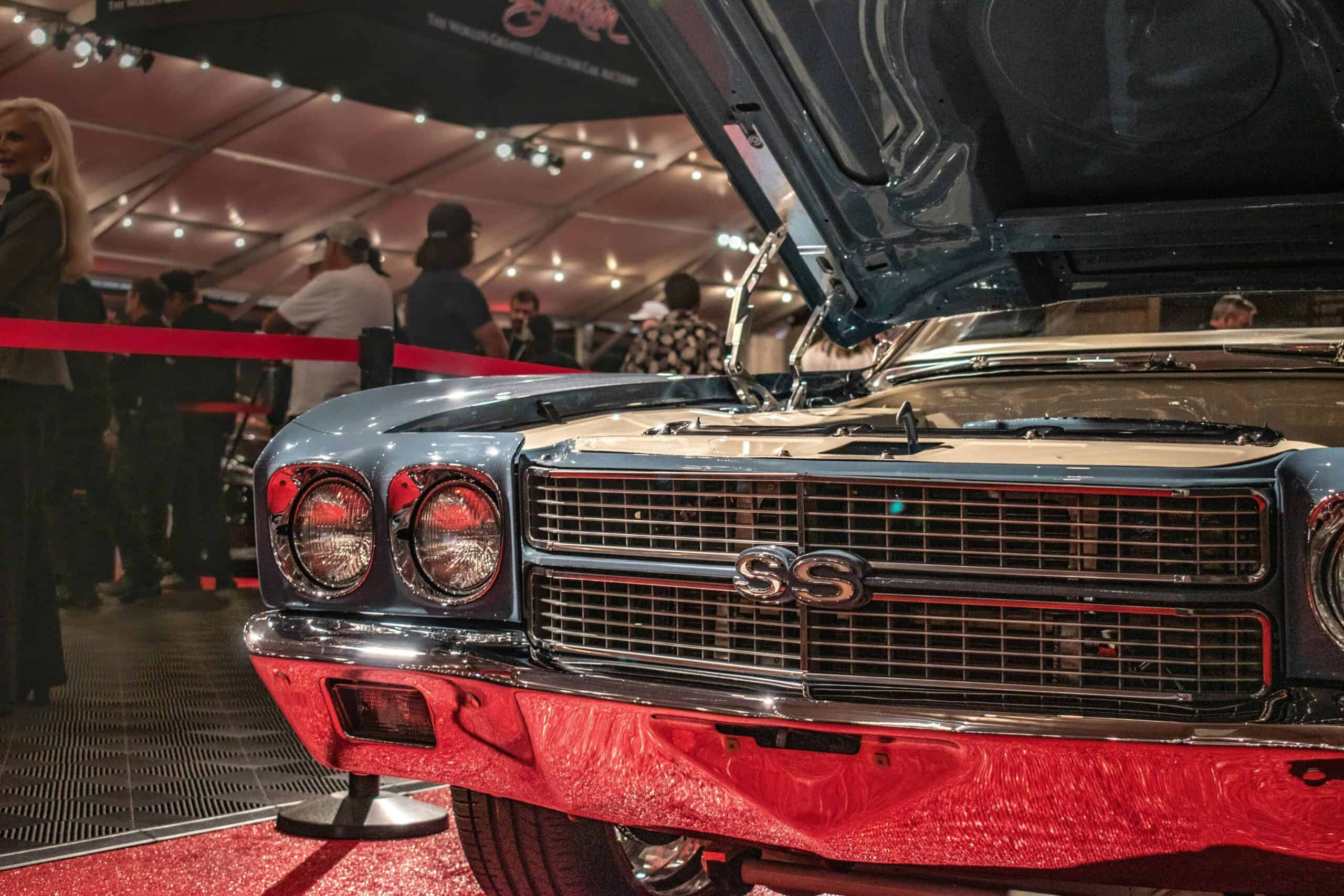
The conventional read on the collector car market going into 2024 and 2025 was straightforward: the frothy post-pandemic surge was over, and prices would correct. For the broader classic car market, that correction arrived. Analysis of recent classic car market trends shows prices across the category have fallen more than 10% over the past two years — a meaningful drawdown for anyone who bought at the peak.
Muscle cars didn’t follow the script. According to Hagerty, the average muscle car transaction sits at approximately $78,000, compared to $61,000 for classic cars broadly — a $17,000 premium that has held even as the wider market softened. Street Muscle Magazine reports that American muscle cars and restomods are still posting near-double-digit value growth across many models — moving in the opposite direction from the broader classic car slide.
Before you read that as a green light to buy anything with a V8 and a hood scoop, the full history demands respect. This market has two documented crashes in living memory — the 1973 OPEC oil embargo and the 2008 housing crisis — that wiped out buyers who ignored fundamentals. The current resilience deserves a hard look, not cheerleading.
Reasons 1-3: Supply Is Smaller Than You Think
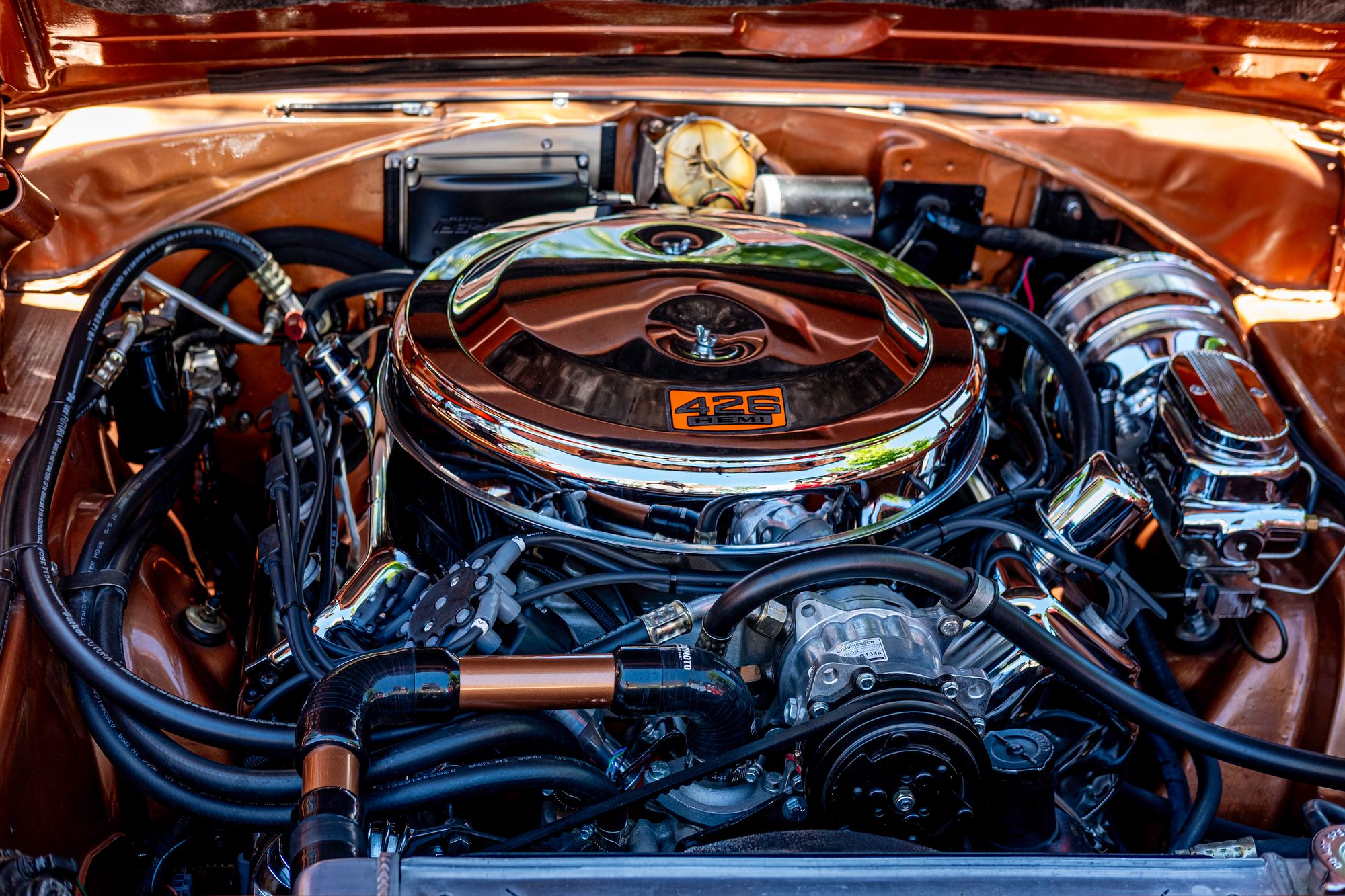
Start with numbers that were always true. The most desirable configurations — big-block engines, four-speed transmissions, factory documentation — were low-volume builds when new. A 1969 Camaro ZL1 or a 1970 Plymouth ‘Cuda 426 Hemi was not a volume product in its day. Fifty-plus years of track use, rust, accidents, and parts-car attrition have reduced the surviving pool of authentic, uncompromised examples to a genuinely finite count. That doesn’t change regardless of what the broader economy does.
COVID-era shutdowns disrupted restoration supply chains in ways that are still unwinding. The semiconductor shortage that paralyzed new-car production also delayed restomod builds, compressing the supply of turnkey, drive-anywhere cars right when demand from buyers with cash and nowhere to spend it was accelerating. That compression showed clearly in auction results through 2022 and 2023, and supply has not fully recovered.
Cloning and title fraud compound the scarcity problem in a way that buyers regularly underestimate. A numbers-matching 1969 Camaro Z/28 and a well-executed clone can look identical to the casual eye. The documentation — broadcast sheet, build records, VIN decoding — is what separates an asset from an expensive mistake. Scarcity of provenance-proven, fully authenticated cars pushes premiums higher on examples that can actually demonstrate what they are, while undocumented cars carry a discount that often isn’t visible until the moment of resale.
Add to that the retirement of the Dodge Challenger and Charger in their current ICE form after the 2023 model year. That decision removed the new-car relief valve. Buyers who wanted a modern, factory-built V8 muscle car now have fewer places to go, and some of that demand is redirecting toward the classic and used market rather than dissipating.
Reasons 4-6: Demand Has Changed — and Broadened
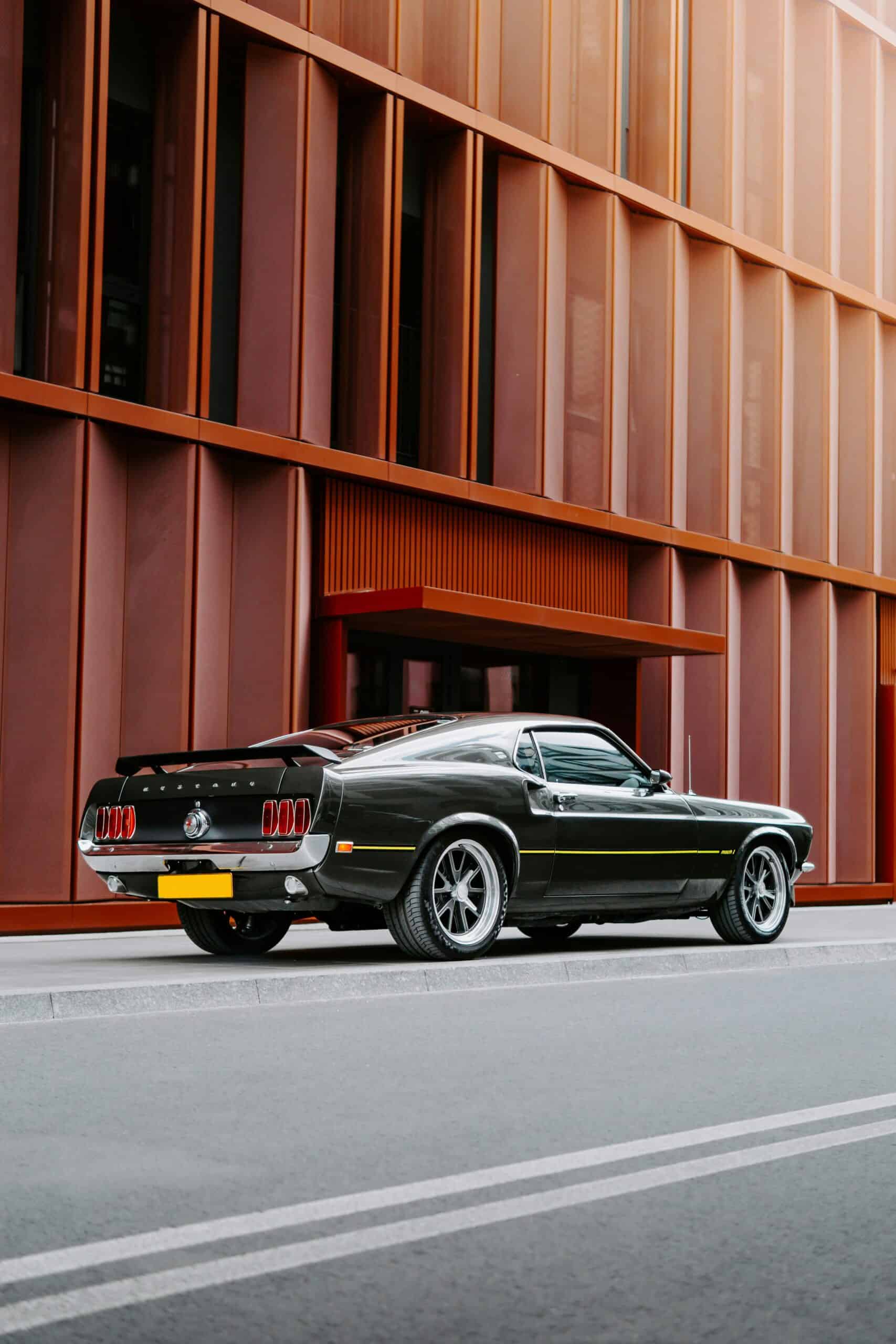
Generational money has arrived in this market in a structural, not cyclical, way. Buyers who grew up watching Bullitt, Smokey and the Bandit, and the early Fast and Furious films now have the income to pursue the cars they couldn’t afford at 22. Their target models — early Mustang fastbacks, first-generation Camaros, A-body Mopars — sit squarely in the high-demand tier. This isn’t a temporary demographic blip; it’s a large cohort working through peak earning years with a specific set of emotional targets already identified.
Restomods have expanded the buyer pool in a way that changes the math for the entire segment. A factory shell rebuilt with modern independent suspension, fuel injection, power brakes, and air conditioning removes most of the ownership friction that kept casual buyers away from classics. Those builds routinely clear $100,000, and when they do, a clean, unrestored original in driver condition at $55,000 starts to look like relative value — even if it needs attention. The restomod ceiling pulls the original-car floor upward with it.
International demand has added a price floor that wasn’t structurally present in prior market cycles. European and Australian collectors, operating on favorable currency dynamics at various points in the past decade, have become consistent bidders at major U.S. auctions. That geographic broadening means a weak domestic economy no longer tells the whole story of where prices go — and it means a domestic-only demand shock would not automatically clear the market the way it did in 1973 or 2008.
Televised auction broadcasts — Mecum, Barrett-Jackson — have made price discovery national and immediate in a way that permanently restructured regional markets. The local arbitrage that once let an informed buyer find an undervalued car at an estate sale or small regional auction is largely gone. Everyone sees the same comparable sales data in real time, which compresses the spread between informed and uninformed buyers and anchors prices at the high end of recent comps rather than the middle.
Reasons 7-8: Why This Market Has Burned Buyers Before
TopSpeed characterizes the muscle car market as a rollercoaster ride of highs and lows — and that characterization is backed by documented history, not editorial caution. The 1973 oil embargo didn’t just slow big-block car sales; it cratered values on cars that had been appreciating steadily, almost overnight. The 2008 housing crash pulled discretionary collector spending down with it in a matter of months. Hagerty’s own analysis of whether the muscle car market can fail points to both episodes as evidence that macro shocks don’t spare this segment.
If you’re treating a muscle car as a pure investment vehicle, you need to price in illiquidity before you price in appreciation. You cannot exit a $90,000 Chevelle the way you can sell a position in a brokerage account. Auction fees, transportation, pre-sale inspection, and storage during the consignment window can consume 10-15% of the gross sale price before you receive a dollar. That is the transaction cost floor on every exit, and it means you need meaningful appreciation just to break even on a short holding period.
The current market is not immune to a macro shock. A sharp, sustained rise in fuel prices or a recession that hits discretionary spending could reprice the bottom of the market quickly — even if top-tier, fully documented cars hold their value better than driver-quality examples. The honest hedge: a muscle car that doubles as a show car and weekend driver reduces pure investment risk because you receive real enjoyment regardless of where the market sits in year three. Buyers who need the car to appreciate to justify the purchase are speculating, not collecting.
Reasons 9-10: What’s Actually Driving Prices Right Now
Hagerty’s insurance-adjusted replacement values show the gap between muscle cars and the broader classic car market widening, not closing. The category is outperforming its own asset class — this isn’t a general wave lifting all boats, it’s a specific dynamic driven by specific structural factors in a specific segment.
The end of large-displacement V8 production in mainstream American vehicles — driven by regulatory pressure and the accelerating EV transition — is adding a “last of the breed” emotional premium that consistently appears in bidding behavior at major auctions. Quantifying it precisely is difficult, but its presence in results is not speculative. When the new-car market no longer offers a factory alternative, the existing inventory of authentic, high-displacement American muscle becomes structurally irreplaceable in a way it was not when a buyer could walk into a dealership and order a new one. That shift in the new-car landscape is permanent in a way that prior market slowdowns were not.
Fuel cost sensitivity, while real, is asymmetric in this market segment. The buyers transacting at $78,000 and above are not being priced out of weekend driving by pump prices the way the original OPEC crisis hit working-class muscle car owners in 1973. The income profile of the current buyer base has changed substantially from the first-generation owners of these cars. The macro risk that ended the first muscle car era does not map cleanly onto the current market structure — though a different macro shock could produce a different but equally damaging result.
What You Should Actually Pay Attention to Before Buying
- Pull specific Hagerty valuations, not averages. The $78,000 average masks enormous variance. A driver-quality Chevelle Malibu and a #1-condition SS 454 with documentation live in entirely different markets. Get the valuation for the specific model, body style, engine code, and condition grade you’re targeting — then verify it against recent auction results for that exact configuration, not the nameplate broadly.
- Budget carrying costs that don’t appear on the window sticker. Agreed-value insurance, climate-controlled storage, and periodic mechanical attention on a car that hasn’t been driven regularly can add $3,000-$6,000 per year to your true cost of ownership. That figure compounds quickly on a multi-year hold.
- Documentation is the asset. A broadcast sheet, Marti Report (Ford), Protect-O-Plate (GM), or equivalent factory authentication directly affects what you can sell the car for. Buying without it means accepting a discount at purchase and absorbing that discount again at exit — typically at a higher absolute dollar figure because the car has appreciated in the interim.
- Run the stress scenario before you wire a deposit. If you’re financing at the top of the market, model the outcome where the car loses 20% of its value in year two. The 2008 and early-1970s precedents are not ancient history — they’re the reason disciplined buyers in this market use cash they can afford to have tied up for an indeterminate period, not leverage they need to service on a schedule.
The Bottom Line
The muscle car market is not a bubble sitting on a predictable countdown. It has genuine supply constraints, a broadening global buyer base, and a structural tailwind from the end of V8 muscle car production that was not present in prior cycles. Those are durable supports, not sentiment — and the distinction matters when you’re trying to separate a rational market from a speculative one.
It is also not a one-way trade. The historical volatility is documented. The macro environment can shift faster than you can move a car through consignment. Illiquidity is a real cost that doesn’t surface until you need to exit, at which point it cannot be managed away.
The buyers who have done best in this market over the long term treat the car as the primary return and the appreciation as a bonus. If the gap between a cooling broader classic car segment and a muscle car category that continues to outperform represents a rational entry window heading into 2025-2026, that window requires the same discipline it always has: verify every number against current Hagerty data, never skip the documentation check, and don’t buy a car you wouldn’t want to own for ten years if the market goes sideways.