
The classic car you dream about and the one you can realistically own, insure, and actually drive are almost never the same machine — and the gap between those two realities is exactly where most enthusiasts either make their smartest purchase or their most expensive mistake.
The Dream Is Real — But So Is the Price Tag

That tension is playing out loudly across the enthusiast internet right now. A poll on mynews4.com is asking visitors to choose their dream classic car category, and zeroto60times.com hosts a dedicated section of classic car polls where enthusiasts weigh in on vintage car questions around the clock. The debate is alive, opinionated, and surprisingly revealing about what people actually want versus what the market charges them for it.
This article maps what enthusiasts actually vote for, why the smart ones compromise, and what those choices reveal about real-world priorities. Whether you are still dreaming, actively comparing options, or ready to write a deposit check, the breakdown below cuts through the sentiment and gets to price, parts availability, and practicality.
The Four Categories Enthusiasts Actually Vote On

The mynews4.com poll structures the choice around four categories: Classic American Muscle, Exotic European Sports Car, Vintage Pickup Truck, and Timeless Luxury Cruiser. That taxonomy is more useful than it first appears, because each category signals something specific about your own priorities before you ever look at a single listing.
- Classic American Muscle signals you want straight-line performance, street presence, and a community of fellow enthusiasts ready to debate cam specs at every car show.
- Exotic European Sports Car says you are chasing a driving experience and mechanical refinement that American iron of the same era rarely matched — and you are prepared to pay a specialist for the privilege.
- Vintage Pickup Truck often marks the most pragmatic voter: someone who wants usability, rugged charm, and a platform the community accepts modifying freely without stigma.
- Timeless Luxury Cruiser points toward show-quality appeal, long-distance comfort, and rolling sculpture that wins concours trophies rather than stopwatch battles on a back road.
What the categories do not advertise is this: ownership costs, parts availability, and mechanical complexity vary wildly between them. The category you vote for shapes your total cost of ownership as much as any individual model does. Keep that in mind as you read the comparisons below.
American Muscle: What Voters Want vs. What They Buy

The 1966-67 Dodge Charger sits near the top of nearly every dream muscle car list, and for good reason — that roofline is one of the most distinctive shapes Detroit ever stamped. But scroll through the r/classiccars thread on dream classic cars and the reality check is hiding in plain sight. One commenter stated their dream car was a 1966-67 Charger but they settled on a 1966 Coronet due to cost, noting it is “practically the same car from the doors up.”
That is not a consolation prize. That is a disciplined purchase. The price gap is real and quantifiable. A driver-quality 1967 Charger routinely asks $40,000-$70,000 in today’s market. A comparable 1966 Coronet equipped with the same 383 or 440 cubic-inch V8 can be found for $15,000-$30,000. Same basic drivetrain, closely related sheetmetal, dramatically lower badge premium.
| Model | Engine Options | Est. 0-60 (period tests) | Avg. Market Price (driver quality) | Parts Availability |
|---|---|---|---|---|
| 1967 Dodge Charger | 318, 383, 440, 426 Hemi V8 | ~6.5 sec (383) | $40,000-$70,000 | Good — high collector demand drives aftermarket supply |
| 1966 Dodge Coronet | 318, 361, 383, 440, 426 Hemi V8 | ~6.5-7.0 sec (383) | $15,000-$30,000 | Good — shares most drivetrain and body components with Charger |
The honest trade-off is straightforward. If the Charger’s specific roofline is the dream, budget for the Charger. If the driving experience is the dream — the torque, the sound, the feel of that era’s big-block V8 — the Coronet delivers it without paying a collector markup for a body style. Knowing which one you actually want is the entire ballgame.
Sleek 50s-60s Cruisers: What an Instagram Poll Revealed

An Instagram poll put three cars head-to-head under a “Sleek 50s-60s Cruisers” banner: the 1957 Adventurer, the 1969 AMX, and the 1986 Monte SS. It is a deliberately eclectic lineup, and the spread tells you as much about the voter base as it does about the cars themselves.
The 1957 Adventurer is a genuine rarity. Production numbers were extremely limited, which makes it a show-circuit car far more than a weekend driver. Presentable examples command prices well above $50,000, and sourcing correct trim pieces is a serious undertaking requiring specialist knowledge. You are buying a museum piece and should price it — and insure it — accordingly.
The 1969 AMC AMX is the sleeper on this ballot. It was one of very few two-seat production cars Detroit ever offered, equipped with a factory 390 cubic-inch V8 and genuine performance credentials backed by period road test data. Critically, the collector market has not yet fully bid the AMX up to a level that reflects its rarity and performance relative to better-known muscle cars. Solid driver-quality examples remain available at prices that look undervalued by comparison. If you want something rare, fast, and not yet auctioned into the stratosphere, the AMX deserves serious attention.
The 1986 Monte SS sits in an entirely different era and represents the accessible end of the spectrum — clean examples regularly trade well under $20,000. Its inclusion in a poll nominally about 50s-60s cars is a stretch chronologically, but it signals something real: the definition of “classic” is stretching younger, and G-body enthusiasts form a genuine and growing community. If your budget is constrained and you want a piece of American styling history you can drive regularly without anxiety, the Monte SS makes a rational argument for itself.
Specs and Ownership Numbers Across All Four Categories
Below is where the romance meets the spreadsheet. Across the four major poll categories, these are the numbers that most directly determine whether a classic car enriches your life or simply empties your bank account.
| Car | Engine | Factory HP (approx.) | Est. 0-60 (period) | Avg. Market Value (driver quality) | Est. Annual Maintenance | Parts Availability |
|---|---|---|---|---|---|---|
| 1967 Dodge Charger | 383 V8 | 325 hp | ~6.5 sec | $40,000-$70,000 | $1,500-$3,500 | Good |
| 1966 Dodge Coronet | 383 V8 | 325 hp | ~6.5-7.0 sec | $15,000-$30,000 | $1,500-$3,000 | Good |
| 1969 AMC AMX | 390 V8 | 315 hp | ~6.5-7.0 sec | $25,000-$45,000 | $1,800-$3,500 | Moderate — specialist suppliers exist but selection is narrower than Big Three |
| Early Porsche 911 (1970s) | Flat-six, 2.2-2.7L | 125-175 hp | ~7.0-8.5 sec | $60,000-$120,000+ | $5,000-$15,000+ | Good — parts exist but specialist labor costs are high |
| 1957 Chevrolet Task Force Pickup | 235 inline-6 / 265 V8 | 140-180 hp | ~12-14 sec | $18,000-$40,000 | $1,000-$2,500 | Excellent |
| 1960s Lincoln Continental | 430 / 462 V8 | 300-320 hp | ~9.0-10.5 sec | $20,000-$50,000 | $1,500-$4,000 | Moderate to Good |
| 1986 Monte Carlo SS | 305 V8 | 180 hp | ~8.5 sec | $10,000-$20,000 | $800-$2,000 | Good |
Two findings stand out from this comparison. First, vintage pickup trucks are consistently among the most livable classics: parts are plentiful, entry prices remain lower than equivalent muscle cars, and the community broadly accepts engine swaps and modernization without the stigma attached to modifying a numbers-matching muscle car. A 1957 Chevy Task Force with a refreshed drivetrain can function as a genuinely useful vehicle. Second, the European exotic cost penalty is real and substantial. A desirable early Porsche 911 can cost three to five times as much to maintain annually as a comparable American muscle car. The dream is legitimate. The repair invoices are realer.
What Your Vote Actually Reveals About You as a Buyer
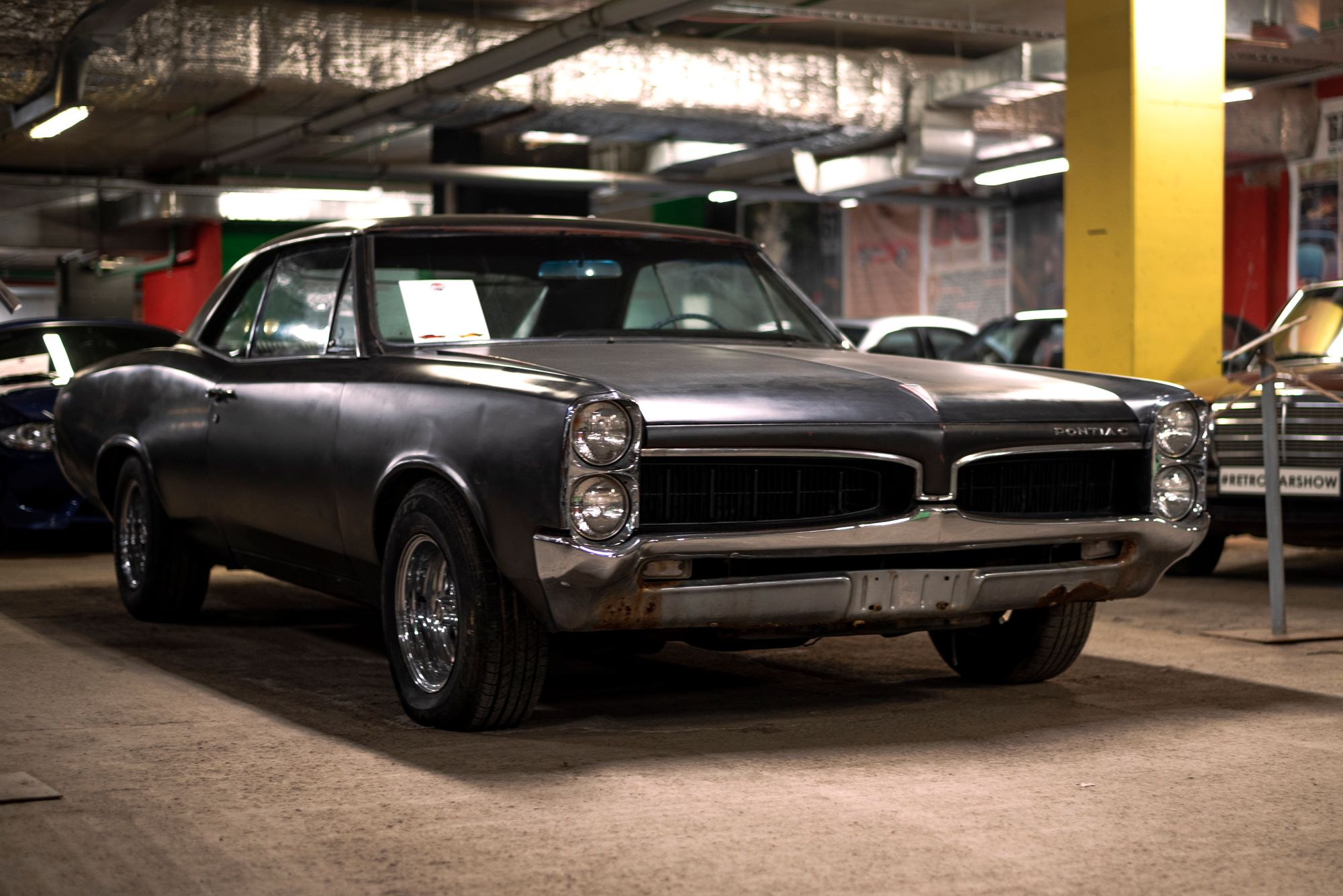
If you vote muscle car, you are prioritizing straight-line performance, a built-in community of shows and online forums, and the option to drive it hard. Budget accordingly: period brakes need upgrading if you are driving seriously, fuel costs on a big-block V8 are not trivial, and correct-width tires for a car of that weight and power are not cheap.
If you vote European exotic, ask yourself one honest question before you commit: will you actually use a specialist mechanic when problems arise, or will the car sit in a climate-controlled garage while you avoid opening the repair estimate emails? There is no wrong answer, but there is an expensive self-deception readily available in this category.
If you vote vintage pickup or luxury cruiser, you may be the most pragmatic buyer in the room. Both categories offer genuine usability, strong enthusiast communities, and market values that have not been fully bid up by televised auction culture. The Lincoln Continental and the classic pickup truck are quiet value propositions in terms of ownership experience delivered per dollar spent — a fact that rarely gets the same airtime as a Hemi Charger.
The Reddit Coronet story is the thesis of this entire article compressed into one purchase decision. Understanding why you want a specific car — whether it is the badge, the driving experience, the investment thesis, or some combination — is the difference between a smart acquisition and an expensive regret that occupies garage space and generates guilt in equal measure.
Cast Your Vote — Then Do the Math
Polls like the ones running on mynews4.com and zeroto60times.com’s classic car polls section are not just entertainment. The collective preferences of thousands of enthusiasts surface genuine market intelligence about which cars are gaining cultural momentum and which have been bid up beyond their real-world merit.
Before you move from voting to buying, answer three questions honestly:
- What is your realistic total budget — not just the purchase price, but restoration reserve, specialist insurance, and estimated annual maintenance combined?
- Will you drive it or show it? The answer changes which car makes sense, sometimes dramatically. A concours-condition car that you are afraid to take in the rain is a different purchase than a driver-quality car you put miles on every weekend.
- Can you live with the Coronet if it gets you into the experience at half the price? The most desirable classic cars on paper are not always the best ones to own in practice — and that gap is exactly where the most clear-eyed buyers find their best deals.
Vote for your dream. Then share in the comments whether you own the car you always wanted or the smarter alternative you actually bought — because both stories are worth hearing, and the second one almost always teaches you more.