
Engineers in the 1960s genuinely believed the Wankel rotary engine would make the piston engine obsolete within a decade — smoother, lighter, simpler, and more powerful for its displacement. Sixty years later, you can count every production car ever sold with a rotary engine on two hands, with fingers to spare. That gap between promise and reality is the whole story.
The Rotary Engine Promised Everything — and Nearly Disappeared
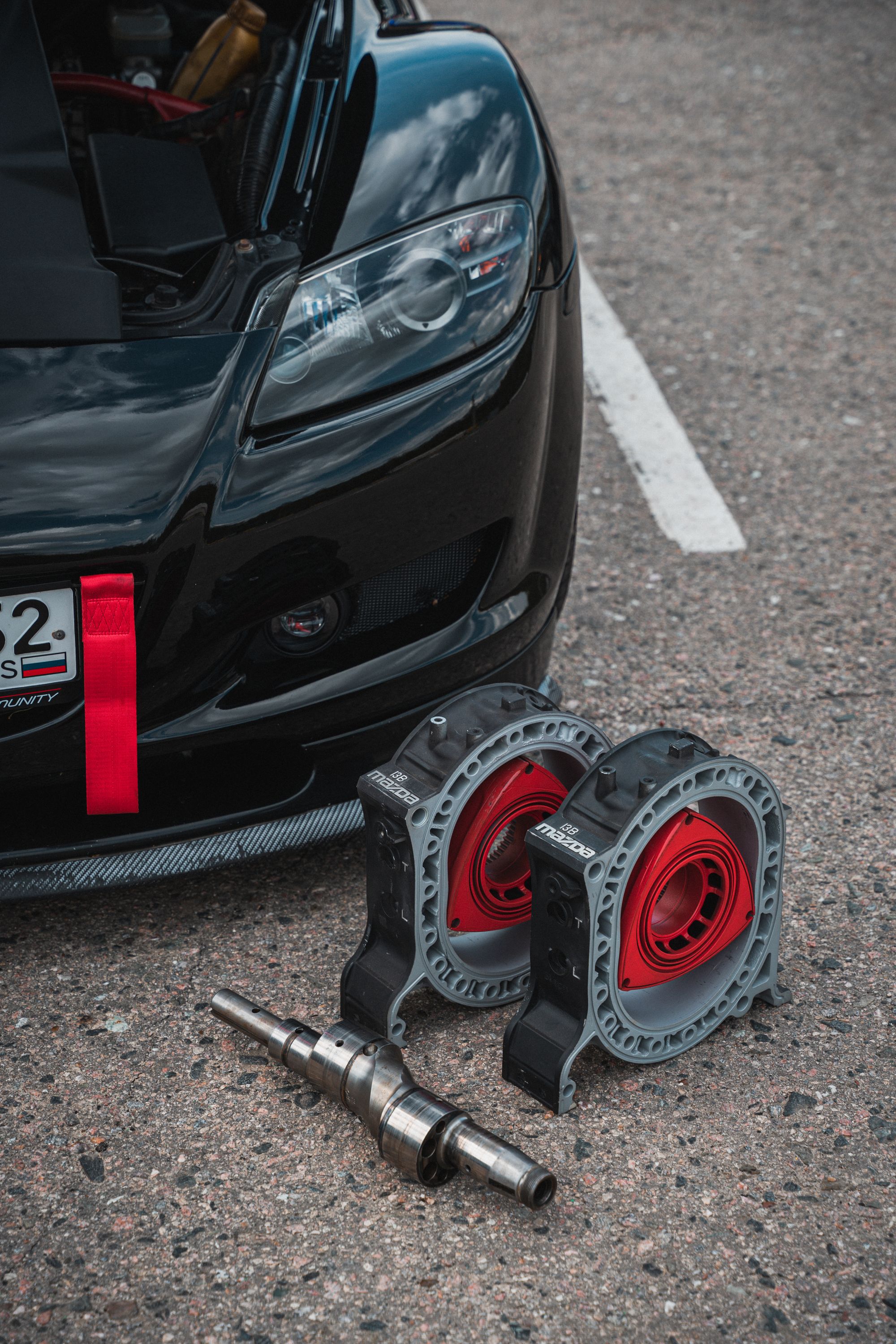
Whether you’re considering buying a rotary-powered car, researching the history, or settling a pub argument, the honest answer to “how many production rotary cars actually existed?” lands at roughly 16 distinct models across four manufacturers. Fuel thirst, apex seal failures, and tightening emissions regulations killed the dream faster than any competitor did. The total list is shorter than most enthusiasts expect — and the trade-offs on every car in it deserve an honest look before you hand over any money.
How the Wankel Rotary Actually Works
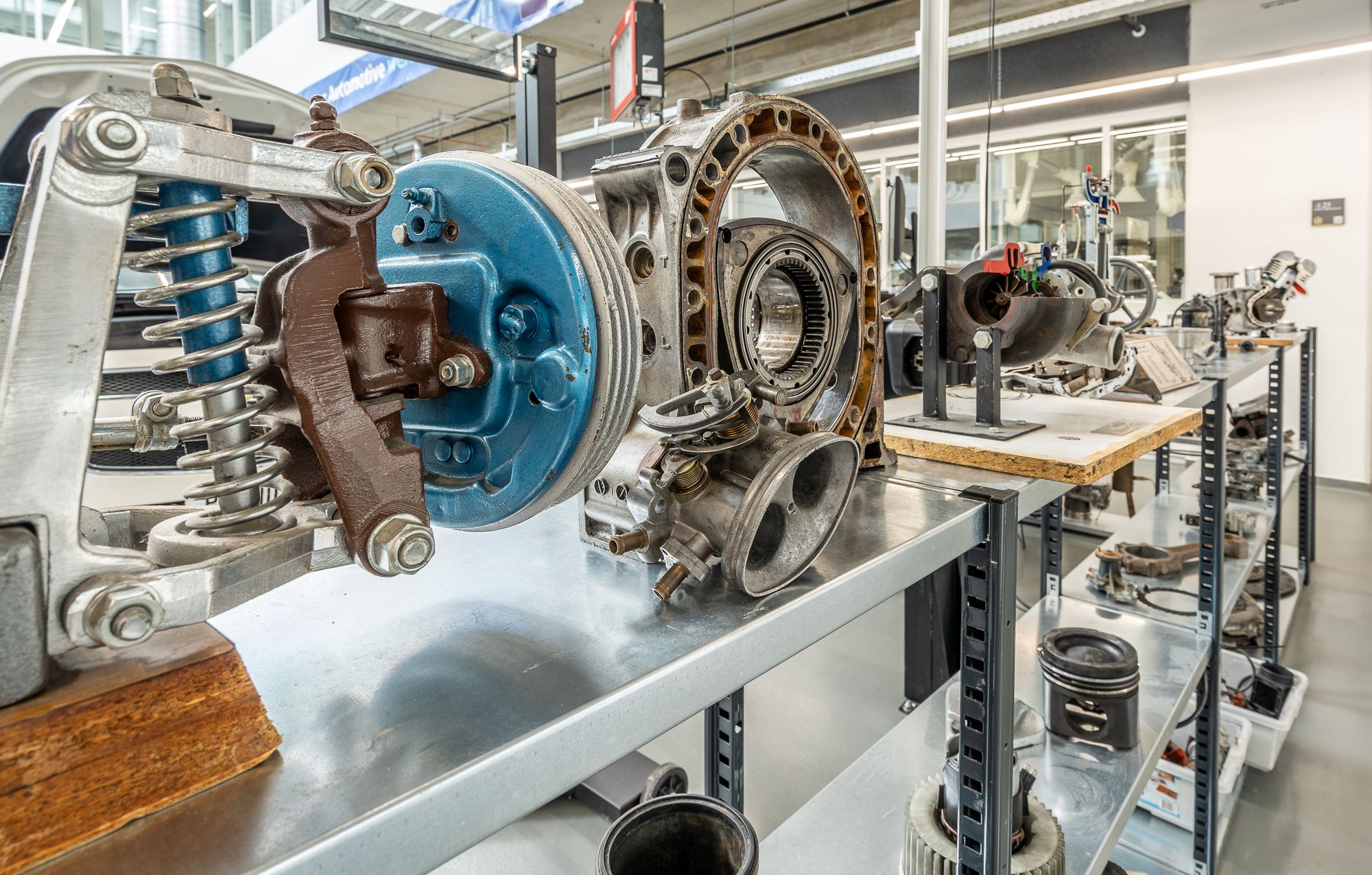
Instead of pistons moving up and down, a triangular rotor spins eccentrically inside an oval housing, completing the four cycles — intake, compression, combustion, exhaust — in continuous rotary motion with far fewer moving parts. The payoff is high power relative to displacement and near-zero vibration, which is why early adopters pushed it for sports cars and premium sedans.
The catch is structural, not incidental. The rotor tips, called apex seals, wear under hard use and are the first thing any prospective buyer should ask about. The engine burns oil by design to lubricate those seals — this is normal, not a warning sign, but it means checking and topping oil at every fuel stop is part of rotary ownership. The elongated combustion chamber shape makes complete fuel burning genuinely difficult, which is why fuel economy is poor across every car on this list — not because of poor tuning, but because of physics. Every reliability and running-cost conversation about any rotary car comes back to those three facts.
The Pioneers: NSU and the Cars That Started It All

NSU, the German manufacturer, was first to market with a production Wankel-powered car, and its experience remains the most important cautionary tale in rotary history.
- NSU Spider (1964-1967): The world’s first production car with a Wankel engine, built on a convertible body with a single-rotor unit producing around 50 hp. Approximately 2,375 were made. Surviving examples are genuine rarities and should be treated as collector pieces requiring specialist support — not daily transport.
- NSU Ro80 (1967-1977): A visionary front-wheel-drive sedan that looked a decade ahead of its time and won European Car of the Year in 1968. Roughly 37,000 were built. Chronic engine failures — many cars required multiple engine replacements under warranty — destroyed NSU’s finances and ultimately the company itself. Audi absorbed what remained of NSU in 1969. If you find an Ro80 today, assume the engine has been rebuilt or replaced at least once. That is not a red flag; it is expected. Budget accordingly for specialist parts and accept that sourcing them will require patience.
The Ro80’s collapse is the clearest historical proof that rotary engineering brilliance and rotary real-world reliability are two entirely separate things.
Mazda’s Rotary Lineup: Every Model from the Cosmo to the RX-8

No manufacturer committed to the rotary engine the way Mazda did. Where every other company eventually retreated, Mazda ran rotary-powered cars in series production for decades across a remarkably wide range of models. The full list of Mazdas with rotary engines covers more ground than most people realise.
- Cosmo Sports (110S), 1967-1972: The world’s first volume-production rotary-powered vehicle. A low-slung two-seat coupe with a twin-rotor engine producing around 110 hp, produced in very small numbers over two series. Collector interest is significant; practical daily use is not realistic.
- R100 (1968-1973): A compact fastback that brought rotary power to a more accessible price point and sold in genuine volume, particularly in export markets including the United States and Australia.
- RX-2 (1970-1978), RX-3 (1971-1978), RX-4 (1973-1978), RX-5 (1975-1980): A succession of progressively larger sedans, coupes, and wagons that carried the rotary engine into mainstream family car territory. Fuel economy was consistently poor by class standards — real-world figures of 15-20 mpg were common even when new — but these cars sold because the performance-per-dollar ratio was compelling at the time. Parts supply is now diminishing across all four models.
- HB Cosmo (1975-1981) and Eunos Cosmo (1990-1996): Luxury-oriented rotary coupes aimed at the top of the Japanese domestic market. The Eunos Cosmo used a three-rotor 20B engine producing around 280 hp, making it one of the most exotic production rotary applications ever built. Both are Japan-only models, and parts sourcing outside Japan is genuinely difficult.
- RX-7 SA/FB (1978-1985): The car that exported the rotary’s sporting reputation globally. Lightweight and well-balanced, with a twin-rotor 12A engine producing between 100 and 135 hp depending on market specification, it arrived when the rotary’s image needed a credibility reset after the mid-1970s oil crisis. It delivered one convincingly.
- RX-7 FC (1986-1991): Turbocharged and significantly more refined than the FB, the FC raised outputs to around 146-200 hp depending on specification and added a level of sophistication the earlier car lacked. Turbo-related reliability on high-mileage examples is a genuine concern that should be factored into any purchase price.
- RX-7 FD (1992-2002): The car that cemented the rotary’s place in automotive culture. The sequential twin-turbocharged 13B produced around 255 hp in Japanese-market specification, wrapped in bodywork that still reads as contemporary. Values have risen sharply — budget $15,000-$45,000 or more for a sound example in current market conditions, and budget separately for maintenance from a specialist with documented 13B experience. Cooling system integrity and flooding prevention are the two issues that separate a well-maintained FD from an expensive problem.
- RX-8 (2003-2012): Often overlooked in rotary discussions but built in significant numbers — over 190,000 units globally. The naturally aspirated Renesis engine produced 189-232 hp depending on specification, and the four-door, four-seat layout made it the most practical rotary car Mazda ever built. The RX-8 also has the most documented reliability data of any rotary model; flooding and cold-start flooding are the primary mechanical concerns, and low-compression engine failure is common on poorly maintained examples. Pre-purchase compression testing is non-negotiable.
Across the entire Mazda rotary lineup, the honest pattern holds: strong power-to-weight ratios, genuine driving character, and fuel economy that runs 15-25 mpg real-world on virtually every model. The RX-7 in all generations and the RX-8 remain the most practical entry points into rotary ownership — parts availability is reasonable, specialist knowledge exists in most markets, and the communities are active and helpful.
The French Experiment: Citroën’s Rotary Detour

Citroën’s involvement with the rotary engine was brief, commercially disastrous, and produced two of the most collectible cars on this entire list — largely because so few survived.
- Citroën M35 (1969-1971): A single-rotor coupe producing around 49 hp, deliberately placed with selected customers for structured field testing rather than offered for open sale. Fewer than 300 were built. It sits at the edge of what can reasonably be called a production car, but it appears on the Wikipedia category of Wankel-engined production vehicles and earns its place on this list.
- Citroën GS Birotor (1973-1975): The genuine public attempt — a twin-rotor version of the GS, producing around 107 hp and sold through Citroën dealerships. The 1973 oil crisis made its fuel consumption commercially indefensible almost immediately after launch. Citroën recalled and destroyed the majority of cars it could recover. Fewer than 200 are believed to survive worldwide. Parts require specialist importers or outright fabrication. If you are considering one, you are not buying a car so much as acquiring a historical artifact, with running costs to match.
Citroën’s exit from rotary development in 1975 is a direct lesson in timing: the GS Birotor was not a bad car — it was introduced at exactly the wrong moment in automotive history.
The Complete Production Rotary Car List

Every confirmed production rotary car in a single reference table. For community discussion of the edge cases and what qualifies as a true production vehicle, this thread on rotary engine car lists is worth reading alongside the table below.
| Manufacturer | Model | Years Produced | Engine Configuration | Approx. Power Output | Key Trade-off |
|---|---|---|---|---|---|
| NSU | Spider | 1964-1967 | Single rotor | ~50 hp | Extreme rarity; parts nearly unobtainable |
| NSU | Ro80 | 1967-1977 | Twin rotor | ~115 hp | Chronic engine failure history; specialist parts required |
| Mazda | Cosmo Sports (110S) | 1967-1972 | Twin rotor | ~110 hp | Very low production numbers; collector only |
| Mazda | R100 | 1968-1973 | Twin rotor | ~100 hp | Poor fuel economy; aging and diminishing fleet |
| Mazda | RX-2 | 1970-1978 | Twin rotor | ~120 hp | Fuel economy; diminishing parts supply |
| Mazda | RX-3 | 1971-1978 | Twin rotor | ~110 hp | Fuel economy; diminishing parts supply |
| Mazda | RX-4 | 1973-1978 | Twin rotor | ~130 hp | Fuel economy; specialist maintenance required |
| Mazda | RX-5 | 1975-1980 | Twin rotor | ~115 hp | Fuel economy; limited current collector demand |
| Mazda | HB Cosmo | 1975-1981 | Twin rotor | ~135 hp | Luxury running costs; JDM only |
| Mazda | RX-7 SA/FB | 1978-1985 | Twin rotor (12A) | ~100-135 hp | Age-related wear; fuel economy |
| Mazda | RX-7 FC | 1986-1991 | Twin rotor turbo (13B) | ~146-200 hp | Turbo reliability on high-mileage examples; fuel economy |
| Mazda | Eunos Cosmo | 1990-1996 | Twin or triple rotor (13B/20B) | ~230-280 hp | JDM only; parts sourcing very difficult outside Japan |
| Mazda | RX-7 FD | 1992-2002 | Sequential twin-turbo (13B) | ~255 hp (JDM) | High specialist maintenance cost; sharply rising purchase prices |
| Mazda | RX-8 | 2003-2012 | Naturally aspirated (Renesis) | ~189-232 hp | Flooding risk; compression testing essential before purchase |
| Citroën | M35 | 1969-1971 | Single rotor | ~49 hp | Sub-300 production; parts essentially unavailable |
| Citroën | GS Birotor | 1973-1975 | Twin rotor | ~107 hp | Most examples destroyed; under 200 survive; parts require fabrication |
| Mazda | MX-30 R-EV | 2023-present | Single rotor range extender (830cc) | Generator only | Rotary does not drive wheels; small battery limits EV-only range to ~53 miles |
Notable Rotary-Powered Cars That Never Reached Production
The production list is short partly because so many rotary programmes were cancelled before reaching customers. Mercedes-Benz developed the C111 concept series through the early 1970s using multi-rotor Wankel engines, achieving genuine performance milestones in prototype testing, but never put a rotary car into production. GM built the XP-897GT concept and invested heavily in Wankel licensing during the early 1970s before abandoning the programme as the oil crisis arrived. American Motors briefly offered a rotary-powered Pacer in prototype form. None reached a showroom. The production list being as short as it is reflects how many manufacturers got close and then pulled back — a context that matters when assessing how significant Mazda’s decades-long commitment actually was.
The Rotary’s Comeback: Mazda MX-30 R-EV
The Mazda MX-30 e-Skyactiv R-EV is the most recent production car to use a rotary engine — but not in the way anyone expected. The single-rotor 830cc Wankel does not drive the wheels. It runs exclusively as a range-extending generator for the electric drivetrain, and that distinction matters enormously for understanding both its appeal and its limitations.
Running at a steady, optimised load as a generator suits the rotary’s characteristics far better than the variable demands of direct propulsion ever did. Compact, smooth, and light — those are the rotary’s genuine engineering strengths, and in a generator role they are fully exploited without the combustion inefficiency penalties that made fuel economy poor in every car above. Real-world combined range with the generator operating extends to approximately 400 miles; EV-only range sits at around 53 miles on the WLTP cycle; and fuel economy in charge-sustaining mode reaches figures around 40 mpg — a number no previous rotary-powered car could have approached.
Whether Mazda extends the rotary beyond the range-extender application remains publicly unconfirmed. The MX-30 R-EV does make one thing clear: the engine is not extinct. It has simply found an application that plays to its strengths rather than exposing its weaknesses. For a broader look at how rotary cars rank by current market value, the full spectrum from affordable project cars to blue-chip collectibles is wider than most buyers expect.
Buying a Rotary Car: What the List Means in Practice
The shortness of the production list has direct consequences for anyone buying into the rotary world today. Parts supply for anything outside the RX-7 and RX-8 ranges is either difficult or genuinely precarious. Specialist knowledge is unevenly distributed — finding a mechanic who truly understands the 13B is possible in most cities; finding one who knows the NSU Ro80 twin-rotor requires more searching and will cost accordingly. And across every model on the list, the pre-purchase inspection matters more than it does with almost any other category of used car.
For an RX-7 FD or RX-8, that means a compression test, a cooling system pressure test, and a check for flooding damage or signs of water in the intake. For an Ro80 or a GS Birotor, it means engaging a specialist before any money changes hands, not after. The community resources around rotary ownership are genuinely good — forums, specialist rebuilders, and owner clubs have preserved knowledge that would otherwise be lost — but they reward buyers who do the research before committing, not those who learn the hard way afterwards.
The driving experience a healthy rotary delivers is distinctive enough that the enthusiasm around these cars is entirely understandable. The maintenance demands are real enough that going in underprepared is expensive. Both things are true simultaneously, and that is the honest position from which to approach any car on this list.