
Not all electric vehicles handle winter the same way — and the gap between the best and worst performers in cold weather is now large enough, and documented thoroughly enough in real-world owner data, that it should change the order in which you evaluate specs when you’re shopping. If you live somewhere that sees sustained freezing temperatures, cold-weather range retention may be the most consequential number attached to any EV you’re considering — and it doesn’t appear on the window sticker.
The 20-Point Gap That Should Change How You Shop
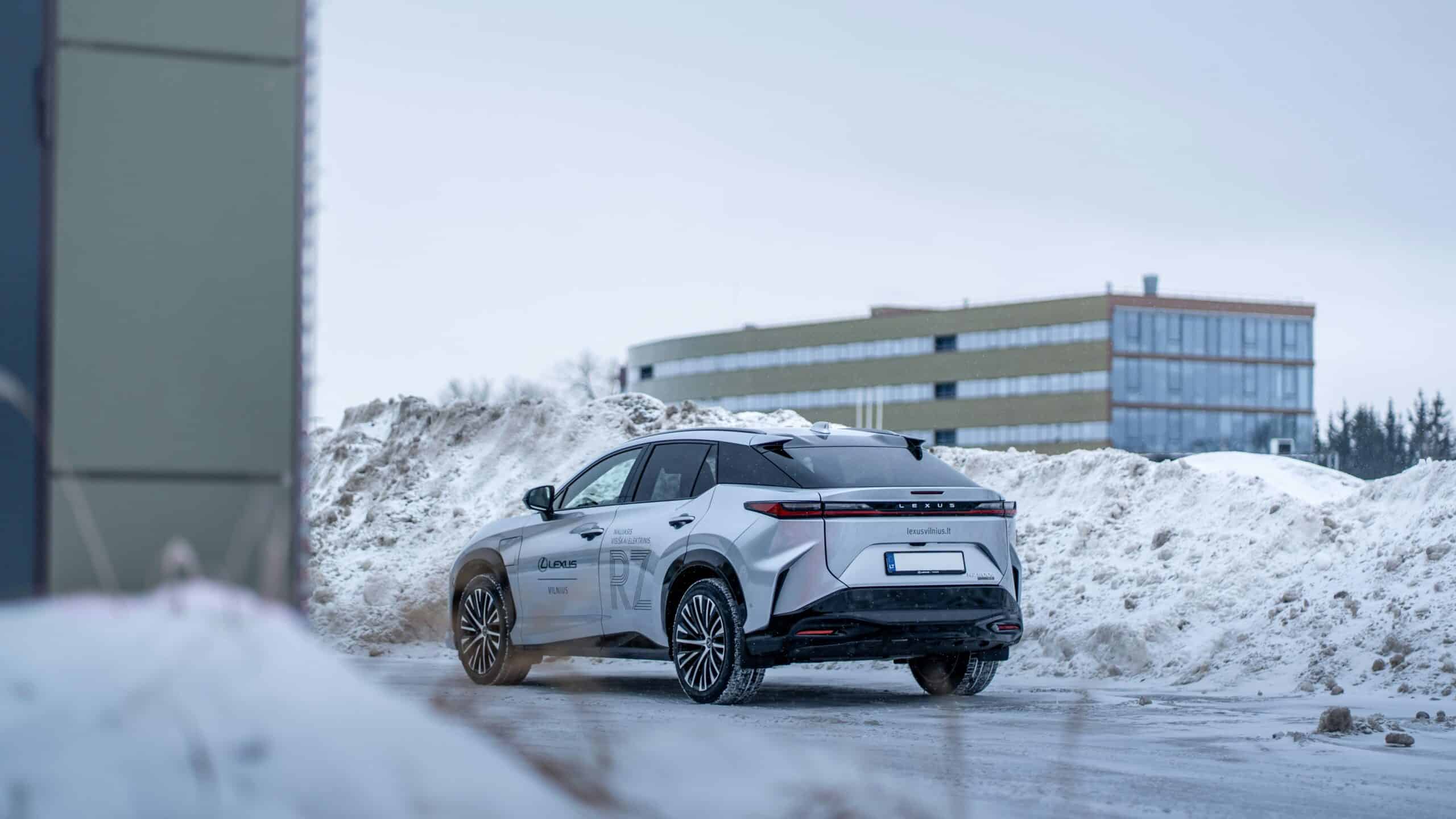
Recurrent Auto’s large-scale real-world research found that the best-performing EVs in cold weather retain roughly 90% of their maximum range at 32°F, while the worst retain only about 70%. That 20-percentage-point spread sounds abstract until you apply it to a specific vehicle. On a 300-mile EPA-rated car, that gap represents roughly 60 miles of usable range on a single charge — the difference between arriving with margin to spare and arriving with the range-anxiety sweats.
AAA’s own testing puts the worst-case figure even starker: some EVs lose more than 40% of their range in cold conditions. A car rated at 300 miles under moderate EPA test conditions can deliver as few as 180 miles on a cold highway day. That is not a footnote. That is a different vehicle.
If you live in Minnesota, Michigan, New England, or anywhere that sees sustained winter temperatures, cold-weather range loss is the most consequential spec on that window sticker — and it isn’t listed there. What follows covers what the data actually shows, which engineering decisions drive the difference between top and bottom performers, and how to use that information before you sign a purchase agreement.
Why Cold Weather Hits EV Batteries So Hard
The core problem is electrochemistry. Lithium-ion cells slow their chemical reactions as temperatures drop, reducing the amount of usable energy the pack can deliver at any given moment. This is physics, not a software bug, and no manufacturer has fully engineered around it. What they can do is manage the degree of impact — and that management is precisely where the spread in real-world cold-weather performance comes from.
Cabin heating compounds the problem in a way that catches many buyers off guard. A gasoline car recycles waste heat from combustion essentially for free — the heater core is simply a radiator plumbed into the engine cooling loop. Most EVs must draw from the main battery pack to warm the interior, which accelerates range drain beyond what cold chemistry alone would cause. Cold-weather range loss in real-world driving typically falls between 20% and 40%, but the exact figure depends heavily on the thermal management system design, not just battery chemistry or pack size.
Regenerative braking also becomes less effective when cells are cold. A battery pack’s ability to absorb a rapid charge pulse — which is exactly what regenerative braking delivers — is reduced in low temperatures. You lose a secondary efficiency-recovery mechanism precisely when you need it most: on slow stop-and-go winter commutes where regen would otherwise be working hardest.
Heat Pumps: The Single Biggest Hardware Differentiator
Recurrent Auto’s research identifies heat pump technology as a meaningful contributor to better cold-weather range retention. The reason is straightforward engineering: a heat pump moves thermal energy from one place to another rather than generating heat resistively, which cuts the cabin-heating energy penalty significantly. Resistive heating — essentially a large electric coil — converts every watt it consumes directly into heat, with no efficiency multiplier. A heat pump can deliver two to three units of heat for every unit of electricity consumed, depending on ambient conditions.
Not every EV includes a heat pump. Some entry-level trims and older model years rely on resistive heating elements, which are cheaper to manufacture but far more energy-hungry in winter. This is a trim-level and model-year question, not a brand-level one. Manufacturers including Tesla, Hyundai, Kia, and BMW have adopted heat pumps across various models and configurations, but availability varies by model year and trim. A brand’s overall reputation tells you nothing reliable about the specific vehicle on the lot in front of you.
When you’re comparing two otherwise similar EVs in the same price band, confirming whether the specific trim you’re pricing includes a heat pump is one of the highest-value questions you can ask. It is verifiable on the window sticker and in the build sheet, and it correlates directly with where that vehicle falls in cold-weather performance comparisons drawn from real-world data.
Active Battery Thermal Management: The Second Hardware Marker
Heat pumps address cabin heating. Active battery thermal management addresses the pack itself — and it matters independently. Systems that actively heat and cool the battery pack, rather than allowing it to warm passively through use, affect both cold-start usable capacity and long-term pack longevity.
A vehicle that can pre-warm its battery while still plugged into a charger before you leave the driveway will deliver meaningfully better real-world winter performance than one that relies on the pack warming itself through driving. The energy for that pre-warming comes from the grid rather than the battery, so you lose nothing from your starting range. On a vehicle without this capability, the first several miles of a cold drive are effectively spent warming the pack rather than moving the car efficiently.
Both heat pump inclusion and active battery thermal management are verifiable on the window sticker and build sheet of the exact trim you are pricing. Neither should be assumed from a model’s general advertising or a brand’s reputation for cold-weather performance.
What Recurrent’s Real-World Data Shows — and What It Doesn’t
Recurrent Auto aggregates range data from a large pool of privately owned EVs being driven in actual conditions, which makes its findings more representative of real owner experience than EPA laboratory cycles measured at controlled temperatures. The 90%-versus-70% retention spread at 32°F represents the outer bounds of the fleet studied. Most models cluster somewhere between those two poles, which means the specific model and trim you choose matters more than the category of EV in general.
Real-world data captures variables that lab tests exclude: driving style, highway versus city mix, preconditioning habits, ambient temperature during charging, and degraded pack capacity in higher-mileage vehicles. Treat the figures as directional benchmarks rather than guaranteed per-trip predictions. The study framework is the right starting point; model-specific owner communities and Recurrent’s individual vehicle reports can help you narrow further.
It is also worth consulting broader discussions from actual owners who have lived with these vehicles across multiple cold seasons. Long-running owner conversations about EV winter range often surface model-specific quirks — charging behavior in cold queues, preconditioning limitations, software update effects — that manufacturer specs and even aggregated fleet studies do not capture.
Cold-Weather Range Retention: A Comparison Framework
Because the published research covers performance tiers rather than exhaustive per-trim breakdowns for every configuration, the table below summarizes documented tiers rather than fabricating specific figures not supported by the source data. Use it to frame your research, then verify the hardware features on the actual window sticker of the trim you’re pricing.
| Performance Tier | Approx. Range Retention at 32°F | Key Hardware Indicators | Buyer Implication |
|---|---|---|---|
| Best-in-class | ~90% | Heat pump + active battery thermal management | Minimal real-world range anxiety in winter; closest to EPA-rated behavior in daily use |
| Mid-tier | ~80-85% | Heat pump or improved passive thermal management | Manageable with consistent preconditioning habits; plan for a moderate winter discount on usable range |
| Weakest performers | ~70% or below | Resistive heat only; older or purely passive thermal systems | Plan for significantly shorter winter range; adjust expected daily usable miles before committing to purchase |
Preconditioning while plugged in can recover a meaningful portion of range regardless of which tier your EV falls into — but it does not close a 20-point hardware gap. It narrows it. If you’re deciding between two models at the same price, that gap can represent 30 to 60 real miles on a cold day. In many metro areas, that is the difference between completing your errands on one charge and needing to stop and charge mid-day in freezing temperatures.
What This Means If You’re Buying Right Now
Ask for the specific trim’s feature sheet, not the brand-level brochure. Heat pump inclusion, battery preconditioning capability, and active thermal management must be confirmed for the exact model year and configuration you are considering — not assumed from the brand’s general reputation or the model’s top-trim advertising copy.
EPA range ratings are measured at moderate temperatures and do not reflect cold-weather performance. Budget for at least a 20% real-world winter discount on the EPA number even for well-performing models, and up to 40% for weaker ones. Efficiency Vermont’s breakdown of EV winter driving realities is a useful reference for understanding how these losses compound across a full cold season in a genuinely northern climate — not just on a single test day.
If your daily round-trip exceeds 60% of the EPA-rated range and you’re in a cold climate, the winter retention tier of your chosen EV is a practical necessity to evaluate before you commit — not an optional detail to revisit after delivery. Consider your charging situation honestly as well. A model with weaker cold-weather retention is more manageable if you charge at home every night from a full battery. It becomes genuinely problematic if you depend primarily on public charging infrastructure with unpredictable queues and potentially slower cold-weather charge acceptance rates.
The Bottom Line: Cold Weather Is the Real EV Range Test
The data is unambiguous. A 20-percentage-point spread in cold-weather range retention between the best and the worst performers on the market is too large to ignore if you park outside, commute in winter, or live anywhere north of roughly the 40th parallel. That is not a limitation of EVs as a category — it is a documented consequence of specific engineering choices that you can verify before you buy.
Heat pump technology and active battery thermal management are the two hardware features most correlated with better cold-weather performance in the real-world data. Both are verifiable on the window sticker before you sign anything. For buyers in cold climates, both should be treated as non-negotiable specifications rather than nice-to-have options evaluated after the fact.
No EV fully escapes the physics of cold batteries. But the gap between a well-engineered winter performer and a poorly equipped one is now documented in large-scale owner data — which means you have better information available today than buyers did even a few model years ago. Use Recurrent’s research as your framework, verify heat pump and thermal management specs on the actual window sticker of the specific trim you’re pricing, and build a realistic winter range buffer into your daily-use math before you commit to any vehicle.