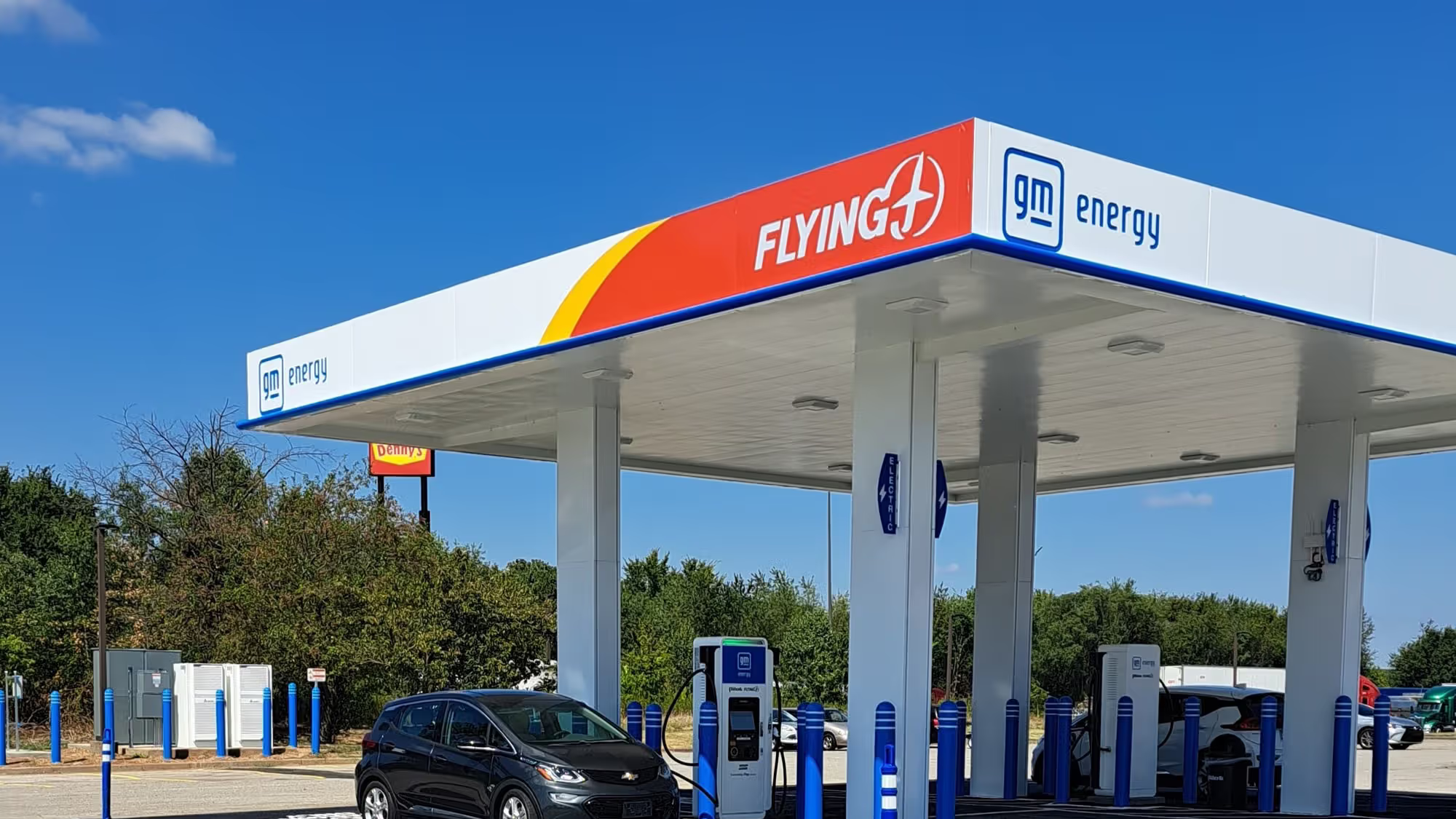
Ohio just committed $41 million to build 40 new fast-charging EV stations statewide. Before that headline recalibrates your range anxiety or accelerates a vehicle purchase, you need to understand exactly what that money buys, when it actually shows up, and whether it helps your driving situation at all.
The Bottom Line Before the Backstory
The $41 million combines $31 million in federal funds with $10 million in private developer co-investment to deliver 40 fast-charging locations. That blended cost works out to roughly $1 million per site. Construction is slated to start and finish in 2027, which means if you are shopping for an EV in late 2025 or 2026, this network does not factor into your real-world charging calculus yet. It does not exist.
This is also not Ohio’s first move. At least 27 EV charging stations were announced in an earlier funding round, so what you are looking at is a phased rollout. The 40 new sites are additive to that prior commitment, not a complete picture of Ohio’s EV infrastructure buildout. That is the responsible way to construct a network. It is also a slower one.
What $41 Million Actually Buys — and What It Doesn’t
Forty stations sounds like meaningful progress until you map it against Ohio’s 44,825 square miles and 88 counties. That averages to one new station per roughly 1,120 square miles. The distribution will not be even — and that is by design, not accident.
Federal NEVI program rules require stations to sit within one mile of an interstate exit and be spaced no more than 50 miles apart on designated Alternative Fuel Corridors. That framework functionally dictates where the first dollars land. Expect clustering on I-70, I-71, I-75, I-77, and I-90 before any secondary or rural routes see coverage. If you commute or road-trip on those corridors, Ohio’s electric vehicle fast-charging buildout along major highways is legitimately useful. If your driving runs off those spines, the math does not work in your favor yet.
One critical specification remains publicly unconfirmed: charger power output. This is not a minor detail. A 150 kW unit adds roughly 100 miles of range in about 20 minutes to most current EVs. A 350 kW unit can accomplish similar results in under 10 minutes on a vehicle capable of accepting that rate — think Hyundai IONIQ 6, Kia EV6, or a Porsche Taycan. The difference between those two outcomes is whether a charging stop is a coffee break or a real-time commitment. Until the Ohio Department of Transportation publishes contract specifications, you do not know which you are getting, and that uncertainty matters when evaluating road-trip reliability.
The $10 million in private developer co-investment also shapes what these stations look like in practice. Commercial site hosts — travel plazas, retail centers — are likely in the mix. That typically means better amenities while you wait. It also means site selection is partly driven by foot-traffic economics, not purely by where EV drivers need charging infrastructure most. Those two motivations overlap in some locations and diverge in others.
Which Ohio Drivers This Helps — and Which Get Left Behind
Be honest with yourself about which category you fall into.
- Highway commuters and long-distance drivers on Ohio’s major interstates stand to benefit most. NEVI corridor rules functionally guarantee that interstate coverage comes first, and 40 stations concentrated on a handful of corridors can meaningfully close gaps that exist in today’s network.
- Rural Ohio EV owners face the sharpest gap. If you live in Meigs, Vinton, or Morgan County, 40 new stations clustered near interstate exits does very little for your day-to-day charging situation. EV charging access in rural Ohio remains the problem this funding round does not solve.
- Apartment and condo dwellers without home charging access are the overlooked demographic in this announcement. Fast charging on I-71 does not solve the problem of having nowhere to plug in overnight in Columbus, Cleveland, or Cincinnati. Multi-family residential charging access is a separate infrastructure challenge that this program does not address.
- Fleet operators running delivery vehicles or work trucks across rural service areas have the least to gain from a highway-first buildout. If you are evaluating an EV fleet transition timeline, factor this in directly: the network Ohio is building for urban highway corridors is not the same network that supports a rural last-mile operation.
How This Changes Your EV Buying Decision Right Now
Short answer: it probably does not, yet — and you should resist letting it.
If you are shopping for an EV in late 2025 or 2026 and mentally banking on these 40 stations for road-trip confidence, recalibrate. The stations will not be operational until end of 2027 at the earliest, and infrastructure projects routinely slip past announced timelines due to procurement delays, permitting backlogs, and contractor availability. Treat 2027 as an optimistic target until ODOT confirms awarded contracts.
What does change your decision calculus right now is range. In Ohio’s current charging landscape, a vehicle with a 250-mile EPA-rated range gives you a meaningfully different risk profile than one rated at 150 miles. With gaps still present in the existing network — particularly off major interstates — that buffer matters in practice. The difference between a Chevy Equinox EV, which is rated up to 319 miles in rear-wheel-drive configuration, and a base-trim short-range option is not just about distance. It is about how much charging-network incompleteness you can absorb without anxiety.
Home charging remains the highest-reliability solution available to you today. A Level 2 home charger, typically $500 to $1,500 installed depending on your panel situation, delivers more predictable charging than any public network in a state that is mid-buildout. If you have that option, use it as your primary strategy and treat public fast charging as your backup, not the other way around.
When you do buy, prioritize vehicles with broad fast-charger compatibility. CCS (Combined Charging System) is well-represented in Ohio’s existing public network. NACS, the Tesla-derived connector now being adopted by most major automakers, is increasingly available via native ports and adapters. Make sure whatever you purchase can access both standards so you are not locked out of whichever equipment type lands at these new sites.
The Honest Trade-Offs: Federal Money Isn’t Finished Infrastructure
NEVI funding comes with real contractual requirements. Each station must have a minimum of four charging ports, and operators are required to maintain 97% uptime. That standard is the right benchmark. It is also a standard that most existing public chargers in Ohio have failed to consistently meet under real-world conditions. The requirement exists on paper; execution is what gets tested after installation, not before.
The 2027 completion timeline is contingent on procurement proceeding without delay, permits clearing on schedule, and contractors being available in a construction environment that has shown persistent supply-chain pressure. Until ODOT confirms awarded contracts, the deadline is an announced target, not a guarantee.
Ohio’s $41 million electric vehicle charging network expansion is real money and a genuine commitment. It is also a down payment on a network, not a finished product. The phased approach — 27 stations in a prior round, 40 more in this one — is how functional infrastructure actually gets built: incrementally and iteratively. That is the responsible read. It is also an honest acknowledgment that Ohio is mid-construction, not done.
What to Watch Before You Make Any Decision Based on This News
- ODOT’s published corridor map and Request for Proposals. That document will replace speculation with actual locations — specific highways, specific exits. Until it is public, the precise placement of these 40 stations remains unconfirmed. The RFP process is when site selections become public record, and that is the moment the announced commitment becomes something you can plan around.
- Charger power ratings in final contracts. 150 kW versus 350 kW is the difference between a 20-minute top-up and a 45-minute wait on a road trip. This single specification determines whether these stations are genuinely useful for time-sensitive drivers or merely checkboxes on a coverage map.
- Uptime reporting once stations go live. The 97% NEVI uptime requirement is the contractual floor. Check third-party apps like PlugShare for real-world reliability data before depending on any specific station in an unfamiliar area. Contractual requirements and operational reality diverge more often than they should in public charging infrastructure, and no commitment letter changes that until there is a track record.
- Subsequent funding rounds targeting non-corridor gaps. The highway network Ohio is building is necessary. It is not a complete answer for rural Ohio EV owners, urban multi-family residents without home charging access, or fleet operators running off the interstate grid. Watch for state or federal programs that specifically address those use cases. They are the next chapter of this story, and they have not been written yet.