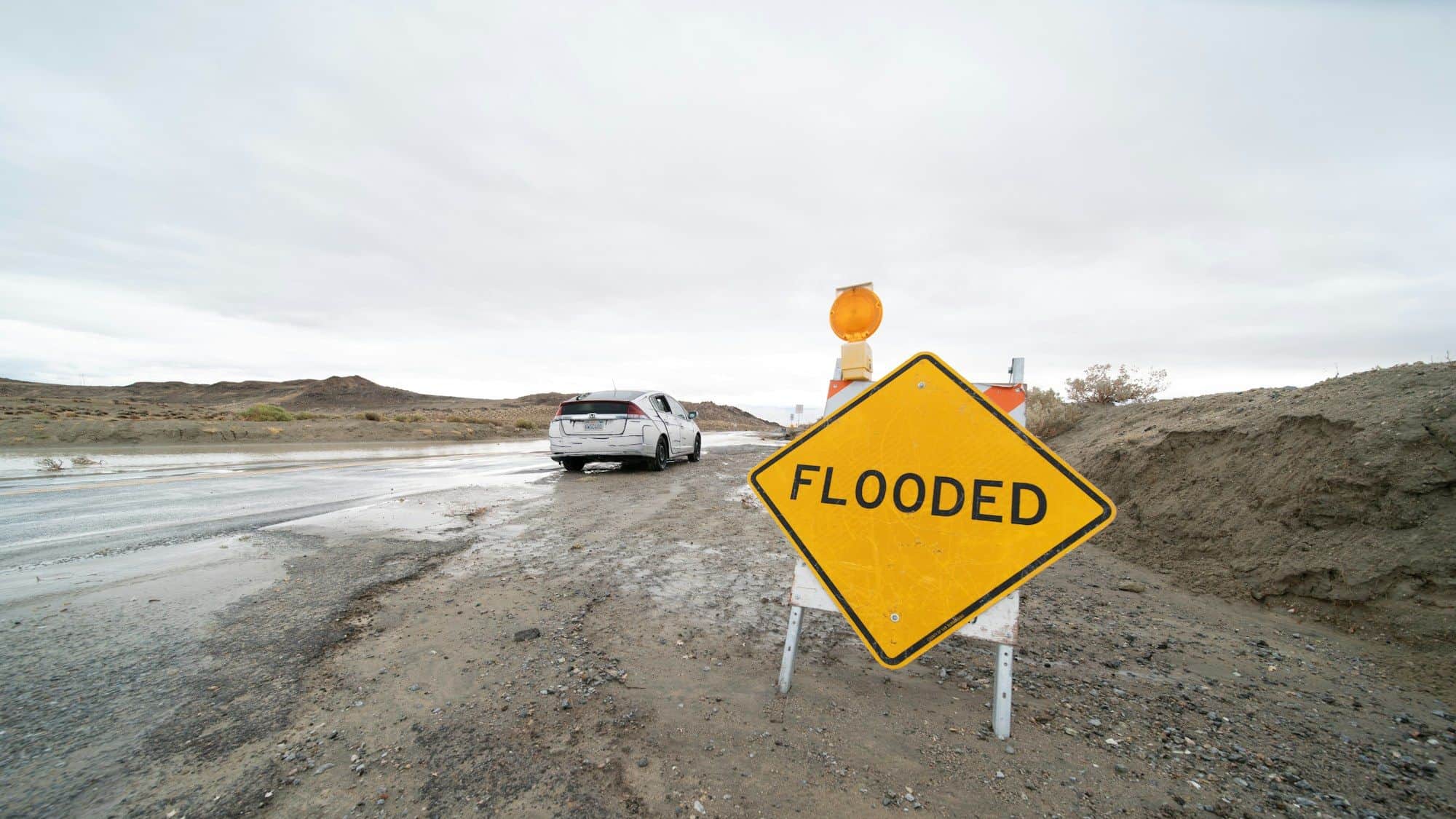
California’s atmospheric river seasons are putting more EVs on flooded streets than any previous generation of drivers has faced — and the advice circulating online, that electric vehicles are essentially waterproof, is incomplete enough to cost you a car or start a fire in your garage.
What Your EV Can Actually Handle (And Where the Line Is)
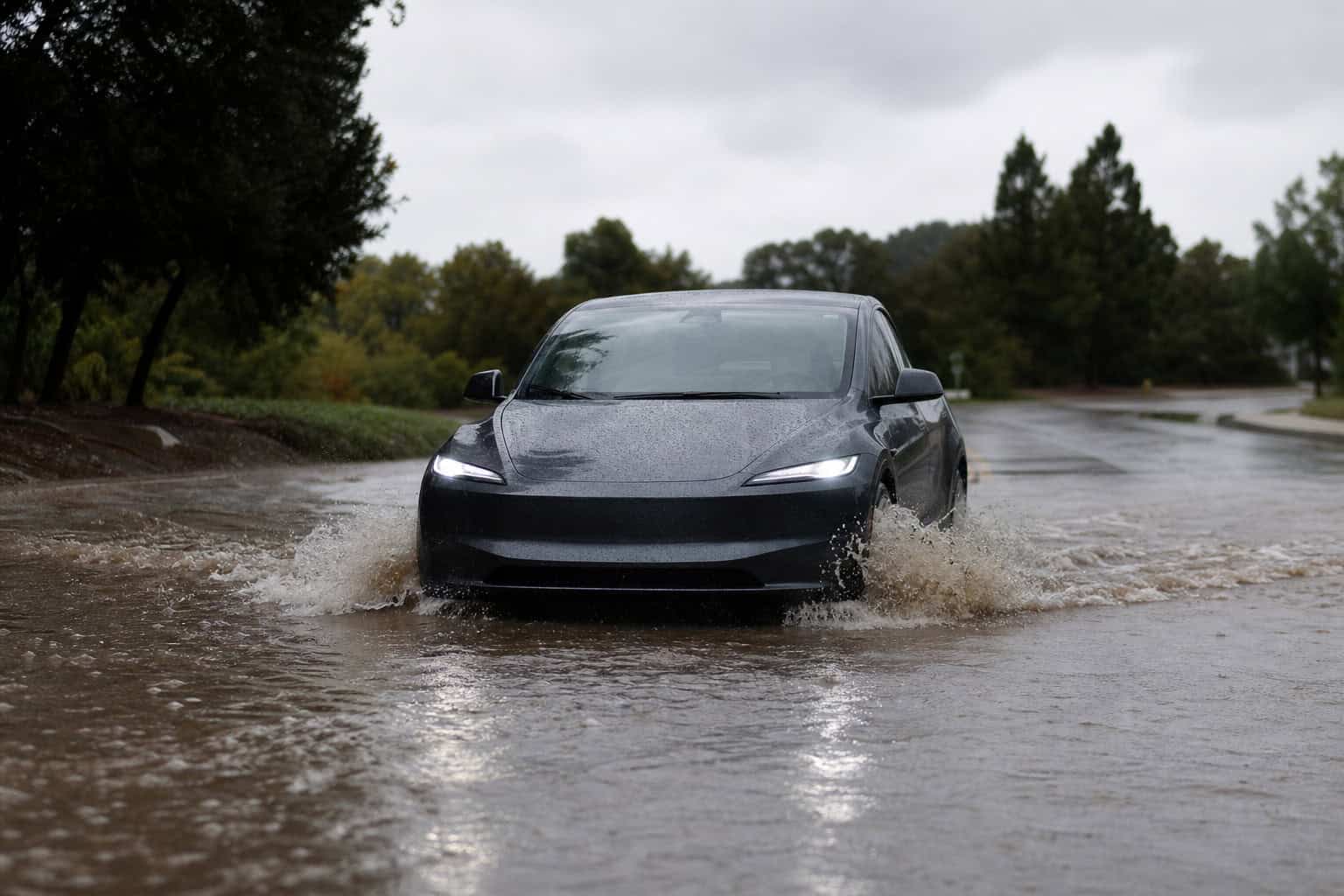
Start with what’s true: your EV is engineered to manage heavy rain, sustained wet roads, and shallow standing water without complaint. That’s not marketing — it’s a function of how these vehicles are built. High-voltage battery packs carry IP67 or IP68 enclosure ratings, meaning they survived a controlled laboratory immersion test under defined conditions of depth, duration, and water purity.
What that rating does not mean is that your car is amphibious. A lab test uses clean, still water. A flooded California street carries grit, agricultural runoff, road chemicals, and debris that degrade seals over time and in ways a one-time certification test doesn’t replicate. The engineering reality is that waterproofing and flood-worthiness are different categories entirely — and conflating them is where drivers get into trouble.
The practical threshold is lower than most people assume. Once standing water approaches your door sills — roughly 6 to 12 inches depending on your specific model’s ride height and platform design — you are no longer in puddle territory. You are in flood territory, and the physics don’t care what powers your drivetrain.
EV vs. Gas-Powered Vehicle in a Flood: Different Risks, Not a Clear Winner
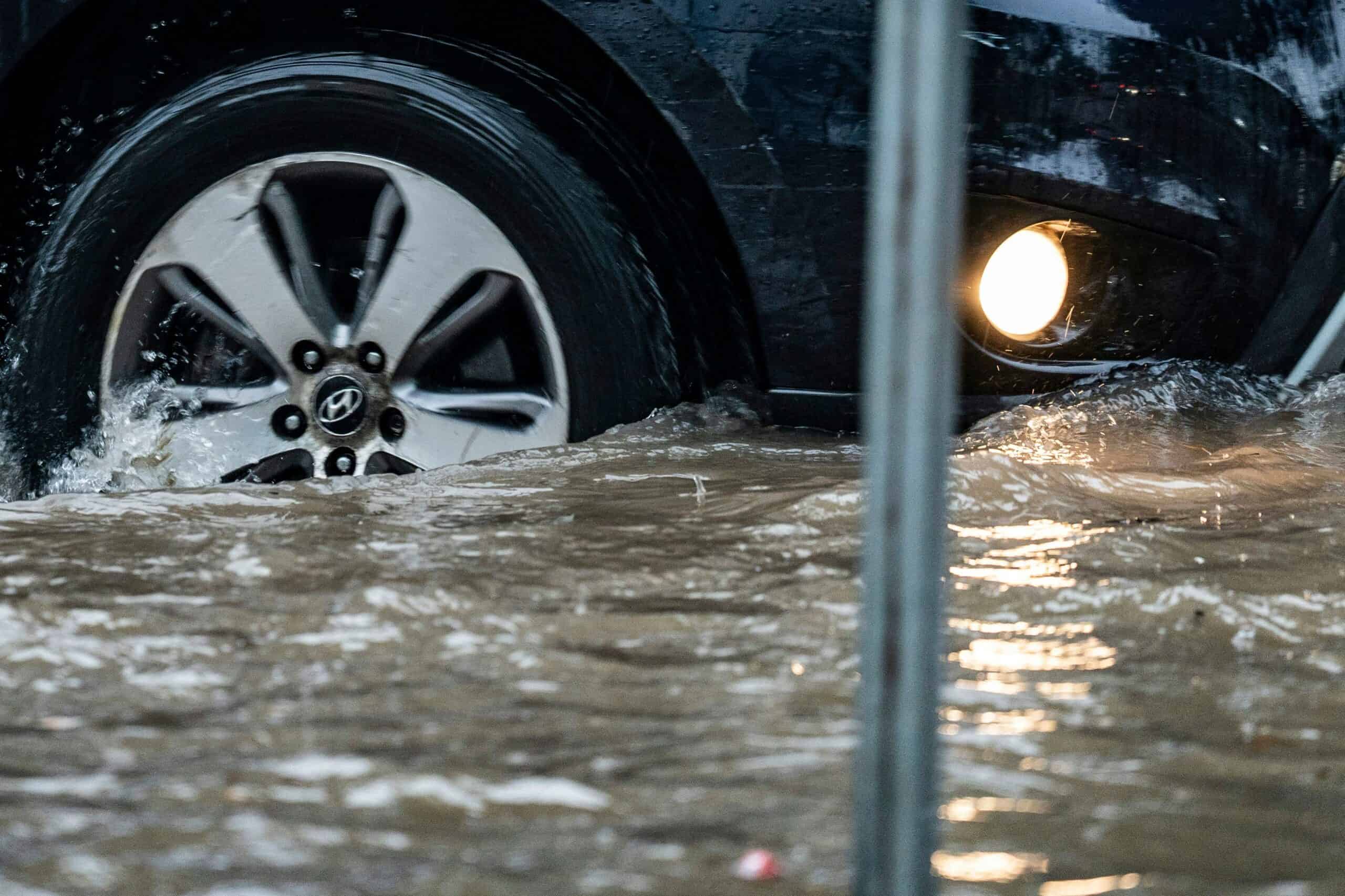
The comparison most EV owners have heard goes like this: gasoline engines can hydrolock when water enters the air intake, seizing the engine instantly, while EVs don’t have that failure mode. That’s accurate. It’s also the source of a dangerous overconfidence.
What EVs have instead of a hydrolocking risk is a large-format lithium-ion battery pack mounted low in the chassis — the skateboard platform design that gives these vehicles their handling balance and interior space. That geometry means the pack sits closer to standing water than a mid-mounted engine air intake on a truck or body-on-frame SUV. The EV’s structural advantage in a flood is narrower than it appears.
Beyond the powertrain comparison, both vehicle types share the same non-powertrain flood risks: loss of traction on submerged road surfaces, hidden hazards like washed-out pavement or open drains you can’t see, and the hydraulic force of moving water. Transportation officials are consistent on this point — six inches of moving water can knock a person off their feet, and twelve inches can carry a small vehicle. Neither your motor configuration nor your ground clearance changes those numbers.
The difference that matters most for EV owners is the timeline of damage. When flood water kills a gasoline engine, the failure is immediate and obvious. When contaminated water compromises an EV battery pack, the damage can be completely invisible — no warning light, no drivability issue — for hours or days after the event.
The Battery Short-Circuit Risk You’re Probably Not Thinking About
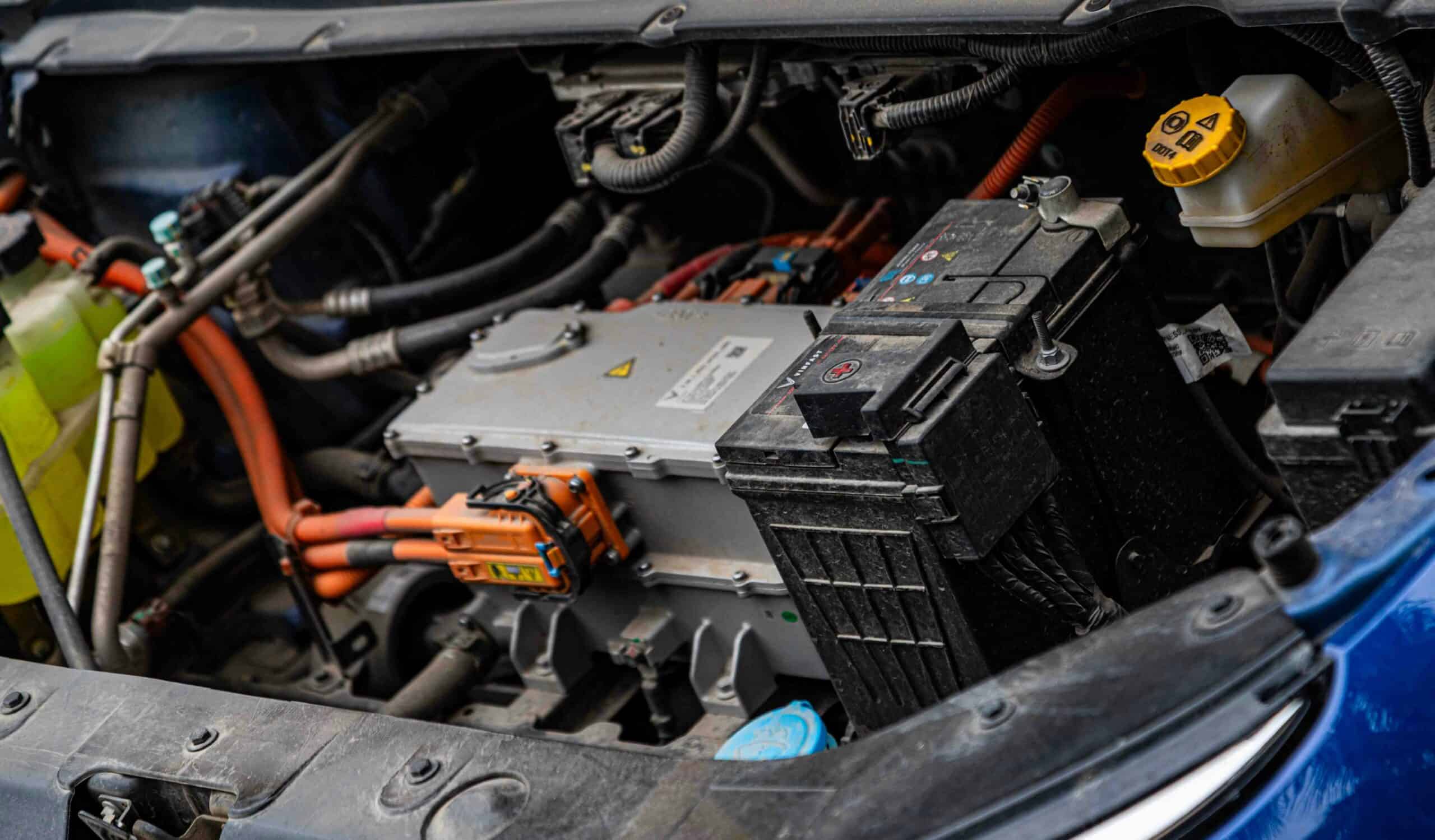
Here is the specific mechanism worth understanding before the next storm system moves through. A modern EV battery pack operates at 400V to 800V depending on the platform. When contaminated water finds a path into the enclosure — through a degraded seal, a pressure point from debris impact, or simply accumulated exposure — it can create a conductive bridge between cells or modules. At those voltages, an internal short circuit generates heat rapidly, and heat in a lithium-ion cell is the precondition for thermal runaway.
Saltwater accelerates this risk significantly. It is far more electrically conductive than fresh water, and in coastal California flooding — or in road spray mixed with the chemical residue of extended wet seasons — salt contamination is the realistic scenario, not the edge case.
The danger window extends past the drive itself. A pack that has been exposed to flood water can appear completely normal through the drive home and for some period after parking. That is what makes post-flood charging particularly dangerous: you are adding electrical load and heat to a system that may already have a compromised cell. Industry guidance on EV flood handling is explicit — do not attempt to drive or charge the vehicle after flood exposure until a certified technician has inspected it. This reflects broad transportation safety guidance, not caution specific to any single manufacturer.
What to Do If You’ve Already Driven Through Standing Water
If you’ve already made it through and you’re reading this after the fact, here is the practical sequence:
- Do not charge the vehicle. Park it in an open area away from structures, other vehicles, and anything combustible. Outside and away from your garage is the right choice until an inspection is complete.
- Do not assume it’s fine because it drove fine. The latent fault scenario is precisely what post-flood inspection requirements are designed to catch — it is not ruled out by how the car behaves on the road home.
- Document before anything dries. Photograph water lines on the exterior, the undercarriage if you can safely access it, and every warning light or fault code on the instrument cluster. This documentation matters for both insurance claims and warranty conversations.
- Contact your insurer promptly. California comprehensive auto policies typically cover flood damage, but the claim process requires documentation of the event alongside the damage — not just a repair invoice submitted weeks later.
- Get a certified EV technician inspection before the car returns to service. This is the documented manufacturer and industry position, not optional caution.
Safe Water Depth: A Practical Reference for California Drivers
EV-specific depth limits are not uniformly published by manufacturers, and they vary by model, platform height, seal age, and condition. Any specific depth figure you encounter online — including from enthusiast forums and social media — is an approximation, not a certified clearance rating. Treat any such number accordingly.
The working guide that holds regardless of vehicle type: if you cannot clearly see the road surface through the water, or if the water is moving at any meaningful speed, the risk calculation does not favor continuing. Practical guidance for EV drivers in flood conditions consistently lands on the same threshold — shallow, still, and visible road surface, or don’t proceed.
California’s Turn Around, Don’t Drown public safety campaigns use six inches of moving water as the threshold for pedestrian danger and twelve inches for vehicle displacement. These aren’t conservative estimates for timid drivers — they’re physics. A sedan-height EV with 5 to 6 inches of ground clearance has very little margin between “navigable puddle” and “the current has the car.”
A conservative working rule that applies to every vehicle on the road: treat anything deeper than 4 to 6 inches of standing water as a turn-around situation. If it’s moving water at that depth, the decision should already be made before you reach the edge of it. When in doubt, California’s public emergency guidance is unambiguous — turn around, don’t drown.
Specific Hazards That Make California Flooding Harder to Read
Flooding in California presents some conditions that are worth naming separately, because they affect risk in ways that aren’t obvious from water depth alone.
Agricultural and industrial runoff. Central Valley flooding in particular mixes road water with agricultural chemicals, fertilizer residue, and soil particulates. This chemical load is more corrosive to battery pack seals over time than clean rainwater, and it’s the realistic composition of floodwater across much of inland California — not an edge case.
Storm drain failure. Urban flooding during heavy atmospheric river events frequently involves overwhelmed storm drain infrastructure. What appears to be 4 inches of standing water can conceal an open drain or a sudden drop where the road surface has washed out underneath. This hazard applies to all vehicles but is worth naming explicitly because EV drivers who feel confident in their vehicle’s water resistance may underweight it.
Post-storm road debris. Rocks, branches, and displaced infrastructure debris in flood channels can impact the undercarriage directly. The battery pack on a skateboard-platform EV runs the full length of the vehicle floor. A debris impact that causes a seal breach may not register as a drivability issue at all — which circles back to the case for post-flood professional inspection even when nothing felt wrong during the drive.
The Bottom Line for California EV Owners
Your EV handles California’s rainy seasons — including serious downpours and the kind of street flooding a clogged drain produces — without drama. That capability is real and well-documented. What it is not is a license to treat flooded roads as navigable simply because your car won’t hydrolock.
The honest summary of the EV flood risk picture looks like this:
- EVs avoid one specific gasoline-engine failure mode (hydrolocking) but carry a different and potentially more dangerous risk: latent battery pack damage that isn’t visible during or immediately after the event.
- Saltwater contamination — the realistic scenario in coastal and chemically saturated California flooding — is more dangerous to a lithium-ion pack than fresh water, and significantly more so.
- Post-flood charging is as dangerous as continued driving in a compromised vehicle, because thermal events can initiate hours or days after exposure.
- The manufacturer and industry guidance position is consistent and unambiguous: no driving, no charging, open-air parking, certified inspection before the vehicle returns to service.
Knowing where your car’s actual limits are before the next atmospheric river system parks itself over the Sierra Nevada and drains into the Central Valley isn’t overcaution — it’s the difference between a manageable insurance claim and a vehicle fire. The flood season will come back. The question is whether you’re making decisions based on what EVs can actually do, or on a half-understood version of what waterproofing means.