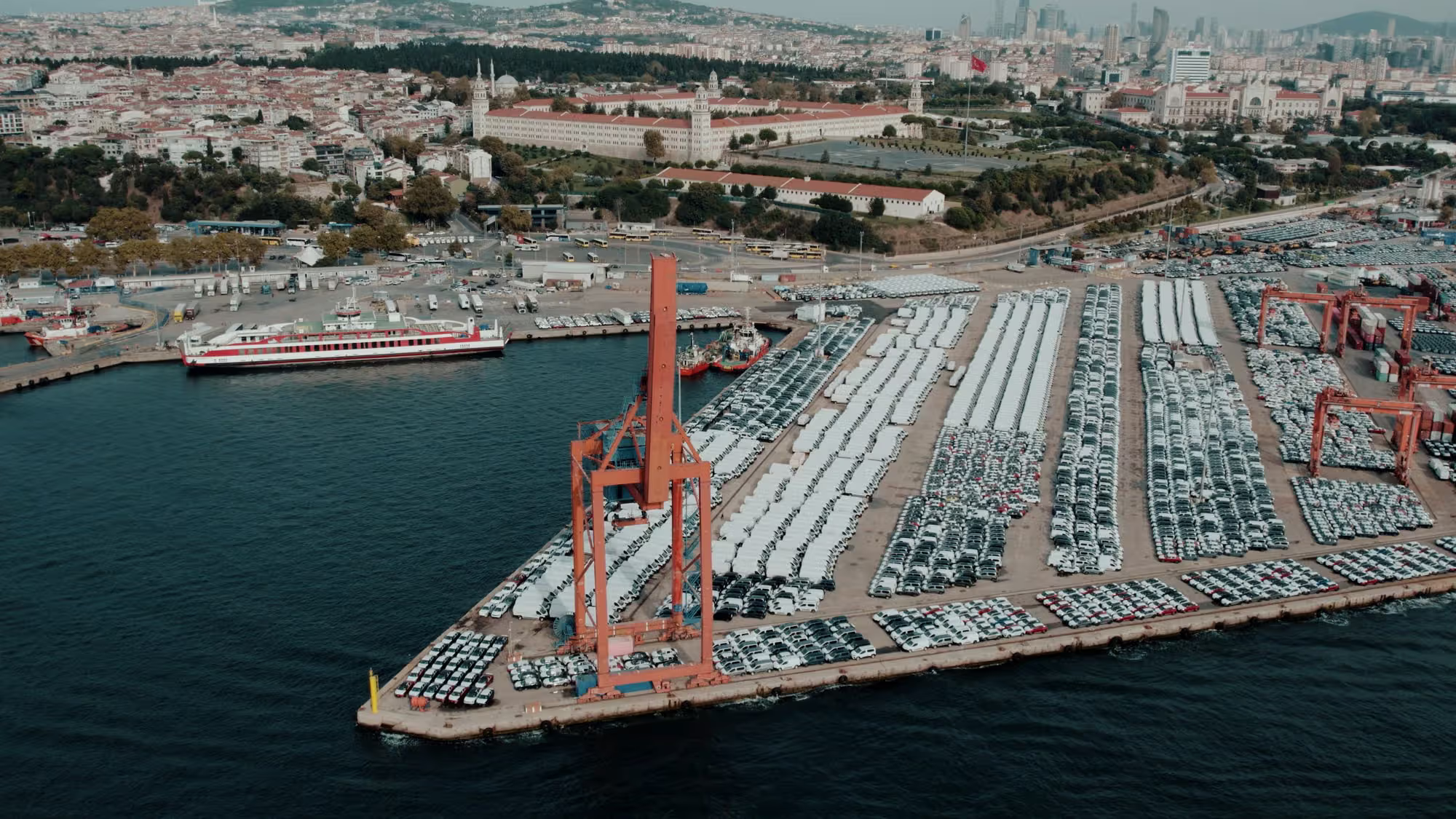
If you are shopping for a Toyota Corolla Hybrid or a Ford Kuga Full Hybrid in Europe right now, your purchase decision sits downstream of a geopolitical trade argument you probably were not tracking — and the numbers suggest you should start paying attention.
The Crack in Türkiye’s Export Engine
Türkiye accounted for 18 percent of the EU’s imports of non-plug-in hybrid cars from outside the bloc by value, according to 2025 Eurostat data. Toyota’s facility in Adapazarı and Ford’s Kocaeli plant represent the bulk of that throughput, both running hybrid-specific tooling built on the assumption that European demand for self-charging HEVs stays robust through the late 2020s.
Read that alongside this: the EU and China have agreed to cap Chinese hybrid and plug-in hybrid vehicle imports at 350,000 units per year, with the stated aim of more than halving current Chinese inflows over four years. The headline target is China. The collateral exposure lands on Türkiye — because Turkish production lines were built precisely to fill the EU hybrid demand that Chinese imports were also competing to supply.
This piece maps that exposure honestly: who is at risk, what the EU’s measures actually say and do not say, and what the realistic outcomes are for the vehicles and prices you care about. As covered by Hurriyet Daily News reporting on the EU hybrid import curbs, the risk to Türkiye is structural, not speculative.
What the EU Is Actually Doing — and What It Is Not
The policy details determine whether you are looking at a live threat or a theoretical one, so precision matters here. The EU-China agreement targets Chinese-origin hybrid electric vehicles (HEVs) and plug-in hybrid vehicles (PHEVs), with a 350,000-unit annual ceiling on combined inflows. The mechanism is a managed trade arrangement, not a blanket tariff on all hybrid imports — a distinction that matters enormously for Turkish-assembled vehicles.
Türkiye is not China. A Corolla Hybrid assembled in Adapazarı under Toyota’s production system carries Turkish rules-of-origin status, which means it is not directly subject to the Chinese-origin cap. Under the EU-Türkiye customs union framework, Turkish-assembled vehicles from European OEMs have historically moved into EU markets without the same friction applied to third-country imports.
So what is the actual risk? Three indirect mechanisms:
- Demand-signal suppression: Quota ceilings on Chinese hybrids reset what European buyers and fleet managers expect to pay for an HEV. If Chinese competitors are volume-capped and therefore scarcer, that could benefit Turkish supply — but if the cap is part of a broader EU pivot toward full EVs, it signals reduced long-term appetite for HEVs generally, and Turkish export planners read that signal.
- Substitution risk: EU policy pressure on Chinese EVs has already accelerated European OEM investment in domestic assembly. If manufacturers repatriate HEV production closer to EU borders, Turkish plants lose volume regardless of tariff status.
- Customs classification complexity: Broader protective sentiment in Brussels can generate compliance friction — stricter rules-of-origin audits, local-content thresholds — that compresses margins on Turkish exports even without a direct tariff.
One critical distinction before you act on any of this: the 350,000-unit cap framework has been agreed in principle between the EU and China. Full implementing regulations and enforcement timelines must be verified against the Official Journal of the European Union before treating them as operative law. Agreed in principle and enforceable are not the same thing.
Why Turkish Export Concentration Is a Structural Vulnerability
Non-plug-in self-charging HEVs are the volume sweet spot in Germany, France, and Italy — markets where charging infrastructure anxiety keeps full EV share below 20 percent in many segments. Turkish export exposure sits precisely where EU demand is highest and where any supply disruption has the most visible retail effect.
The strategic vulnerability Türkiye built into this model is channel concentration. When a dominant share of a single import category flows into one trading bloc, any disruption to that bloc’s appetite is an existential shock, not a rounding error. Toyota and Ford both invested in hybrid-specific tooling in Turkey on the reasonable assumption that EU HEV demand would remain robust through the late 2020s. That assumption has not been proven wrong yet — but the policy environment is making it harder to defend in a boardroom.
The Turkish automotive industry association (OSD) flagged EU regulatory uncertainty as a material risk factor in its 2025 annual communications. That is documented industry concern from the people running the production lines, not speculation from outside analysts.
How Türkiye Got Here: A Strategy Built on Hybrid Volume
Through the 2010s and into the early 2020s, Türkiye positioned itself as the low-cost, high-quality HEV assembly hub for European OEMs. The logic was sound: customs union access to the EU, competitive labour costs, government incentives for automotive foreign direct investment, and a regulatory environment in Brussels that treated HEVs as the compliant middle path between internal combustion and full electric.
The strategy worked because it aligned with EU emissions regulation timelines. HEVs delivered measurable CO₂ compliance improvements without requiring the charging infrastructure buildout that made full EVs a harder retail proposition in southern and eastern Europe. Turkish plants could supply them at a price point that kept European retail competitive.
What was not examined carefully enough was the assumption that EU policy appetite for HEVs would remain stable. It has not. The same regulatory machinery that created the HEV compliance window is now accelerating toward 2035 ICE phase-out timelines and EV infrastructure investment, gradually narrowing the policy justification for HEVs as a long-term category.
Ankara’s response has been to play both sides of the trade board. Turkey’s trade ministry imposed strict conditions on the import of plug-in hybrid vehicles from some countries, including China, protecting domestic assembly from Chinese competition in its home market while maintaining its export posture toward the EU. It is a defensible short-term hedge. It does not, however, address the EU’s own demand-side policy shifts — and that is the harder problem.
What This Means for European Hybrid Buyers Right Now
If you are mid-purchase on a Turkish-assembled HEV, here is what the macro picture actually means at the transaction level.
The practical near-term risk is supply tightening: longer order books, reduced dealer stock, and upward price pressure on models like the Corolla Hybrid or Ford Kuga Full Hybrid that are already supply-constrained in several EU markets. A secondary risk is model rationalisation — if manufacturers decide Turkish export volumes no longer justify a dedicated HEV production line, variant choice narrows before you have locked your specification.
What is not affected is the vehicle itself. A Corolla Hybrid’s real-world fuel economy does not change because of a Brussels policy document. The engineering that makes Turkish-assembled HEVs competitive does not degrade with tariff uncertainty. What can change is the transaction price and the lead time.
No confirmed price increases attributable specifically to EU hybrid import measures have been published for Turkish-assembled vehicles at the time of writing. Treat any dealer claim of imminent tariff surcharges with scepticism until an implementing regulation is in force and your specific model’s supply chain is confirmed affected. What you should do is get your current quote in writing and confirm your dealer’s actual stock position — macro uncertainty shortens the window in which today’s pricing stays valid, even when it has not yet moved the sticker.
Three Indicators Worth Watching
If you follow this market, these are the concrete signals that matter:
- The Official Journal of the EU: The gap between political agreement on the 350,000-unit cap and an enforceable implementing regulation is where timing risk lives. Manufacturers planning 2027 model-year production volumes need that regulation in force, not just agreed in principle. The EU-China hybrid import cap agreement is documented; the implementing detail is not yet fully public.
- OSD quarterly export data: If Turkish OEM shipment volumes to the EU fall materially year-on-year in the first half of 2027, the structural risk is materialising, not merely theoretical. OSD publishes monthly and quarterly figures; they are the most direct read on whether Turkish HEV export momentum is holding.
- OEM production announcements from Adapazarı and Kocaeli: Toyota and Ford have not publicly announced production cuts at Turkish facilities in response to EU hybrid import measures. If that changes, it is the clearest signal that manufacturer confidence in the Turkish HEV export model has cracked. Until it does, treat line-shutdown reports without attributed sourcing as unverified.
The larger question — whether Türkiye can pivot its export mix toward PHEVs or full EVs before EU policy appetite for self-charging HEVs is structurally capped — will play out over the next two to three years. That is not a crisis resolved by next quarter’s earnings call, and it is not a problem that disappears if the implementing regulations are delayed. The EU’s direction of travel on hybrid imports is established; the precise timeline and mechanism are what remain uncertain. For you as a buyer, that means the vehicles you want are still available and the value proposition is still real — but the window in which you are buying into stable supply and pricing is narrower than it looked two years ago.