
Most buyers shopping the 1969 Ford Mustang lineup walk in convinced they want a Boss 429 — or they settle for a base coupe because the numbers feel safer. Both are mistakes, and this guide exists to stop you from making either one.
Why 1969 Is a Pivotal Year for the Mustang

Ford launched the first-generation Mustang in March 1964, creating an entirely new vehicle class that Detroit spent the next decade scrambling to copy. By 1969, that platform had grown wider, longer, and heavier in direct response to competitive pressure from the Camaro Z/28 and the incoming Dodge Challenger. The result was the most performance-focused Mustang the first generation ever produced — and also the most confusing one to buy today.
Ford offered more distinct performance variants in 1969 than in any other single model year of the first generation, which ran through 1973. That variety is the source of both the car’s appeal and its complexity. Hagerty’s valuation data for the 1969 Mustang shows a wide spread across condition grades and models — a range so broad that any single average figure is nearly meaningless without knowing which specific model and condition you’re evaluating. The gap between a driver-quality base SportsRoof and a numbers-matching Boss 429 is not a rounding error. It’s six figures.
The Model Breakdown: What You’re Actually Choosing Between

The 1969 lineup is not two or three models — it’s a full matrix of body styles, trim levels, and engine combinations that can overwhelm even experienced collectors. Here is what actually matters for a buying decision:
- Base hardtop and SportsRoof (fastback): Same shell, different roofline. The SportsRoof’s sloping fastback profile is the visual most buyers want, and it commands a price premium to match. If you’re considering a base car, the SportsRoof is the only body style worth prioritizing for resale value and long-term aesthetics.
- Mach 1: Ford’s volume performance car for 1969 — a performance-trimmed SportsRoof with a standard 351 Windsor small-block and options escalating through the 390 FE and 428 Cobra Jet. It looked the part, sold in meaningful numbers, and has the parts support to prove it. Roughly 72,458 Mach 1s were built for the model year, making it the most attainable of the performance variants.
- Boss 302: Purpose-built for SCCA Trans-Am racing homologation. High-revving, relatively lightweight, and genuinely track-capable in a way the heavier big-block cars were not. Ford built approximately 1,628 Boss 302s for 1969. This is a driver’s car that happens to wear muscle car clothing.
- Boss 429: A NASCAR-derived big-block squeezed into a heavily modified front end. Ford relocated the shock towers outward to accommodate the wide engine — a telling detail about how much engineering this conversion required. Approximately 859 Boss 429s were produced for the 1969 model year, making it the rarest of the three performance variants. Low volume, high prestige, and priced accordingly — then and now.
Specs That Actually Matter: A Side-by-Side Look

Advertised horsepower figures across the 1969 lineup were routinely conservative — a common industry practice of the era, driven in part by insurance market pressure. Keep that context in mind when comparing these numbers:
| Model | Engine | Advertised HP | Curb Weight (approx.) | Est. 0-60 mph | Hagerty Value Range (approx.) |
|---|---|---|---|---|---|
| Mach 1 | 351 Windsor | 250 hp | 3,175 lbs | 7.0-7.5 sec | $25,000-$65,000 |
| Mach 1 | 428 Cobra Jet | 335 hp | 3,607 lbs | 5.5-6.0 sec | $45,000-$95,000 |
| Boss 302 | 302 small-block | 290 hp | ~3,200 lbs | 6.5-7.0 sec | $55,000-$120,000 |
| Boss 429 | 429 big-block | 375 hp | ~3,500 lbs | 5.5-6.0 sec | $90,000-$160,000+ |
The weight distribution story on the 428 Cobra Jet Mach 1 deserves close attention. Car and Driver’s period test of the 1969 Mach 1 with the 428 Cobra Jet documented total vehicle weight at 3,607 lbs, with 2,140 lbs of that loading the front axle with a full gas tank. That front-heavy bias is the direct cause of the understeer reputation the big-block Mach 1 carries in corners — it is not mythology, it is physics. The Boss 302, by contrast, was the lightest and most balanced of the performance variants, which is precisely why Ford chose it as the Trans-Am weapon rather than any big-block derivative.
Real-World Ownership: Reliability, Running Costs, and Rust

Enthusiasm fades at the pump. The 428 Cobra Jet is a robust and durable engine by the standards of its era, but real-world fuel economy lands in the 10-13 mpg range under normal driving conditions. Premium fuel is a practical necessity, not an option. Budget accordingly, particularly if you plan to drive the car regularly rather than trailer it to shows.
The Boss 429 ownership experience carries a specific penalty that is easy to underestimate: parts availability. Because Ford modified the front-end geometry significantly to fit the wide engine, many suspension and steering components are unique to this application. That means fewer off-the-shelf solutions, longer sourcing lead times, and higher labor costs when something needs attention. This is manageable — but it compounds over a decade of ownership in ways that first-time buyers consistently fail to anticipate.
The 351 Windsor-powered Mach 1 sidesteps most of these concerns. The 351W has one of the deepest aftermarket support ecosystems of any Ford small-block, the weight distribution is more forgiving on public roads, and the car tolerates regular use far better than the heavier, more specialized big-block variants. If you want a 1969 Mustang you can drive to a weekend event and occasionally use as intended, this is the honest recommendation.
Regardless of which model you are evaluating, rust is the dominant structural threat on every 1969 Mustang without exception. Before you look at anything else — before you open the hood, before you listen to the engine — get the car on a lift and inspect the floor pans, torque boxes, and frame rails. Structural rust in those areas produces repair costs that routinely exceed the car’s purchase price. Walk away from any seller who will not allow a lift inspection. That refusal is itself diagnostic information.
What You’ll Pay — and What to Walk Away From

Hagerty’s valuation data reflects a broad population of cars across widely varying condition grades. In practice, a driver-quality base SportsRoof sits comfortably under $30,000. A numbers-matching Boss 429 in excellent documented condition can push well past $150,000. The Mach 1 occupies the middle of that range — desirable enough to hold value over time, but produced in sufficient numbers that patient buyers can afford to walk away from a bad deal. That combination of demand and availability is genuinely rare in the collector car market, and it is the primary reason the Mach 1 represents the strongest value-to-performance ratio in the entire 1969 lineup.
One buying risk towers above all others in the 1969 Mustang market: cloned cars. A base coupe or SportsRoof converted to resemble a Boss 302 or Boss 429 is not a cosmetic issue — it is fraud, and these cars are widespread. Sellers are not always the original builders, which means misrepresentation can be inadvertent as well as deliberate. Full VIN decoding and a Marti Report — a factory production record generated from Ford’s original build data, specific to your car’s VIN — are non-negotiable steps before any money changes hands on a car represented as a Boss model. If a seller resists either request, treat that resistance as your answer and walk away.
The Verdict: Which 1969 Mustang Should You Actually Buy?
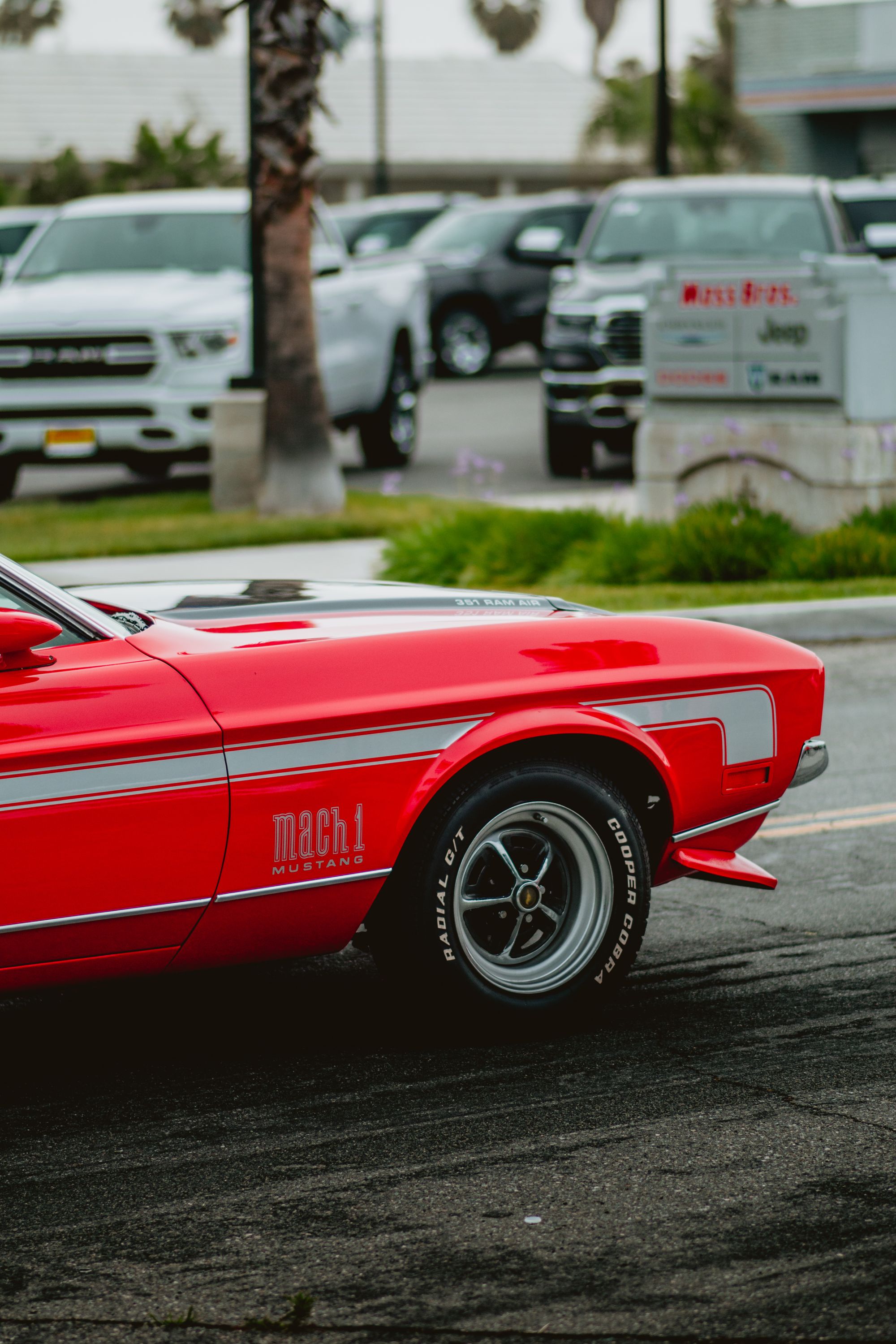
If you want the quintessential muscle-era experience with genuine real-world usability and the strongest parts support available, the Mach 1 with the 351 Windsor is the right car for most buyers. That is not a compromise position — it is the model that does the most things well across the widest range of ownership scenarios.
If driving dynamics matter to you and you intend to put real miles on the car — including occasional track use — the Boss 302 deserves serious consideration. It is increasingly recognized in collector circles as undervalued relative to the Boss 429, and its low production numbers combined with its documented racing heritage give it a strong long-term case. Buy it because it is the better driver’s car, not because you are speculating on appreciation.
The Boss 429 is a collector’s car first and a driver’s car second. That is a category distinction, not a criticism. If you are buying one, go in with full awareness of the six-figure cost of entry, the parts sourcing complexity, and the reality that maintenance demands will likely exceed seat time. There is nothing wrong with that trade-off — provided you make it deliberately and with accurate expectations.
Whatever model you choose, build 15-20% above the purchase price into your first-year budget for a thorough pre-purchase inspection, deferred maintenance, and ownership surprises. That is not pessimism — it is the arithmetic of buying a 55-year-old performance car. The buyers who skip that step are reliably the ones selling at a loss within two years.