
Volkswagen’s chief financial officer is on record warning that 2026 revenue will shrink. If you are deciding whether to buy a VW now, hold out for a next-generation model, or walk away entirely, that internal warning deserves more than a passing glance.
When a Carmaker’s CFO Waves a Red Flag, Buyers Should Pay Attention

VW’s Q2 2025 operating profit came in at approximately €3.5 billion — a decline of nearly 10% year-over-year. That miss is not noise. It is the kind of result that forces structural decisions: which models survive, which trim levels get axed, and how aggressively engineers get funded for the next platform.
The bigger signal came with VW’s revised 2026 revenue guidance. The company cut its forecast from a range of flat to 3% growth all the way down to a range of negative 3% to flat — a full six-percentage-point downward swing. This is not analyst speculation; it is the company’s own financial leadership putting a contraction on the record. For buyers weighing a purchase decision today versus waiting for a 2026 model, that changes the math considerably.
The Numbers Behind the Slide: A Closer Look

The profit decline was driven by weak production output and softening sales volume, not a one-quarter accounting quirk. Two named culprits appear repeatedly in VW’s own guidance: China market weakness and mounting tariff risks. Both are structural, not seasonal. Neither is likely to resolve quickly.
For a volume automaker with genuine premium ambitions — Audi, Porsche, and Bentley all live under the VW Group umbrella — a compressed operating margin leaves almost no cushion when costs rise or demand softens simultaneously. Running lean is manageable in isolation; running lean while China volumes slide and tariff costs climb is a different problem entirely.
Why China and Tariffs Are the Two Fault Lines You Need to Understand
China has historically been VW’s single largest market, responsible for millions of unit sales annually at margins that subsidized global research and development. That era is under serious pressure. Domestic Chinese EV brands — BYD being the most prominent — have taken significant share with competitive pricing and locally tuned features that VW has struggled to match at speed. When China volume weakens, VW loses the scale that makes its global cost structure work.
Tariff exposure compounds the problem. Higher import costs in key markets compress the margins on vehicles VW needs to move in volume. VW’s revised 2026 outlook specifically cites both China weakness and tariff risks as the key drivers of the downward revision. If you are a buyer, the downstream consequences are practical: a weakening China operation threatens the research and electrification budget that funds next-generation models. Fewer resources into development means fewer global variants, trimmed equipment levels, and delayed launches — all of which affect what you can actually choose from at a dealership.
What a Revenue Decline Forecast Actually Does to a Car Lineup

When revenue guidance turns negative, automakers respond with model rationalization. That is industry language for cutting slow-sellers and consolidating trim levels. Reuters reporting on VW’s revised forecast makes clear that the company is taking a hard look at which products earn their place in the lineup. Niche models with low volume are the most exposed.
Short-term, you may actually benefit from this pressure. Automakers under margin stress tend to increase incentive spending to move inventory and shore up quarterly delivery numbers. That can mean better financing rates, more dealer flexibility on price, and factory-to-dealer cash being passed along at the point of sale. Take advantage of it, but recognize what it signals: demand is softer than VW would like.
Longer term, a constrained budget slows EV development. VW’s ID. lineup is already playing catch-up in software refinement against Tesla and Hyundai. If the revenue contraction holds into 2026 and 2027, the pace of ID. platform improvements slows further, and the competitive gap becomes harder to close.
Should You Buy a Volkswagen Right Now?
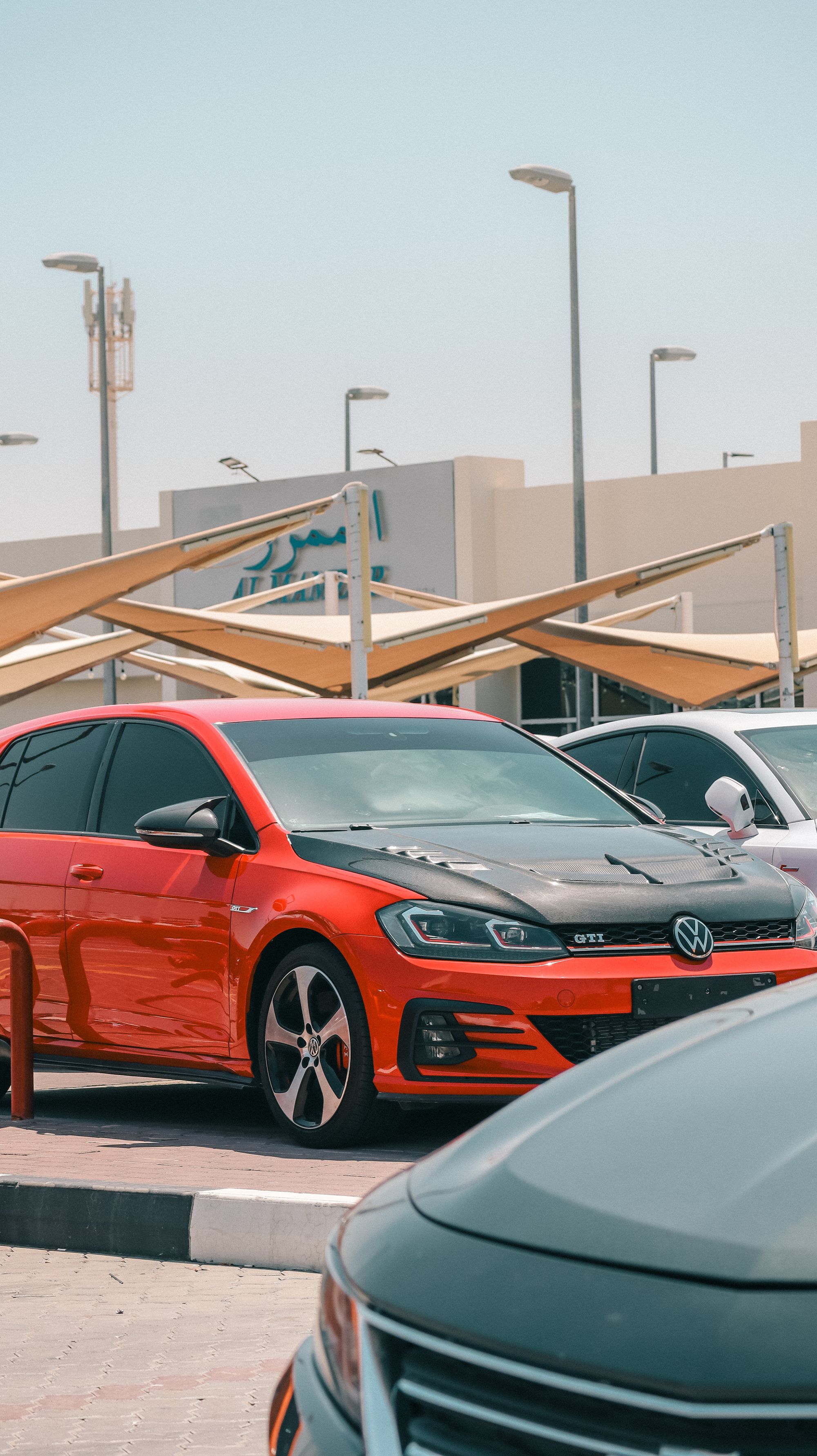
If you are in the market today, current-generation models are fully developed products. What happens in a 2026 boardroom does not change the engineering already baked into a Golf GTI or Tiguan sitting on a dealer lot. Those cars exist, their parts networks exist, and VW has every strategic reason to keep supporting high-volume segments.
What the financial outlook does affect is your negotiating position and your risk profile on less-established models. Here is a practical breakdown:
- Negotiate harder than normal. A manufacturer under margin pressure and chasing volume is more willing to deal. Do not accept the first number.
- Factor in reliability context. A cost-cutting environment rarely improves build quality. Include long-term ownership costs in your calculation, not just the sticker price.
- Do not wait on an unconfirmed 2026 model. With the revenue forecast in flux and product plans under review, betting on a specific variant that has not been officially confirmed is an unnecessary gamble.
- Watch the next quarterly results. If VW’s operating margin does not show meaningful recovery, the 2026 guidance revision will likely worsen before it stabilizes.
Which VW Models Carry More Risk Right Now

Not every model in the VW lineup carries equal exposure to the company’s financial turbulence. The Golf GTI and Tiguan sit in high-volume segments VW cannot afford to walk away from. Both carry genuine competitive strength in their respective classes, and the parts and service infrastructure behind them is well established. These are the safer long-term bets from a support and resale perspective.
The ID.4 is a different kind of calculation. VW’s over-the-air software updates have improved the ownership experience incrementally, but the ID. lineup’s software reputation still trails leading EV competitors in real-world reviews. If you are drawn to the ID.4, go in clear-eyed about where the technology stands today, not where VW says it is heading. Verify whether federal or state EV incentives apply to your situation, as those can meaningfully offset the purchase price.
Low-volume niche models are the most directly exposed to portfolio rationalization. If you have your eye on a VW model that occupies a narrow segment with modest sales figures, the time to buy is before the company has had another two quarters to reconsider its lineup economics — not after.
The Bottom Line: Act on Facts, Not Brand Loyalty
VW’s financial turbulence is real and documented. A profit decline approaching 10% and a six-point downward swing in 2026 revenue guidance are not minor corrections. They reflect genuine structural pressure from intensifying China competition and tariff headwinds that VW’s own leadership has now put on the record. None of that makes every Volkswagen a bad purchase. It makes an uninformed Volkswagen purchase riskier.
Prioritize models with confirmed production runs, strong parts ecosystems, and segments VW has clear strategic reasons to defend. Negotiate more aggressively than you would with a manufacturer reporting record margins. And keep one eye on the next quarterly report: if VW’s operating margin does not show meaningful recovery, the 2026 forecast revision is more likely to worsen than to reverse on its own.
Buy the car, not the brand story. Right now, the brand story has some real complications attached to it.