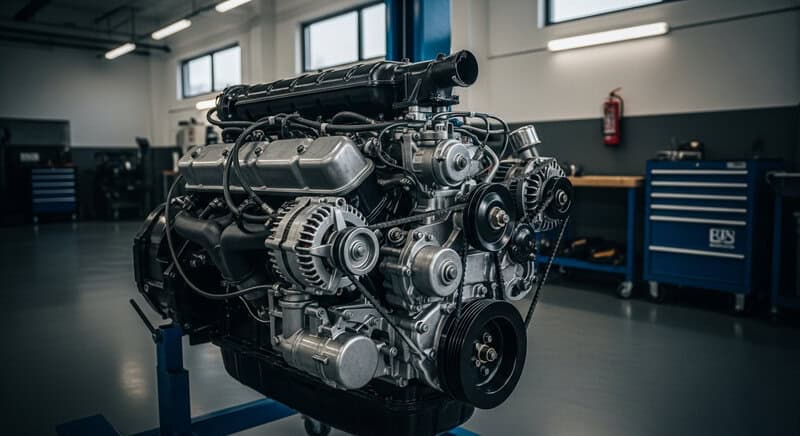
Section 4: Honda K20 Engine

The Honda K20 engine, introduced in 2001, is a 2.0-liter inline-four engine that has become a cornerstone of Honda’s performance lineup. It has powered various models, including the Civic Si, RSX, and Accord, earning a reputation for its high-revving nature, reliability, and tuning potential. Mechanics appreciate the K20 for its straightforward design and ease of maintenance, which contrasts with the complexity of newer, turbocharged powertrains.
One of the standout features of the K20 is its aluminum block and DOHC (dual overhead cam) configuration, which contributes to a lightweight yet robust engine design. The engine utilizes a 4-valve per cylinder setup, totaling 16 valves, allowing for efficient airflow and combustion. This design enables the K20 to achieve high RPMs, delivering a thrilling driving experience. (slashgear.com)
Over the years, the K20 engine has undergone several revisions, each improving upon the previous generation. The K20A variant, found in the Civic Type R, is known for its high-revving capabilities and performance-oriented tuning. The K20Z variant, used in the Civic Si, offers a balance between performance and daily drivability. These engines have been praised for their durability, with many owners reporting high mileage without significant issues. (slashgear.com)
Mechanics appreciate the K20 engine for its reliability and ease of maintenance. Regular oil changes are essential to maintain engine health, with intervals typically recommended every 5,000 to 7,500 miles, depending on driving conditions and oil type. The engine’s design allows for straightforward access to components, facilitating tasks such as spark plug replacement and timing chain inspections. This accessibility reduces labor time and costs associated with maintenance and repairs. (slashgear.com)
Another common issue is timing chain wear. The K20 utilizes a timing chain system, which is generally more durable than a timing belt but can still experience wear over time. A rattling sound from the engine bay is often a sign of a worn timing chain or chain tensioner. Regular maintenance and timely replacement of the timing chain and tensioner can prevent potential engine damage. (newparts.com)
Engine mount failure is also a noted concern. Over time, the factory engine mounts can deteriorate, leading to increased engine movement and vibrations. Replacing worn engine mounts with quality OEM or reputable aftermarket options can restore smooth operation and reduce vibrations. (currently.att.yahoo.com)