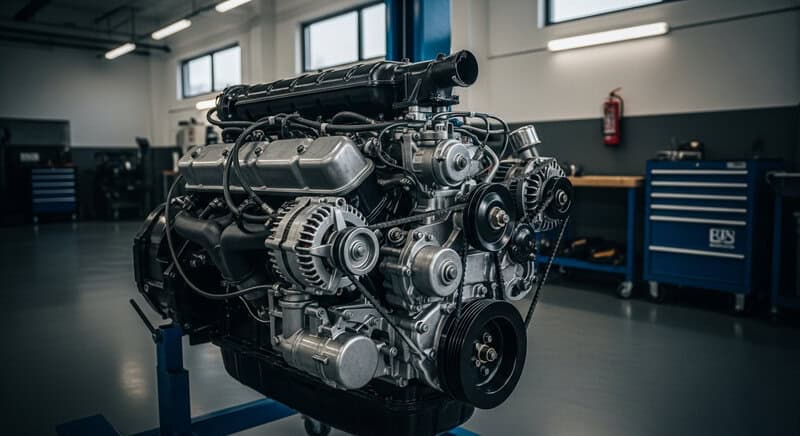
Section 3: Ford 5.0L V8 Engine

The Ford 5.0L V8 engine, commonly known as the “Coyote,” has been a cornerstone of Ford’s performance lineup since its introduction in 2011. This naturally aspirated engine has powered various models, including the Mustang GT and F-150, earning a reputation for its robust performance and reliability. Mechanics often prefer the Coyote engine for its straightforward design and ease of maintenance, which contrasts with the complexity of newer, turbocharged powertrains.
One of the key features of the 5.0L Coyote V8 is its aluminum block and aluminum DOHC cylinder heads, which contribute to a lighter engine weight without compromising strength. The engine utilizes a dual overhead camshaft (DOHC) configuration with four valves per cylinder, totaling 32 valves. This design allows for precise control of the intake and exhaust valves, enhancing performance and efficiency. The engine’s compression ratio is 12:1, which, combined with its displacement, enables it to produce substantial horsepower and torque. (ford.co.uk)
Over the years, the Coyote engine has undergone several revisions, each improving upon the previous generation. The first generation (2011-2014) produced 412 horsepower and 390 lb-ft of torque. The second generation (2015-2017) increased output to 435 horsepower and 400 lb-ft of torque, while the third generation (2018-present) further enhanced performance, with some models reaching up to 480 horsepower and 420 lb-ft of torque. These improvements have been achieved through advancements in technology, such as the introduction of port and direct fuel injection systems, which optimize fuel delivery and combustion efficiency. (autoblog.com)
Mechanics appreciate the Coyote engine for its durability and ease of maintenance. Regular oil changes are essential to maintain engine health, with intervals typically recommended every 5,000 to 7,500 miles, depending on driving conditions and oil type. The engine’s design allows for straightforward access to components, facilitating tasks such as spark plug replacement and timing chain inspections. This accessibility reduces labor time and costs associated with maintenance and repairs. (motorhub.club)