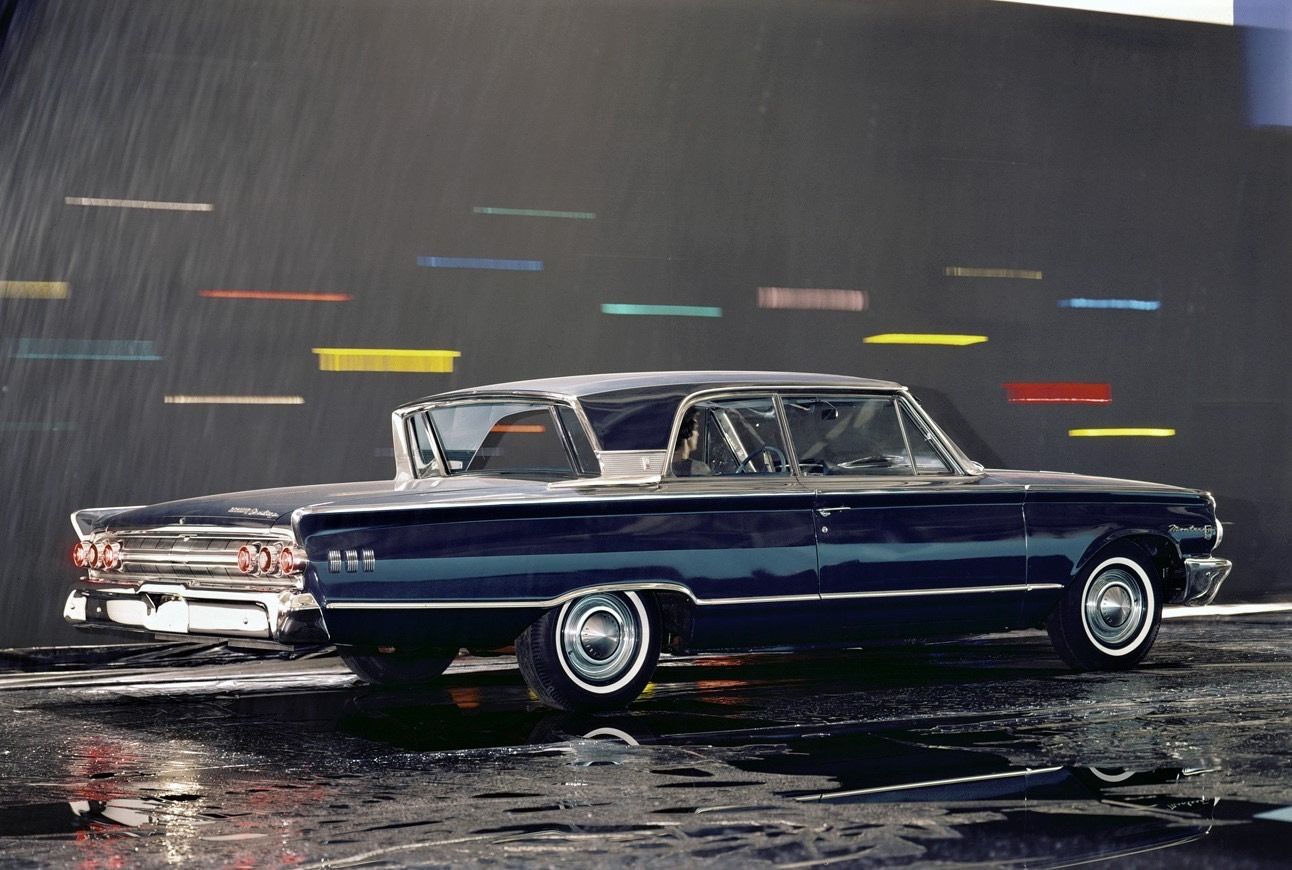
Ford Falcon

Seeing compact cars had an increasingly significant market share made Ford rethink its stance on small vehicles. So the Falcon was introduced in 1960. In those days, Ford was very nervous about presenting the new model in the new class since the Edsel debacle was very painful for the company’s accountants. However, with solid backing from Ford’s top managers, the Falcon project was approved. The immediate success proved that Ford hit a home run with a compact yet roomy Falcon. The car was nothing unique or innovative in terms of design or technology. It had unibody construction, leaf spring suspension in the back, drum brakes, and a standard three-speed manual transmission (via Classic Industries).

The secret of the Falcon’s success was its affordability and a long list of options. Even though the standard model only had a 2.4-liter 90 HP engine, you could get a bigger power plant with six cylinders and 260 V8. Also, the Falcon was available in several body styles, including the convertible, sedan delivery, and three or 5-door station wagon, which broadened its appeal. In 1964, the Falcon received its first redesign. And in the same year, the Mustang was introduced, which was based totally on Falcon’s underpinnings. The automotive press called the Mustang “The well-dressed Falcon” when the car first arrived. However, the Falcon was still a strong seller on the American market as the most affordable Ford product.