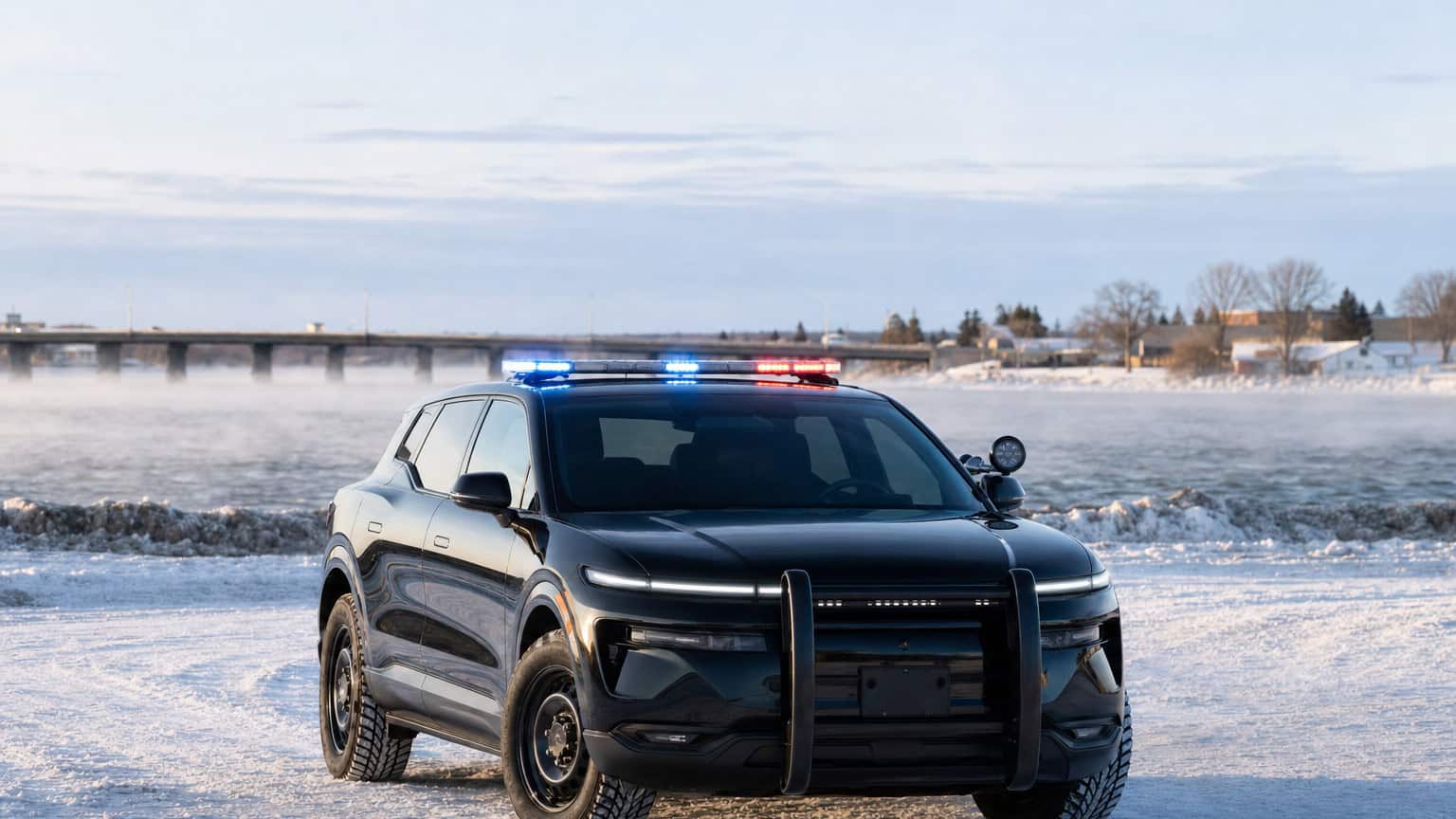
A small police department in northern Michigan recently published unsponsored, operationally grounded EV field data that no manufacturer fleet division will hand you — and if you are evaluating electric vehicles for any high-use application, it deserves more attention than another press release from a pilot program designed to succeed.
A Small Michigan Department Posted Real-World EV Data Fleet Managers Cannot Buy
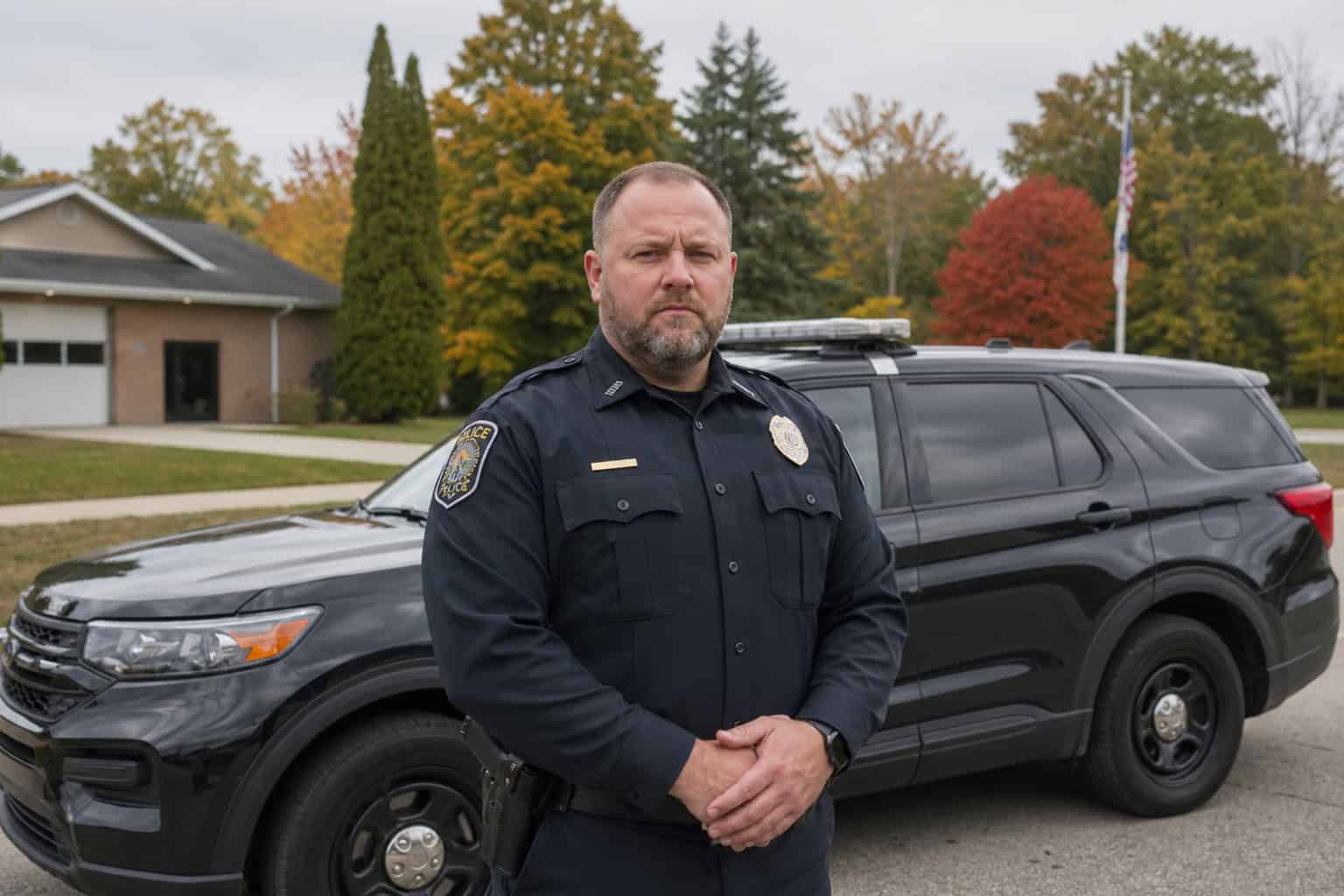
Tawas City PD reported $437.33 in cost savings over a three-week period in October, comparing two electric patrol vehicles against equivalent gasoline-powered units. That works out to roughly $72.89 per vehicle per week. The number is documented and comes with an identifiable operational baseline — not a simulation, not a manufacturer case study, and not a fleet average smoothed across thousands of vehicles in favorable climates.
What makes this data worth your attention is not the dollar figure alone. It is the environment. Tawas City sits in Michigan’s northern Lower Peninsula — cold weather, rural geography, long idle times, and limited charging infrastructure as a fallback. That operational profile stress-tests an electric vehicle in ways a California or Texas pilot program structurally cannot replicate. If you are calibrating real-world EV expectations for fleet use, high-mileage personal ownership, or municipal procurement decisions, small-department data from cold-climate rural operations belongs at the top of your reading stack.
Why Police Duty Cycles Are Among the Hardest EV Tests Available
Consumer EV range is modeled around driving — highway cruising, urban stop-and-go, a mix of both. Patrol vehicles operate on a fundamentally different energy profile. A patrol car can sit running for extended periods with HVAC, radios, emergency electronics, and onboard computing drawing continuous power from the battery pack without the drivetrain turning a wheel. That parasitic load degrades effective range far more aggressively than highway miles do, and it is a use case that EPA test cycles were never designed to reflect.
Layer cold-weather operation on top of that. Lithium-ion battery packs lose usable capacity in low temperatures — this is documented physics. Northern Michigan in October is not the same as the mid-Atlantic in September, and by December it is a materially different test entirely. The gap between EPA-rated range and actual patrol-shift range can be substantial depending on the platform, the ambient temperature, and how heavily the cabin heating system is working.
There is also a constraint that does not apply to consumer driving: a patrol vehicle that runs low mid-shift is not an inconvenience, it is an operational failure. You cannot pull a patrol unit off coverage because the state of charge dropped below comfortable. That means effective usable range for police EV duty cycle planning must be calculated conservatively — not at 80 or 90 percent of rated range, but at whatever threshold guarantees the vehicle completes the shift with margin. That is a tighter window than most EV marketing material acknowledges.
Breaking Down the $437.33: What the Number Means and What It Does Not
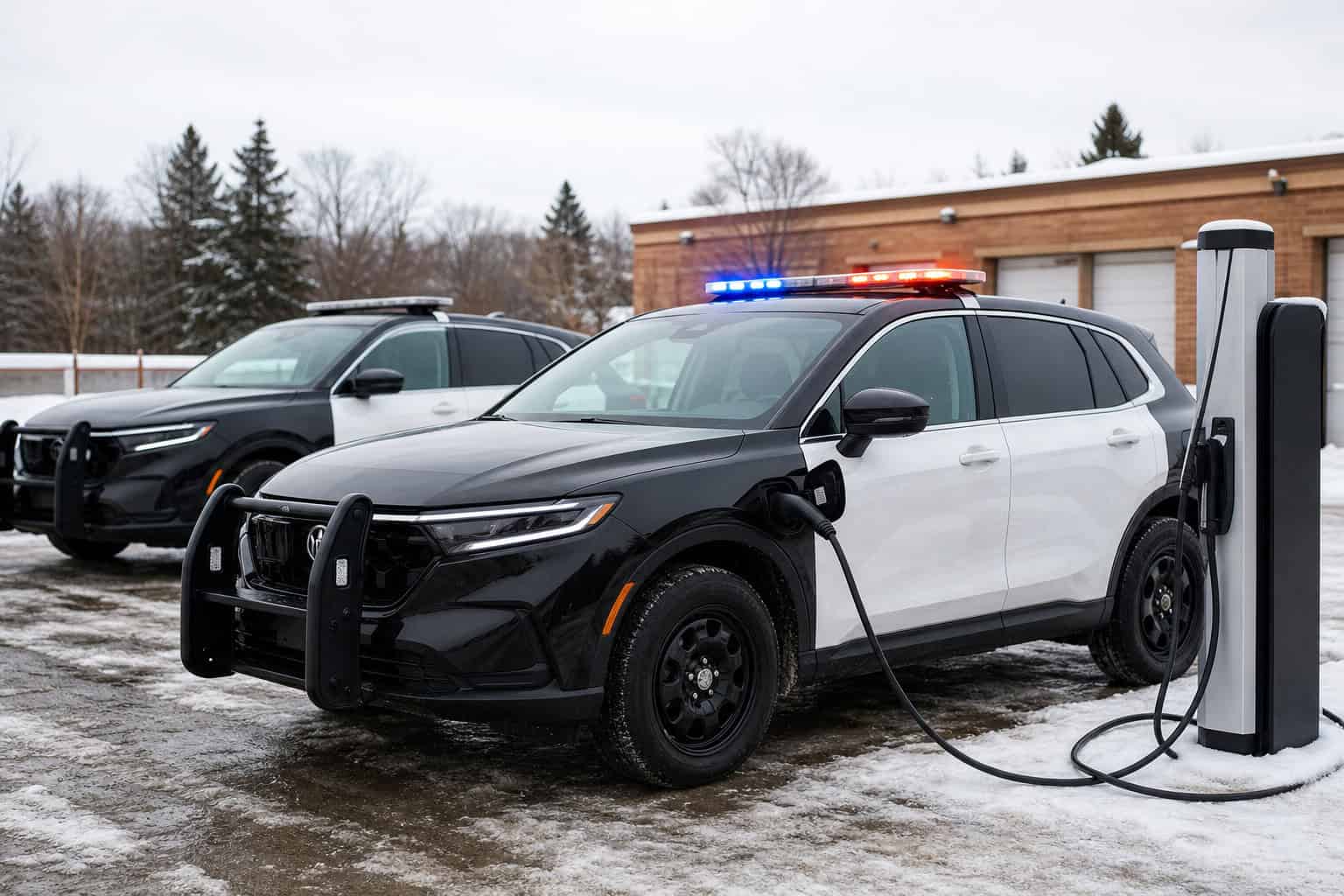
Three weeks of savings data is a proof-of-concept window, not a lifecycle study. Before building a business case around $437.33, you need to understand what that figure almost certainly does and does not include.
What it likely captures: fuel cost avoidance — the direct, measurable difference between electricity consumed for charging and gasoline that would have been burned in equivalent patrol vehicles over the same period.
What it almost certainly does not capture, based on available reporting:
- Amortization of charging equipment installation and hardware
- Any change in utility rates or demand charges triggered by EV charging loads
- Maintenance cost differences — brake wear savings from regenerative braking are real on stop-and-go routes, but they accrue over time and are not visible in a three-week window
- Capital cost premium of EV patrol platforms over gasoline interceptors
- Depreciation curve differences between EV and ICE fleet assets
None of that makes the number less real. It makes it a first data point, not a final answer. The honest read: encouraging, credible, and insufficient on its own to green-light a full municipal EV fleet transition. What it does establish is that the direction is positive under operationally demanding conditions — and that matters as a starting benchmark.
The Charging Problem That Rarely Makes the Press Release
The standard municipal EV charging model — vehicles return to station, charge overnight on Level 2, repeat — works cleanly under ideal conditions. Patrol operations do not run on ideal conditions. Shifts run long. Vehicles return lower than expected. The next crew needs the unit in 90 minutes, not eight hours.
In an urban department with a large fleet, that is manageable: pull a different vehicle. In a two- or three-unit department, there is no other vehicle, or the operational impact of pulling one is immediate and significant. That is when electric vehicle fleet charging challenges stop being theoretical and become a real scheduling problem that gasoline vehicles simply do not create.
Rural and small-town settings compound this further. Urban departments operating EVs typically have public DC fast-charge infrastructure within reasonable proximity as a fallback. In Tawas City’s geography, that fallback is thin to nonexistent. If a vehicle returns at 15 percent state of charge and DC fast-charging is not available at the station, options are limited. Level 2 charging at that point is a multi-hour recovery, not a shift-gap solution.
The practical implication for any department or fleet operation evaluating this transition: the infrastructure question is not secondary to the vehicle question — it is equal to it. Adding EVs to a facility without upgrading electrical capacity and installing at minimum Level 2, and ideally DC fast-charge capability, creates the conditions for the kind of operational failure that generates bad headlines and sets back broader adoption timelines. Budget the infrastructure or do not budget the vehicles.
What Small-Town Departments Demonstrate That Large-City Pilots Cannot
Large urban departments absorb EV limitations through fleet depth. A vehicle that cannot complete a full shift gets swapped. The weakness exists, but it is buffered. In a small department, every operational gap is exposed directly because there is no buffer. That is not a criticism of small departments — it is precisely what makes their data valuable.
When Tawas City publishes a progress report, even at three weeks, they are contributing to the real-world EV patrol conversation in a way that a 500-vehicle pilot operating with dedicated fleet support staff and favorable geography structurally cannot. Every constraint is visible. Every trade-off surfaces quickly.
Rural patrol also means more highway miles per shift and fewer opportunities for opportunity charging — the kind of stop-and-go urban operation that allows a regenerative-braking EV to partially recover range throughout a shift. Highway patrol miles are one-way energy expenditure. That tests range management discipline in a way urban pilots do not, and it is a closer analogue to how EVs perform in many real-world fleet applications outside major metro areas.
An Honest Trade-Off Comparison: EV Patrol vs. Gasoline Patrol at the Municipal Level
| Factor | EV Patrol | Gasoline Patrol | Notes |
|---|---|---|---|
| Upfront cost | Higher | Lower | Federal and state incentives exist but eligibility and amounts vary by jurisdiction and program cycle; verify current availability directly before budgeting around them |
| Per-mile fuel cost | Lower | Higher | Consistent with Tawas City early data; advantage scales with fuel price volatility exposure |
| Brake maintenance | Reduced wear via regenerative braking | Standard wear | Advantage strongest on stop-and-go routes; reduced on highway-dominant patrol |
| Refuel or recharge speed | Slower, even with DC fast charge | Faster | Critical variable for shift-gap scenarios in small departments |
| Cold-weather range | Degraded | Minimal impact | Northern Michigan winter will test this directly; November through February data from Tawas City will be the meaningful indicator |
| Operational flexibility | Constrained by charge state | Refuel anywhere, anytime | Rural geography amplifies the EV constraint significantly |
| Infrastructure cost | Station electrical upgrade required | None | Non-negotiable budget item; not optional |
What to Watch in Tawas City’s Next Report — and What It Means for Your Decision
October is the easy month. The genuinely useful data comes from November through February, when Michigan winter imposes real cold-weather range reduction on those battery packs. If Tawas City’s savings hold through that window — and especially if the department reports no shift-coverage gaps attributable to charge state — that is a materially stronger result than the current October baseline. If winter compresses the savings and forces backup gasoline vehicle use, that is equally important information, and equally worth publishing.
The metric to watch is not just cost savings. It is whether the department reports any operational gaps — shifts where charge state constrained coverage, vehicles that could not complete an assignment, or scheduling friction created by charge timing. That data, more than any cost figure, determines whether a police department electric vehicle fleet is operationally viable at the small-department level, not just economically interesting.
If you are a fleet manager or municipal decision-maker: Tawas City is running this experiment in a climate and operational profile that may match yours more closely than any manufacturer case study. Follow their reporting cadence before committing capital. The three-week number is a start. The winter numbers will be the real test.
If you are tracking EV real-world performance for high-use personal or commercial applications: small-department police data is among the cleanest unsponsored stress-test information available. It sits alongside owner community data and third-party range testing as a reality check on optimistic specifications — and it is worth following Tawas City’s progress reports directly as you calibrate your own expectations.