
You probably watched these films as a teenager and came away convinced that a black Trans Am or a white Dodge Challenger was the only car worth owning. Sit down with them today and something has gone badly wrong. The cars are still compelling. Almost everything built around them is not — and understanding exactly why is more useful than pretending the problem doesn’t exist.
Why Classic Car Movies Age Harder Than the Cars in Them

Car culture has shifted underneath these films in ways that are difficult to overstate. Audiences raised on data-driven motorsport coverage, transparent performance figures, and decades of genuine racing documentary filmmaking bring a fundamentally different set of expectations to anything with four wheels on screen. You want to know what a car actually does, not merely what attitude it projects. When a film’s entire identity rests on attitude rather than substance, the years are not kind.
The five films below were each genuinely celebrated in their moment. Each one has crossed the line from dated to genuinely difficult to sit through — and the reason tends to come down to a single defining scene where the film’s era stops being charming and starts being a real problem. This is not nostalgia-bashing. It is the same honest assessment you would apply to any vehicle with a great reputation and a complicated ownership reality: acknowledge what works, be precise about what does not, and do not pretend the trade-offs are not there.
Smokey and the Bandit (1977): The Trans Am Was Enough of a Plot

The 1977 Pontiac Trans Am — commonly called the Bandit Edition — was a genuine performance icon for its era. A 6.6-liter 400-cubic-inch V8, gold screaming-eagle hood decal, and a silhouette that still commands attention at any car show. Surviving Bandit Edition Trans Ams attract serious auction money precisely because the car itself delivered something real and specific to its moment in automotive history. On those terms, the film holds a legitimate place in the culture.
What kills it on a modern rewatch is Bandit’s extended CB radio courtship of Carrie, a sequence that leans so completely into 1970s gender assumptions that it stops the picture cold for any contemporary viewer. It is not edgy. It is not charming in a pleasantly dated way. It is a script that mistakes bravado for character writing and expects you to find the result endearing. The driving sequences still deliver genuine entertainment — good car work tends to survive time better than almost anything else a film can offer — but if you are watching for a coherent story with characters worth rooting for, you will be mentally checked out somewhere in the second act, waiting for the next scene where the car actually does something.
Vanishing Point (1971): The Challenger Gets All the Good Lines

Vanishing Point built its entire identity around a 1970 Dodge Challenger R/T — equipped with a 440 Magnum V8, stripped of nearly everything that was not related to speed, and pointed west across the American desert. That premise still works on paper, and the chase photography still works on screen. The 1970 Challenger R/T is one of the most visually commanding muscle cars ever produced, and this film understood precisely how to frame it against open landscape.
Vanishing Point appears on multiple lists of classic car movies that no longer hold up as complete viewing experiences. What derails it is Kowalski’s extended desert encounter with a naked motorcyclist, a sequence that felt genuinely transgressive in 1971 and now reads as pure time-capsule surrealism. It does not merely slow the film down — it abandons whatever narrative momentum had been built and leaves you watching something that no longer seems to know what it is. As a car film, Vanishing Point remains a legitimate seven out of ten. As a complete, watchable narrative in the mid-2020s, it is best consumed in highlight clips. The non-car content has aged so unevenly that it overwhelms the sequences that still work, and that imbalance is fatal to the viewing experience.
Death Race 2000 (1975): Satire That Forgot to Stay Ahead of Reality

Death Race 2000 presented a dystopian future in which race drivers score points by running down pedestrians — a concept intended as pointed political satire of American spectacle, mass-media violence, and the public’s appetite for both. In 1975, that was provocative in a way that had genuine intellectual bite. The custom vehicles, particularly Frankenstein’s beast-themed racer, represent legitimately inventive low-budget fabrication work that influenced automotive film design for decades afterward.
The scene that makes it impossible to defend today is the opening scoring sequence. In its original context it was meant to function as shocking black comedy. The problem is that pedestrian fatality figures on American roads have become genuinely grim in the intervening decades, and what was once absurdist satire now sits in uncomfortable proximity to documented, ongoing tragedy. The film wanted to make you think by making you uncomfortable. What it actually delivers today is discomfort without the thinking — and that is the worst possible outcome for a dark comedy. The satire has not sharpened with age. It has dulled, and what remains does not justify the full experience.
Mad Max (1979): A Great Car Deserved a Bigger Budget

The Ford Falcon XB GT modified into the Last of the V8 Interceptors — supercharged, visually aggressive, and purpose-built as a hero vehicle — is one of cinema’s genuinely great automotive creations. For anyone interested in Australian automotive history or in how a film can make a specific car feel like a character rather than a prop, the original Mad Max remains essential reference material on those narrow terms.
What the film cannot survive is its climactic finale, which at the production’s famously constrained budget looks exactly as cheap as it cost. The emotional weight the ending demands is simply not supported by what appears on screen, and you feel the gap between ambition and resources most acutely at precisely the moment when that gap matters most. Mad Max 2 — known in most markets as The Road Warrior — corrected the budget problem almost entirely and holds up as a near-complete film, which tells you everything you need to know about the original’s structural limitations. The concept was always sound. The execution had constraints that time has not made easier to look past, and the finale that was supposed to carry the picture is now the clearest evidence of what the film could not afford to be.
Days of Thunder (1990): Real NASCAR, Fictional Everything Else
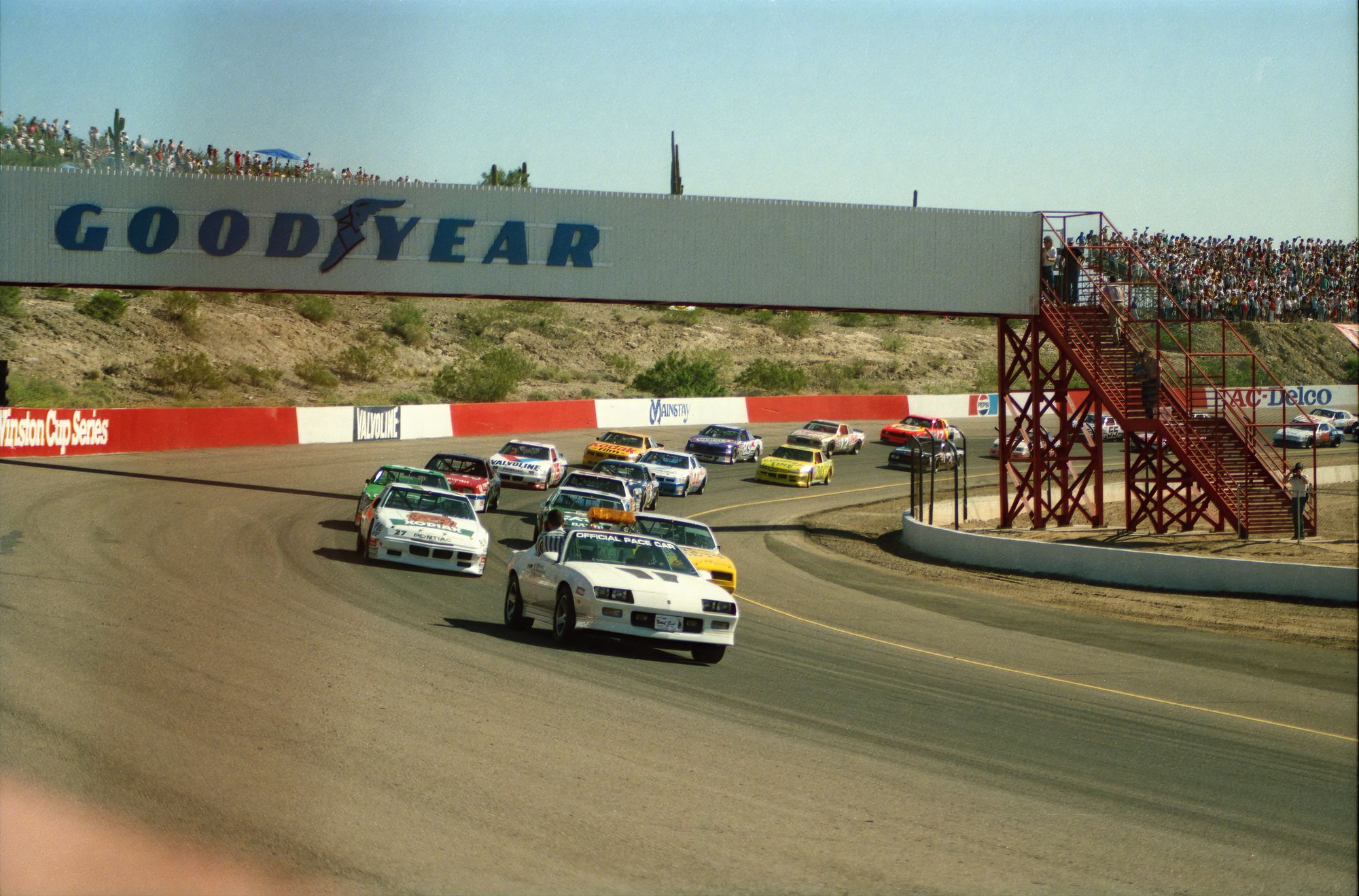
Days of Thunder deserves specific credit for its on-track footage. The NASCAR machinery is genuine, the superspeedway sequences reflect authentic racing infrastructure, and the first twenty minutes demonstrate a real understanding of what that environment looks like and sounds like at speed. As a technical record of late-1980s Cup Series racing hardware, those sequences have lasting value.
Everything constructed around them does not. The hospital romance subplot consumes the film’s second act with the pacing and emotional depth of a daytime soap opera, and Tom Cruise’s Cole Trickle is a character built entirely on projected attitude rather than demonstrated craft or knowledge. That was always a weakness. It has become a fatal one in an era shaped by a generation of detailed, character-driven motorsport documentaries that have shown audiences exactly what drivers actually have to understand and execute to compete at that level. Trickle never convincingly knows or does any of it. The gap between what the cars are doing on track and what the script is doing everywhere else is one of the most glaring disconnects in any mainstream racing film, and modern audiences — who have seen the real thing rendered with genuine depth — are no longer willing to fill that gap with goodwill.
What These Films Tell You About How Car Culture Has Changed
Every film on this list fails for the same underlying reason: the cars were always the most competent thing on screen, and everything constructed around them — the scripts, the social assumptions, the attitudes baked into each frame — has collapsed under the weight of time. The vehicles themselves remain genuinely significant machines. The 1977 Trans Am, the 1970 Challenger R/T, the Falcon XB GT — none of this analysis changes their place in automotive history or diminishes what they represented when new.
But a car movie is not a car. It is everything that surrounds the car, and if that surrounding material cannot survive the removal of its era’s cultural assumptions and still give you something real to hold onto, it was never truly a great car movie. It was a great car with a film crew pointed at it — and that is a meaningfully different thing. Modern car culture demands honesty about trade-offs. These films, revisited with clear eyes, are trade-offs that no longer balance in their favor, and acknowledging that directly is more respectful to the cars themselves than pretending otherwise.