
A 1970 Plymouth Barracuda is currently listed at $149,900 on classic.com — and that’s not even close to the ceiling once you start talking Hemi. Whether you’re actively hunting one, already own one, or simply trying to understand why a car Chrysler sold for under $3,000 now commands six figures, here’s what the market actually looks like and what owning one really costs you.
What Changed in 1970: The E-Body Redesign That Made This Car Matter

Chrysler didn’t just refresh the Barracuda for 1970 — they scrapped the platform entirely. The previous generation sat on the cramped A-body architecture, which meant the engine bay was too tight to accept the big-block powerplants that were making the Mustang and Camaro conversation so loud. The 1970 model moved to the all-new E-body: longer hood, shorter deck, wider stance, and critically, enough room under the hood to drop in a 426 Hemi without engineering compromise. That single decision is responsible for most of what the car is worth today.
The redesign also gave Plymouth something it had been missing — visual credibility. The long-hood, short-deck proportion wasn’t just a styling exercise; it was a direct statement that the Barracuda was now competing on design terms with the Mustang and Camaro, not just on spec sheets. Chrysler offered three body styles for 1970: hardtop, convertible, and formal-roof hardtop. Nine engine options ran from the 225-cubic-inch inline-six all the way to the 426 Hemi and 440 Six Pack. You could buy a Gran Coupe hardtop with the base six-cylinder for $2,934, or step up to the 318-cubic-inch V-8 version for $3,035. Those sticker prices feel almost absurd now. Hagerty’s breakdown of the Gran Coupe trim is worth reading if you want the full picture of how Plymouth positioned the Barracuda across its lineup.
Total 1970 Barracuda production came in at 25,651 units across all body styles and engines — a number that looks modest even by the standards of the muscle car era, and one that helps explain why correct, documented examples are so difficult to find today. For full production and specification context, the Plymouth Barracuda overview on Wikipedia is a useful reference point.
Engine Lineup: Nine Options, One That Rules Them All
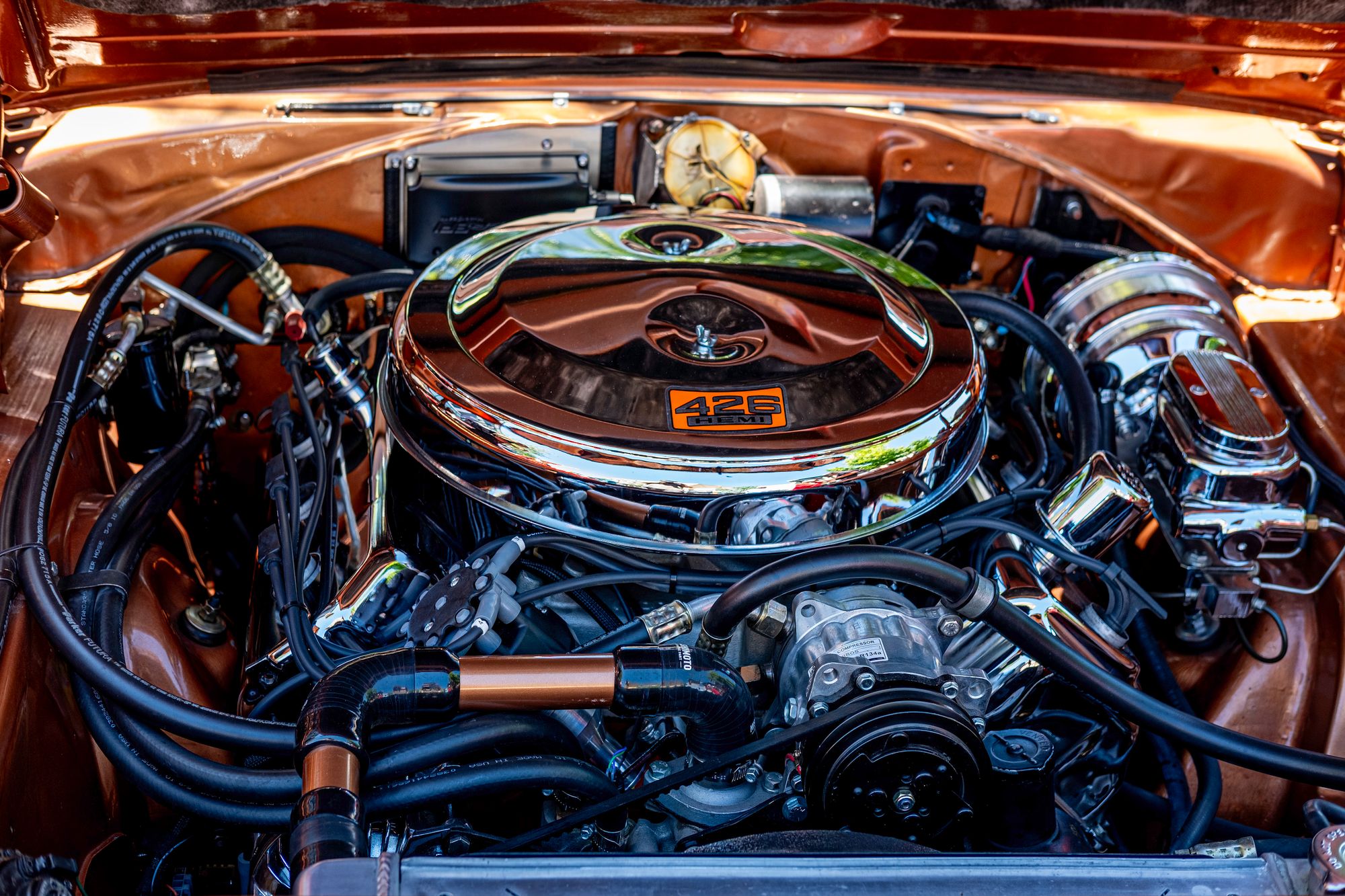
The engine you’re looking at determines everything — the driving experience, the restoration cost, the insurance premium, and ultimately the asset class you’re buying into. Here’s how the 1970 engine lineup stacked up:
| Engine | Displacement | Rated Horsepower | Collector Value Impact |
|---|---|---|---|
| Slant Six | 225 cu in | 145 hp | Base — entry-level pricing |
| LA V-8 | 318 cu in | 230 hp | Modest premium over six-cylinder |
| LA V-8 | 340 cu in | 275 hp | Strong demand, streetable, well respected |
| B V-8 | 383 cu in | 300-335 hp | Solid mid-range collectible |
| 440 four-barrel | 440 cu in | 375 hp | Significant premium |
| 440 Six Pack | 440 cu in | 390 hp | High demand, strong appreciation |
| 426 Hemi | 426 cu in | 425 hp (factory-rated) | Maximum value — different asset class entirely |
The 426 Hemi is the headline. The factory rating of 425 horsepower has long been regarded by historians as a conservative figure — actual output was almost certainly higher, a common practice among manufacturers during the insurance-rate battles of the era. What’s not debatable is what it does to collector value. A documented, numbers-matching Hemi ‘Cuda is not the same financial instrument as a tribute build, and any seller conflating the two should send you walking immediately.
The 440 Six Pack — three two-barrel carburetors feeding 390 horsepower — is the more streetable option and arguably the more rewarding car to actually drive on a regular basis. It commands serious collector interest in its own right and costs considerably less to restore correctly than a Hemi car. Parts are more available, specialist knowledge is more accessible, and the margin for error on a restoration is wider.
Be honest with yourself about the trade-offs before you spend. Hemi cars are brutally expensive to restore correctly. Parts are scarce and becoming scarcer. A proper Hemi rebuild from a reputable Mopar specialist will cost more than the entire purchase price of a comparable small-block car. If your budget is limited or your mechanical experience is in the early stages, a 340 or 440 four-barrel car gives you the full E-body experience without the financial exposure of a Hemi restoration gone sideways.
What Is a 1970 Plymouth Barracuda Actually Worth Right Now?
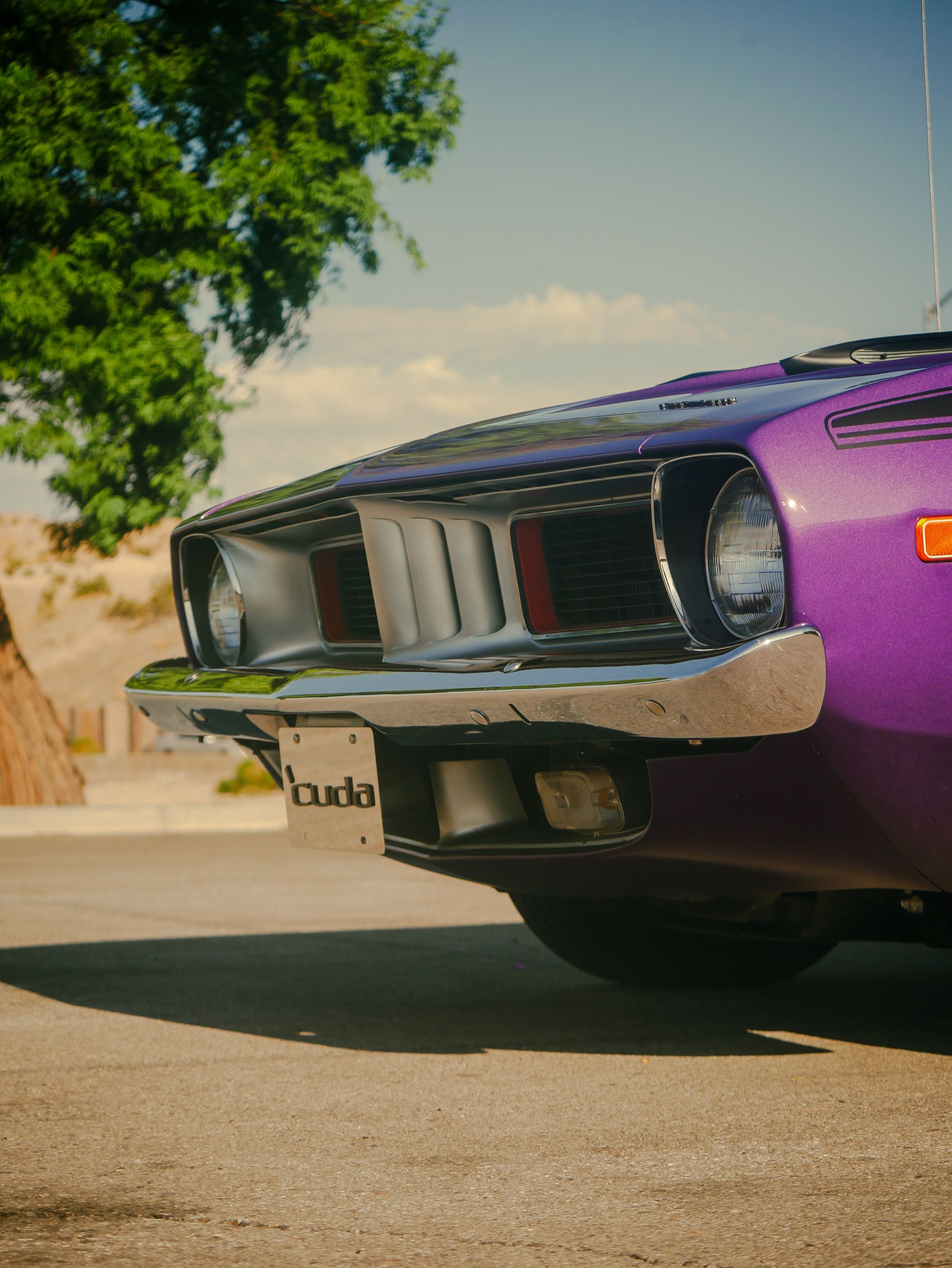
The Plymouth Barracuda market data on classic.com puts average transaction prices in the six-figure range. Treat any single average figure as a starting point for conversation, not a valuation. A base six-cylinder hardtop and a documented Hemi convertible are not remotely the same asset class — they just happen to share a model name. Published averages get pulled hard by both ends of that spectrum and tell you relatively little about what a specific car is actually worth.
What the current market actually looks like in practical terms:
- Solid small-block cars in honest driver condition: $40,000-$75,000 depending on engine and body style
- Numbers-matching 440 or 440 Six Pack cars with supporting documentation: $80,000-$150,000 and above
- Authenticated Hemi hardtops with clean provenance: $200,000-$500,000
- Hemi convertibles with correct restoration and verified documentation: over $1,000,000 at major auction
That last number is not a typo. Authenticated Hemi convertibles have cleared seven figures at major auction houses. The value drivers in plain language: matching-numbers engine, original build sheet tied to the VIN, Hemi or 440 Six Pack powertrain, convertible body style, and either an unrestored original or a documented rotisserie restoration with receipts. Miss more than one of those criteria and you’re buying a passion purchase, not an investment-grade collectible. That distinction matters enormously when it’s time to sell.
In the broader context of American muscle, the 1970 ‘Cuda belongs in the same conversation as the Chevelle SS 454 LS6 and the Boss 429 Mustang — all three represent peak engineering from their respective manufacturers in the same model year, and all three have seen consistent appreciation for properly documented examples over the past two decades. The 1970 Plymouth Barracuda fact sheet at Over Drive Magazine provides a useful model-year reference if you want specification details in one place.
Real-World Ownership: What You’re Actually Getting Into

Fuel economy is not a conversation you have with a 440 or Hemi-equipped car. Budget for 8 to 12 MPG depending on how hard you’re driving, plan for premium fuel, and accept that fuel cost is the least of your financial concerns compared to parts availability and insurance premiums.
Reliability on a properly restored car is reasonable for a weekend driver — these engines were well-engineered and respond well to modern ignition components and updated cooling systems. But you’re maintaining a machine that is now over fifty years old. Rubber components, electrical systems, and cooling circuits all require regular attention regardless of how clean the restoration appears. Budget time and money for that reality before you buy, not after you’ve already committed.
Parts availability is split in ways that matter practically. Common Mopar components circulate reasonably well through the enthusiast market, but correct E-body sheetmetal, exterior trim pieces, and drivetrain-specific components are increasingly difficult to source and expensive when you do find them. The A-body parts that fit earlier Barracudas are no help here — the E-body was a clean-sheet design and the supply of correct components only shrinks as more cars get restored each year.
Insurance is a serious line item that buyers routinely underestimate until it’s too late. Agreed-value classic car coverage is non-negotiable on a six-figure vehicle — standard collector policies with stated-value clauses leave you exposed in a total-loss scenario. Get firm quotes from specialty insurers before you close the deal. Premiums on a $150,000 car are meaningful, and some insurers require a certified appraisal before binding coverage. Factor that appraisal cost into your purchase budget from the start.
How to Find One Without Getting Burned

The fender tag and VIN decode are your first line of defense. The broadcast sheet — the build document Chrysler attached to the car during production — tells you exactly what the car left the factory with. Any serious seller with a legitimate car will have this documentation or be able to explain clearly and credibly why it’s missing. Vague explanations for missing paperwork are a reason to walk, not to negotiate harder on price.
A pre-purchase inspection by a Mopar-specialist mechanic is not optional at these price levels. Budget $500 to $1,000 for a thorough assessment that includes chassis inspection, drivetrain evaluation, and hands-on verification of key identification numbers. If a seller refuses to accommodate an independent inspection, that refusal tells you everything you need to know about the car.
Clone cars are common in this market and worth a fraction of an authentic original. Converting a small-block car to look like a Hemi ‘Cuda is a straightforward cosmetic exercise — the cosmetics are easy; the paperwork is the tell. The VIN, fender tag, and engine stamp must align with each other and with any documentation the seller provides. If any of those three elements don’t agree, walk away regardless of how correct the car looks from twenty feet.
For sourcing: Mecum, Barrett-Jackson, and RM Sotheby’s handle documented auction cars with published provenance records and established bidder accountability. Hemmings listings for 1970 Plymouth Barracuda and Classics on Autotrader cover private sales across a wide price range. Mopar-specific registries and owner clubs consistently surface the most thoroughly vetted examples — sellers in those communities understand documentation standards and buyer expectations better than the general classic car market does.
Bottom Line: Should You Buy One?

If you want a driver: a small-block 1970 Barracuda in solid, honest condition in the $40,000-$75,000 range is a legitimate and defensible purchase. You get the full E-body proportions, the Barracuda nameplate at its historical peak, and a car you can take to a show or a weekend cruise without treating it as a museum piece. The 340 is particularly well-regarded as a balanced performance engine — enough power to satisfy, without the financial consequences that follow every key turn in a Hemi car.
If you want an appreciating asset: only documented, numbers-matching Hemi or 440 Six Pack cars with clean, verifiable provenance have consistently appreciated over time. Anything else is a passion purchase. That’s not a criticism — passion purchases are entirely legitimate reasons to buy a car — but don’t allow a seller to convince you that a tribute Hemi build or an undocumented clone will hold value the same way a verified original will. It won’t, and the gap widens every year.
The honest trade-off stated plainly: you will spend more time and more money maintaining and sourcing correct parts for a 1970 Barracuda than you would for almost any other American muscle car of the era. The E-body sheetmetal is harder to find, the correct trim is scarcer, and the ownership community — while passionate and deeply knowledgeable — is considerably smaller than the Mustang or Camaro world. A significant portion of buyers decide that scarcity is exactly the point. If you’re in that group, the 1970 model year is where the Barracuda bloodline peaked, and there is no substitute for getting it right the first time.