
For decades, the V-8 engine was the sports car world’s most reliable shorthand for serious performance — a cultural and mechanical institution that seemed immune to challenge. That assumption is now being dismantled, engine bay by engine bay, by a new generation of turbocharged V-6 machines producing power figures that would have seemed impossible from six cylinders just twenty years ago. The shift isn’t theoretical. It’s happening in showrooms and on racetracks right now, and it deserves a clear-eyed look at why.
Why the V-8 Became the Gold Standard
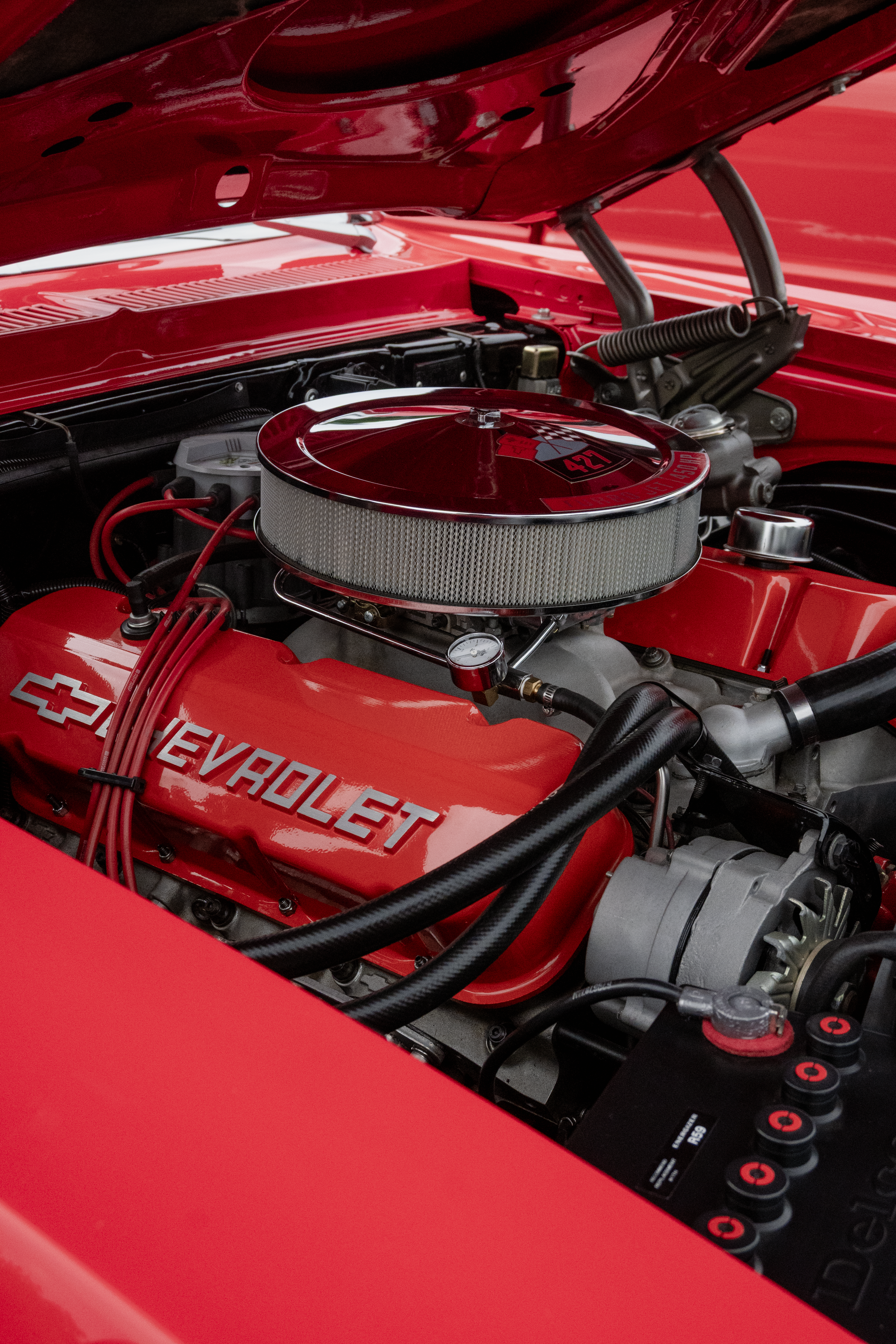
The V-8’s dominance wasn’t arbitrary or purely cultural. In the era before advanced turbocharging and computational engine management, displacement and cylinder count were the most direct route to usable power. More displacement meant more air and fuel burned per cycle, and more cylinders smoothed out power delivery, creating the broad, flat torque curves that made fast driving forgiving. You didn’t need to chase a narrow rev window — the power was simply there across most of the range.
Iconic machines reinforced that mythology. The Ford GT40, the Chevrolet Corvette across generation after generation, the Ford Mustang GT — these cars wrote the cultural rulebook, and a V-8 was on every page. The sound alone became an emotional shorthand for performance: a low, burbling idle climbing to a full-throated roar at wide-open throttle. Any alternative faced an uphill battle not just on performance metrics but on feeling, heritage, and identity. That battle is now being won — not by marketing, but by engineering.
What Changed: Turbocharging, Weight, and Computational Power

The transformation started with turbocharging but didn’t stop there. Modern twin-scroll turbos and electronic boost management allow a 3.0-liter or 3.8-liter V-6 to produce outputs that once required engines nearly twice the displacement. Lighter rotating assemblies in six-cylinder configurations reduce internal friction, letting the engine rev faster and respond more quickly to throttle inputs. Variable valve timing, direct fuel injection, and sophisticated engine mapping software extract efficiency and peak power simultaneously — capabilities that carbureted V-8s from the muscle car era could never approach.
Then there is the weight question, which turns out to be the hidden variable that changes everything. A V-6 can save anywhere from 80 to 150 pounds compared to a comparable V-8. In a performance car, that difference is measurable at every corner, every braking zone, and every straight. Placing a smaller, lighter engine mid-ship keeps mass centralized and low, giving the chassis handling agility that a heavier front-mounted V-8 layout physically cannot replicate. The engineering logic isn’t just sound — it is becoming the new performance consensus at the highest levels of the segment.
The 2026 Maserati MCPura: The Case Study That Resets the Debate

The MCPura makes the argument concrete. At 621 horsepower and 538 pound-feet of torque from its twin-turbocharged V-6, this mid-engined Italian supercar doesn’t just keep pace with V-8 rivals — it sets a new benchmark for what six cylinders can produce at the highest level of the segment.
What makes the power delivery particularly compelling is how accessible it is. Torque arrives usably early, beginning at roughly 3,000 RPM, meaning the performance isn’t locked behind a high-revving scream. It is immediate and tractable. Peak power then arrives at 7,500 RPM, giving the engine both the low-end authority of a torque-rich V-8 and the high-revving drama associated with purpose-built exotic configurations. The MCPura’s V-6 satisfies both halves of the performance expectation — grunt and theater — simultaneously, which is precisely what skeptics said a six-cylinder could never do.
The mid-engine placement completes the picture. With mass centralized behind the driver, the MCPura rotates through corners with an accuracy and responsiveness that heavier, less balanced alternatives cannot match regardless of cylinder count. The MCPura represents not a transitional step but a definitive statement about where serious performance engineering is heading — and Maserati is not the only manufacturer making it.
Three V-6 Sports Cars That Genuinely Match V-8 Performance
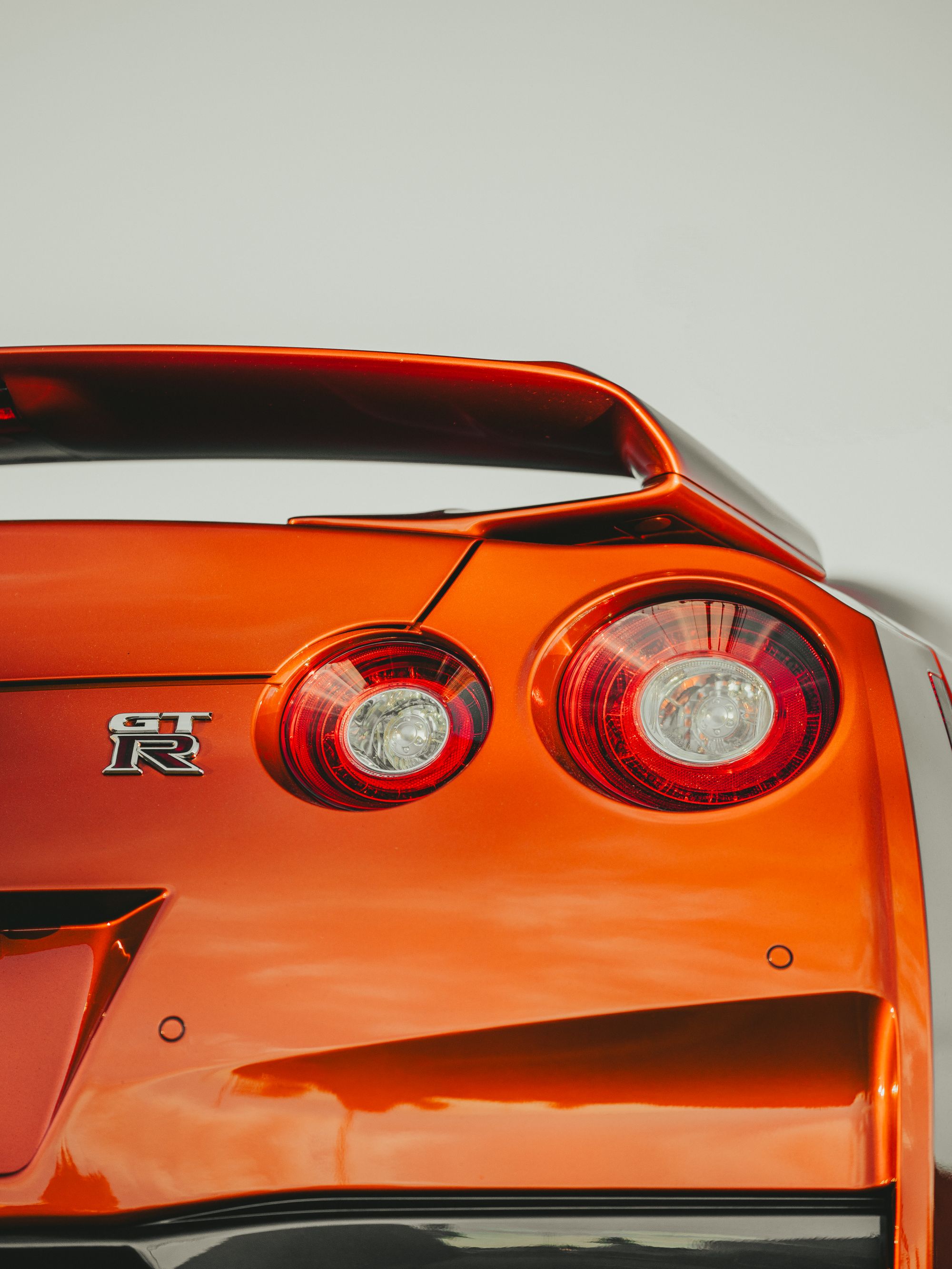
The MCPura is extraordinary, but it isn’t alone. CarBuzz has identified ten turbocharged V-6-powered cars that rival or outright beat comparable V-8 machines, confirming this is a legitimate and expanding category rather than a handful of engineering outliers. Three stand out as the most compelling evidence of the shift:
- Nissan GT-R: For well over a decade, the GT-R’s twin-turbocharged 3.8-liter V-6 embarrassed eight-cylinder supercars costing two and three times its price. Supercar-grade acceleration delivered with cold-blooded consistency — and six cylinders doing all of it. The GT-R didn’t just keep up; it set the terms of the conversation.
- Ferrari F80: Ferrari’s acknowledgment that the six-cylinder era has arrived at the very top of the performance pyramid carries particular weight. A manufacturer whose identity is inseparable from emotional engine character choosing a V-6 configuration at this level is not a concession — it is an unambiguous endorsement. When Ferrari commits, the conversation shifts permanently.
- The broader field: With ten vehicles now identified as genuine V-8 rivals, the GT-R and F80 are not isolated achievements. They are early representatives of a category growing in depth and credibility with each new model cycle, spanning manufacturers, price points, and driving philosophies.
Each of these cars succeeds not by imitating what a V-8 does, but by making the V-6 formula work on its own terms — lighter, faster-spooling, and dynamically sharper than many of the machines they compete against.
V-6 Turbo vs. V-8 Naturally Aspirated: The Honest Performance Math

The direct technical comparison is worth examining without sentiment. A twin-turbocharged V-6 can sustain peak torque across a broad RPM band in ways a naturally aspirated V-8 — which builds power more gradually as displacement fills with air — frequently cannot match. Forced induction effectively compresses the productive power range, making more of the rev band feel strong rather than building toward a single peak that arrives and then fades.
The traditional counterargument has been throttle response: turbocharged engines can feel hesitant at very low RPM while boost pressure builds, creating a brief but perceptible lag between driver input and engine reaction. That gap has largely closed. Modern twin-scroll turbocharger designs route exhaust gases more efficiently to spool the turbine faster, while electronic boost management systems maintain partial pressure even during light-throttle driving. Most drivers in most real-world situations cannot meaningfully detect the difference today.
On paper and on track, a well-engineered turbocharged V-6 is now a genuine performance equal to a naturally aspirated V-8 of comparable output. In several specific metrics — horsepower per liter of displacement, weight distribution, and lap times at circuits that reward balance and mid-corner responsiveness over straight-line brute force — the V-6 frequently wins outright. The math has shifted, and it shifted while much of the enthusiast world was still arguing about cylinder counts.
What the Sound Argument Actually Gets Right

Dismissing the emotional case for V-8s entirely would be intellectually dishonest. The acoustic character of a large-displacement naturally aspirated eight-cylinder is genuinely different from a turbocharged six — lower in fundamental frequency, richer in harmonic complexity, and culturally encoded in ways that decades of motor racing and popular culture have deepened rather than eroded. For many buyers, that sound is part of what driving a performance car means, and no specification sheet resolves a preference that is fundamentally experiential.
What has changed is the framing. The sound and feel of a V-8 are now a matter of taste and priority, not a proxy for performance capability. A buyer who chooses eight cylinders for the acoustics and the heritage is making a legitimate and defensible choice. A buyer who assumes eight cylinders means faster is now, in a growing number of cases, simply wrong.
What This Means for Sports Car Buyers Today
If you are currently shopping for a performance car and reflexively filtering out anything without a V-8, you are likely eliminating some of the fastest, most dynamically rewarding machines available at your price point. The emotional case for eight cylinders — the sound, the heritage, the specific texture of that power delivery — remains real and deserves respect. But it is now a matter of preference, not performance necessity, and those are genuinely different things.
The MCPura, the GT-R, the F80, and the broader field of high-output V-6 sports cars make a shared point: the engine beneath the hood is no longer the headline. The engineering around it — the turbocharger architecture, the chassis balance, the software managing every combustion event, the placement of mass relative to the axles — is where the performance story actually lives.
The most useful question to ask when evaluating a performance car today is no longer how many cylinders it has. It is how the power is made, where the weight sits, and what the chassis was specifically designed to do with both. Answer those three questions accurately, and the cylinder count becomes almost incidental.