
Walk the grounds of almost any classic car show and you’ll encounter the same rotating cast of chrome — Mustangs, Camaros, and the occasional perfectly restored Thunderbird. But the most extraordinary vehicles in automotive history are rarely the ones commanding a dedicated show field. They’re the ones surfacing quietly at estate auctions, sitting in private garages, and waiting to be rediscovered by collectors who know where to look.
Why Rarity and Originality Outperform Fame in Long-Term Collecting

There’s a persistent myth in classic car collecting that fame equals value. In reality, rarity, documented originality, and a compelling provenance drive long-term appreciation far more reliably than celebrity status alone. Unusual vintage cars frequently climb in value precisely because the broader market hasn’t caught up to their cultural or engineering significance — meaning today’s overlooked oddity can become tomorrow’s auction headline.
Obscure collector cars also tend to offer more accessible entry points for newer enthusiasts. The window closes quickly once mainstream buyers arrive, which is why serious collectors spend considerable time researching beyond the obvious. The most unique classic cars almost always sit at the intersection of unconventional design, brutally short production runs, and pivotal moments in automotive history — combinations that the market routinely underprices until it suddenly doesn’t.
Familiar Badges, Forgotten Variants: Icons With a Twist

Not every rare classic comes from an obscure manufacturer. Some of the most undervalued examples wear badges everyone recognizes but represent variants so limited or short-lived that even devoted enthusiasts overlook them.
- 1963 Corvette Sting Ray Split-Window Coupe: The divided rear window that defined the 1963 Sting Ray coupe proved controversial enough that General Motors eliminated it after a single model year. That one-year-only design decision instantly transformed surviving examples into some of the most distinctive and desirable collector cars in existence. Automotive historians consistently rank it among the most significant American designs of the twentieth century. Today, numbers-matching split-window coupes regularly command six-figure sums at major auction houses, a direct reflection of that single production-year decision.
- 1969 Dodge Charger: Pop culture immortalized the Charger in bright orange, but the broader collector market has largely fixated on high-option, numbers-matching examples. Low-optioned, unrestored barn-find Chargers — the ones that survived simply by being forgotten — represent some of the most genuinely undervalued rare classics available to patient collectors willing to verify documentation and do thorough mechanical assessments before buying.
- 1970-1971 Ford Torino GT: Overshadowed almost entirely by the Mustang during its production years, the Torino GT’s fastback silhouette was no styling accident. Ford’s NASCAR aerodynamics program directly informed the body’s profile, giving it a legitimate motorsport pedigree that mainstream buyers have historically ignored. Serious collectors have quietly recognized it as a sleeper for years, and auction results have begun to reflect that reassessment.
- 1977 Ford Bronco: Old enough to qualify as a genuine classic, young enough that many buyers still categorize early Broncos as used trucks rather than rare vintage vehicles worthy of serious attention. That misclassification has historically kept prices accessible for informed buyers — though clean, rust-free examples are now appreciating sharply, and the window for finding them at reasonable prices is narrowing fast.
Micro-Cars and Mavericks: The Truly Unusual Vintage Vehicles

Some of the most visually arresting vehicles ever produced didn’t come from Detroit’s giants. They emerged from smaller manufacturers working under entirely different constraints, solving entirely different problems, and arriving at solutions that still look radical today.
- BMW Isetta 600: No serious list of unique classic cars is complete without the Isetta, and the 600 variant is its most practical and architecturally complex expression. The front-opening door, bubble-car silhouette, and motorcycle-derived engine make it look like a design thought experiment that somehow reached production. In the 600 configuration, the car could accommodate up to four passengers, demonstrating that unconventional and functional are not mutually exclusive qualities. The Isetta has earned lasting recognition as one of the most distinctive rare vintage automobiles of the postwar era.
- Volkswagen Samba Bus (Type 2, 1951-1963): The standard Microbus is familiar enough, but the Samba variant is something else entirely. Featuring up to 23 windows, a fabric folding sunroof, and a two-tone paint finish applied to a higher standard than any other Microbus configuration, the Samba was Volkswagen’s most luxurious and visually elaborate offering of that generation. Original, unmolested Sambas now command significant premiums among collectors who prize honest survivor-quality examples above technically accomplished restorations.
These alternative-format vehicles attract a particularly passionate subset of the collector community — enthusiasts drawn specifically to cars that challenge conventional assumptions about what an automobile is supposed to look like and how it’s supposed to work.
The Wildcard: AMC’s Denim-Clad Experiment

The AMC Pacer was already one of the most polarizing vehicles of the 1970s — wide-bodied, intentionally asymmetrical in its door lengths, and unlike anything else on American roads. For 1975, AMC pushed further with the Pacer X Levi’s Edition, a trim package developed in direct collaboration with the clothing brand that incorporated denim-style seat fabric and copper rivets into the interior.
What reads today as an audacious marketing experiment has aged into something considerably more interesting. Only a small number of Levi’s Edition Pacers survive in documented, unaltered condition, placing authentic examples firmly among the rare vintage automobiles that defy easy classification. The Pacer X Levi’s Edition stands as compelling evidence that the most unique classic cars are sometimes born from the strangest collaborations — and that strange, given enough time and distance, becomes genuinely fascinating to the right collector.
How to Hunt Obscure Collector Cars Without Getting Burned
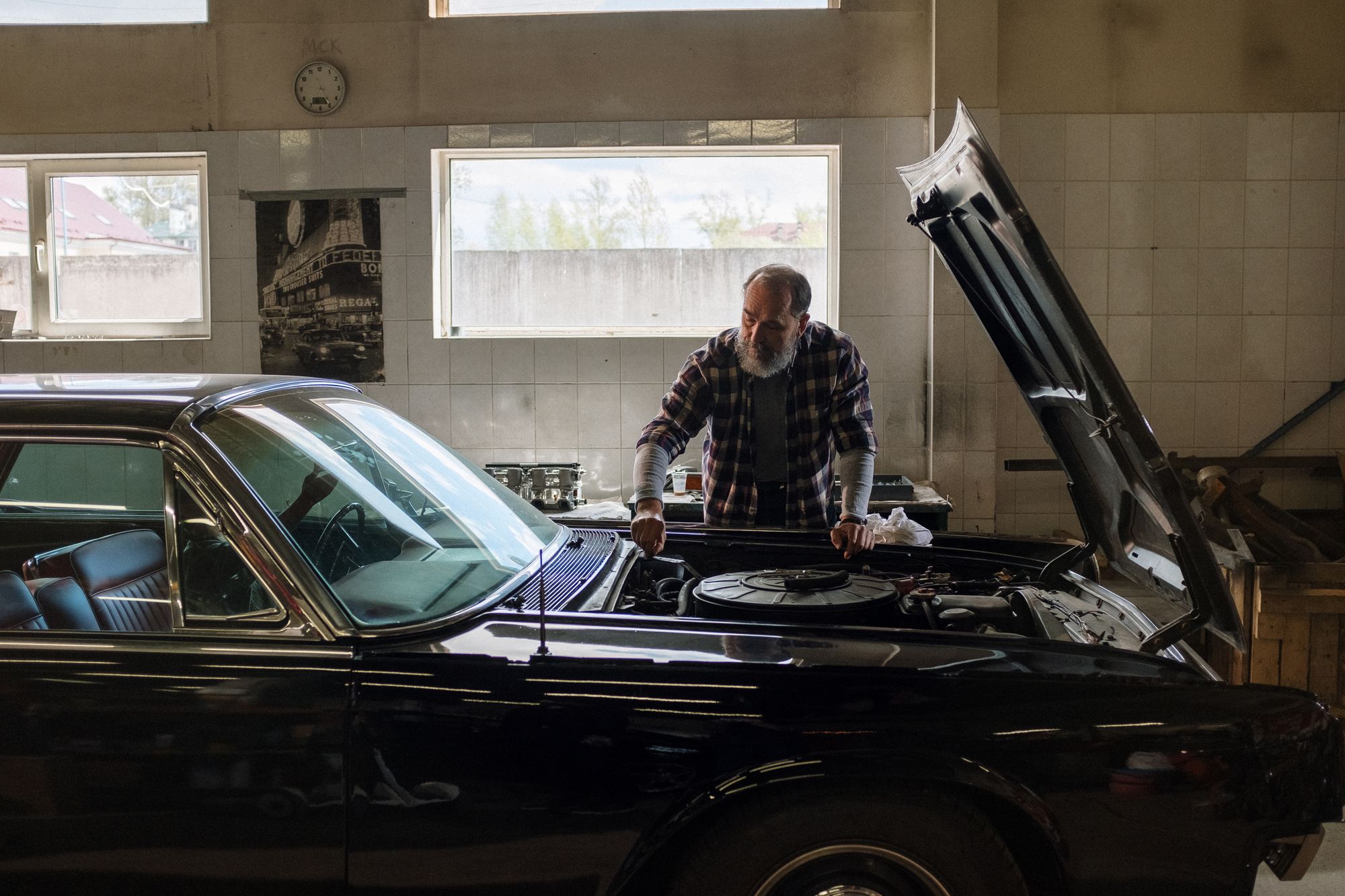
Finding unusual vintage cars is one challenge; acquiring the right examples is another. A few principles consistently separate informed collectors from enthusiastic ones:
- Documentation is non-negotiable. Factory build sheets, original window stickers, and matching VIN numbers are what separate a true rarity from a well-executed approximation. In the obscure collector car market, inflated rarity claims are common enough that independent verification through marque-specific registries is essential before any serious financial commitment.
- Survivor cars carry a premium for good reason. Among serious collectors of rare classics, an unrestored original — factory paint, unmolested interior, honest mileage — consistently commands more respect, and often more money, than even the most technically accomplished restoration. Patina that tells a true story is worth considerably more than perfection that conceals one.
- Hunt where mainstream buyers aren’t. Niche online communities, estate auctions, regional marque club events, and private owner registries remain the most productive hunting grounds for rare vintage automobiles that haven’t yet attracted broader collector attention. By the time a car appears at a major national auction with extensive press coverage, the accessible pricing window has almost certainly already closed.
- Have a qualified inspector involved before purchase. Rarity claims are easiest to inflate in markets where buyers are least familiar with what authentic examples look like. A marque specialist or independent inspector who knows the specific model — not just classic cars generally — is money well spent on any significant acquisition.
History Rewards the Curious

The most unique classic cars are rarely the ones on magazine covers. They’re the ones that took a genuine creative risk during their production years, found too few buyers at the time, and survived against the odds into an era that finally has the perspective to appreciate what made them remarkable. Each vehicle discussed here represents a moment when an automaker — or a product team inside one — committed to something genuinely different. History has quietly vindicated most of those commitments.
For collectors willing to move past the predictable, rare vintage automobiles offer both a compelling story and a tangible connection to forgotten chapters of automotive culture that mainstream collecting rarely touches. Start with serious research, attend regional shows that larger venues overlook, and keep a genuinely open mind about what makes a vehicle worth collecting. The next significant find among unique classic cars is almost certainly one nobody else is watching yet — and that’s precisely what makes it worth finding.