
A routine oil change — a service that should take less than 30 minutes and cost under $150 — destroyed a BMW owner’s engine in less than 48 hours. If you own a BMW or any modern performance vehicle, what happened to her is not a freak accident: it’s a documented pattern with clear warning signs you can catch before the damage becomes irreversible.
She Drove Away From the Shop. 48 Hours Later, Her Engine Was Dead.

According to Motor1’s report on the BMW oil change incident, a woman brought her BMW to a Tire South location for what should have been the most unremarkable item on any car owner’s maintenance calendar. Within 48 hours, her engine had blown. The comment section response — “Sue!! SUE!! SUEEE!!!!!!!!” — went viral for a reason: people recognized immediately that this wasn’t driver error. This was shop negligence.
She wasn’t alone. Shannon Gerdauskas, a DeLand, Florida resident, faced a repair bill of approximately $20,000 after a Take 5 oil change worker drained her transmission fluid instead of her engine oil — a mistake that left her without her car for more than two months. Additional customers at a Take 5 location in Douglas County, Georgia reported severe engine damage after receiving service at the same chain.
These cases share a common thread: high-volume quick-lube environments, undertrained technicians, and vehicles with tighter tolerances than the shop was equipped to handle. Here is exactly what goes wrong, what it looks and feels like in real time, and how you protect yourself before you hand over your keys.
What Actually Happens When an Oil Change Goes Wrong

The most catastrophic mistake is draining the wrong fluid entirely. When your engine runs with zero lubrication — or your transmission operates bone-dry — metal grinds on metal within miles. The damage is frequently irreversible before any warning light fully registers the problem. This is precisely what happened to Shannon Gerdauskas, whose $20,000 transmission repair nightmare began with a single incorrect drain.
Beyond that worst-case scenario, several other failure modes can ruin your engine just as effectively:
- Wrong oil specification: BMWs typically require a Long Life-rated full synthetic oil carrying a BMW LL-01, LL-04, or LL-17 FE+ approval. Substituting a conventional or mismatched synthetic breaks down faster under the higher operating temperatures these engines produce. A technician at a quick-lube counter may not know — or check — that distinction.
- Incorrect fill level: Overfilling by even a quart causes oil to foam under pressure, destroying its lubricating film. Underfilling starves bearings during hard acceleration or cornering. Either condition accelerates internal wear in ways you won’t feel until the damage is already done.
- Cross-threaded drain plug or improperly seated filter: A filter that isn’t torqued correctly, or a drain plug that has been cross-threaded, can bleed oil pressure silently for miles — no immediate symptom, no warning light — until pressure collapses and the engine seizes.
Why BMWs Are Especially Vulnerable to Oil Change Mistakes
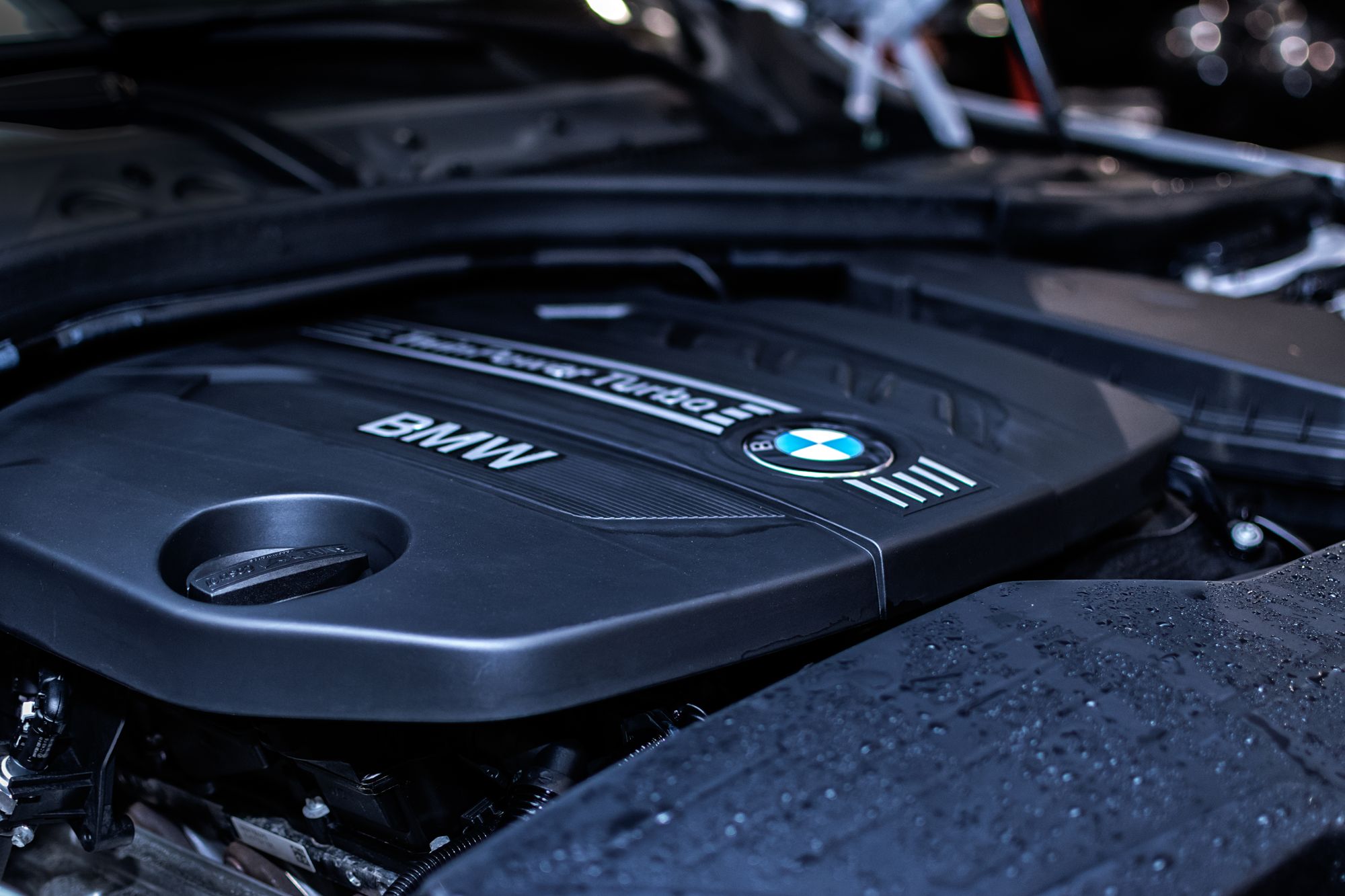
BMW engines run tighter internal tolerances and higher sustained oil temperatures than most mass-market vehicles. The margin for error with wrong-specification oil is razor-thin, and bearing wear from degraded lubrication accumulates in thousands of miles rather than tens of thousands.
The physical layout of several BMW inline-six and V8 platforms places the oil drain plug in close proximity to transmission and differential drain points — a design that has contributed directly to wrong-fluid incidents at high-volume shops where technicians work quickly and from memory rather than from model-specific documentation.
Many BMW models also use a remote oil filter housing positioned away from the drain plug. An inexperienced technician can easily miss a proper filter seal check, or confuse service points entirely. Compounding this, BMW’s Condition Based Service system can extend oil change intervals to 15,000 miles on some models, which raises the stakes for specification compliance considerably. Cheap or incorrect oil will not survive that interval. It will break down, and it will take engine components with it.
The Warning Signs You’ll See and Feel in the First 48 Hours

If something went wrong during your oil change, your car will usually tell you — but the window to act is short. Know these signs before you leave the parking lot:
- Oil pressure warning light or flickering gauge: The oil pressure light should extinguish within five seconds of startup. If it flickers at idle or stays illuminated, shut the engine off immediately. Every additional second of running multiplies the damage exponentially.
- Burning smell or smoke near the hood or exhaust: Fluid contacting hot engine surfaces produces a distinctive acrid smell. Visible smoke from hood seams or the exhaust area means something is leaking onto something hot — stop driving and inspect the car before going another mile.
- Rough idle, hard shifting, or transmission hesitation: These are not symptoms that will sort themselves out. If your transmission slips, hesitates to engage, or shifts harshly after an oil service, the wrong fluid may have been drained. This is the exact pattern reported in the Take 5 incidents.
- New knocking, ticking, or rattling from the engine: Any unfamiliar mechanical noise after an oil change indicates metal-to-metal contact. Park the car immediately — not after you get home, not after one more errand. Stop now.
Quick-Lube Shops vs. Dealerships vs. Independent Specialists: The Real Trade-Off

This is where the practical decision sits for most owners. Here is an honest breakdown of what each service tier actually offers:
| Service Provider | Typical Cost (BMW) | Oil Spec Compliance | Technician Training | Risk Level |
|---|---|---|---|---|
| Quick-lube chain | $60-$120 | Often generic grade stocked | High turnover, limited model-specific training | Highest |
| BMW dealership | $150-$250 | BMW-approved oil, confirmed specification | Factory-trained technicians | Lowest |
| Independent BMW specialist | $100-$180 | LL-rated synthetics typically stocked | Model-specific experience, no dealer overhead | Low to moderate |
The math is straightforward. Any cost savings at a quick-lube shop disappear the instant a mistake costs you $5,000 to $20,000 in engine or transmission repairs. Dealership pricing — $150 to $250 — functions as real insurance: BMW-approved oil, documented service history that supports warranty claims and resale value, and technicians who know the difference between an oil drain and a transmission drain on your specific platform. Independent BMW specialists offer the best value-to-risk ratio for most owners: correct specification oil, model-specific knowledge, and pricing without dealer overhead.
Whichever shop you choose, verify these details in writing before service begins: the exact BMW LL approval rating on the oil being used, the fill quantity in quarts, and confirmation from the technician that they have identified the correct drain point before touching anything under the car.
What to Do If You Suspect a Bad Oil Change

Your first move is the most important one: stop driving. Every mile you add after a lubrication failure multiplies repair costs and weakens any legal claim you have against the shop.
Document everything immediately. Photograph the dipstick reading, the oil cap, any fluid on the ground beneath the car, and record a timestamp on every image. This evidence is the difference between a shop paying your repair bill and you absorbing it yourself.
Take the car directly to an independent mechanic or dealer — not back to the shop that performed the service — and get a written diagnosis specifying the cause of failure. You need that documentation before the at-fault shop has any opportunity to inspect or alter the vehicle.
If the damage exceeds a few thousand dollars, consult an attorney. The engine damage cases reported against Take 5 in Georgia and Shannon Gerdauskas’s $20,000 situation both demonstrate that shops face real liability when negligence is properly documented. Social media pressure is not a substitute for a formal legal process — but a clear paper trail of documented evidence absolutely is.
The Five-Minute Check That Can Save Your Engine Before You Leave the Lot
Before you drive away from any oil service, run through this sequence. It takes five minutes and costs nothing:
- Verify the oil cap is reinstalled. Hand-tighten it yourself before the engine starts. A missing cap will spray oil across the engine bay within seconds of startup.
- Start the engine and watch the oil pressure indicator. The warning light should extinguish within five seconds. If it flickers or stays on, shut the engine off immediately and do not restart it until the issue is diagnosed.
- After a two-minute warm idle, pull and read the dipstick. Wipe it clean, reinsert it fully, and check the level and color. It should read between MIN and MAX. Amber or light brown color is correct. Milky or grey oil signals coolant contamination. Black oil that shows no change from before the service means the oil was never replaced at all.
- Walk around the car and look underneath it. A correct oil service leaves no drips within the first five minutes of running. Any puddle forming under the engine or transmission means something was not sealed correctly. The car does not leave the lot until the shop identifies and corrects the source.
Five minutes of your time in the parking lot could save you $20,000 and two months without transportation. The owners in these cases deserved better from the shops they trusted. You can protect yourself by knowing exactly what to look for — starting the moment the technician hands back your keys.