
You test-drove three cars last weekend. You probably remember the cup holder that swallowed your Stanley whole — and the one that let your coffee lean at a worrying angle — far more vividly than any 0-to-60 figure a salesperson threw at you. It turns out, that reaction is now reshaping how automakers spend their engineering budgets.
The Smallest Part of Your Car Is Causing the Biggest Quality Headaches

Cup holders have been identified as the single biggest driver of year-over-year quality improvements for the entire auto industry. Not engines, not touchscreen lag, not transmission behavior. Cup holders.
Automakers are logging more engineering hours on drink holder design than most buyers would believe, because the alternative is losing the sale. This piece explains why that shift is happening, what it means for the next car you buy, and which brands are getting it right — and which are still shipping $50,000 vehicles with holders that cannot fit a gas station fountain drink.
How a Drink Holder Became a Deal-Breaker

Wired reports that cup holder frustration carries enormous influence over whether consumers actually purchase a vehicle — not just how they rate it afterward on a satisfaction survey. This is a pre-purchase filter, which makes it a direct revenue problem for automakers, not merely a satisfaction footnote.
The shift is partly cultural and partly physical. Modern large-format drinks — 30 oz tumblers, 40 oz Stanley cups, wide-base cold brew containers — simply did not exist when most cup holder packaging specifications were written. A holder engineered to fit a 2019 Yeti is already functionally obsolete for a meaningful share of buyers today.
The deeper problem is timing. Interior architecture is locked in years before a vehicle reaches dealers. Engineers working on a 2026 model are making cup holder decisions right now, based on container trends that may shift again before the car hits showrooms. Automakers are openly struggling to keep pace with consumer demand that vehicle cup holders accommodate modern large-format drinks, and the lag between design freeze and market reality is structurally baked into the development process.
The result: a feature that costs a few dollars to manufacture is quietly becoming a measurable liability in owner quality scores and real-world reviews, at a moment when every other part of the car has never been more competitive.
What Quality Rankings Actually Measure — and Why Interior Details Now Dominate

J.D. Power’s Initial Quality Study measures reported problems per 100 vehicles across multiple categories. Interior quality has grown into one of the most consequential categories in recent cycles — not because interiors have gotten worse, but because mechanical reliability has converged so dramatically across mainstream brands that it no longer differentiates much between them.
Consider what that means practically. Engines and transmissions in the mainstream segment have become broadly reliable. A well-maintained mainstream sedan’s powertrain is unlikely to be the reason you regret your purchase. But a cup holder that tips your drink, blocks the wireless charging pad, or forces you to choose between resting your arm and using the holder — that annoys you every single commute.
When thousands of survey respondents independently report the same complaint about a specific model’s center console, J.D. Power registers it as a systemic quality problem, not an individual quirk. That moves the brand’s score. Brands treat it as an engineering priority accordingly.
The practical takeaway for buyers: a brand’s interior quality score in the Initial Quality Study is now one of the more honest proxies for day-to-day ownership satisfaction. It is worth reviewing before you sign, particularly when cross-shopping two vehicles in the same price bracket with similar reliability histories.
The Engineering Reality: Cup Holders Are Harder to Design Than They Look

A functional cup holder today has to accommodate a diameter range running from a slim 12 oz can (roughly 2.6 inches across) up to a 40 oz tumbler (roughly 3.9 inches at the base), hold contents securely at highway speeds on rough pavement, and accomplish all of that without intruding on the shifter, armrest, wireless charger, or center stack controls. That is a genuinely difficult packaging constraint.
Automakers are investing in adjustable-diameter inserts, rubberized grip liners, spring-loaded retention rings, and deeper well designs. Each solution competes for packaging space against HVAC ducts, wiring harnesses, and in some platforms, airbag modules. You cannot simply make the hole bigger — everything around it has to move, and reworking interior packaging mid-cycle is expensive enough that most brands avoid it.
Rear-seat cup holder placement presents a parallel engineering challenge. Fold-down armrest holders, door pocket holders, and seatback-mounted holders all carry different load ratings, serve different passenger demographics, and create different ergonomic problems. A rear holder that works cleanly with the armrest at one angle can become effectively unusable in its alternate position.
The cost of getting this wrong extends beyond a bad review. It registers as a measurable hit to resale positioning and conquest sales when a competitor’s center console becomes the talking point in a comparison test — and automotive journalists are increasingly making it exactly that.
Brand Scorecard: Who Is Winning the Cup Holder War
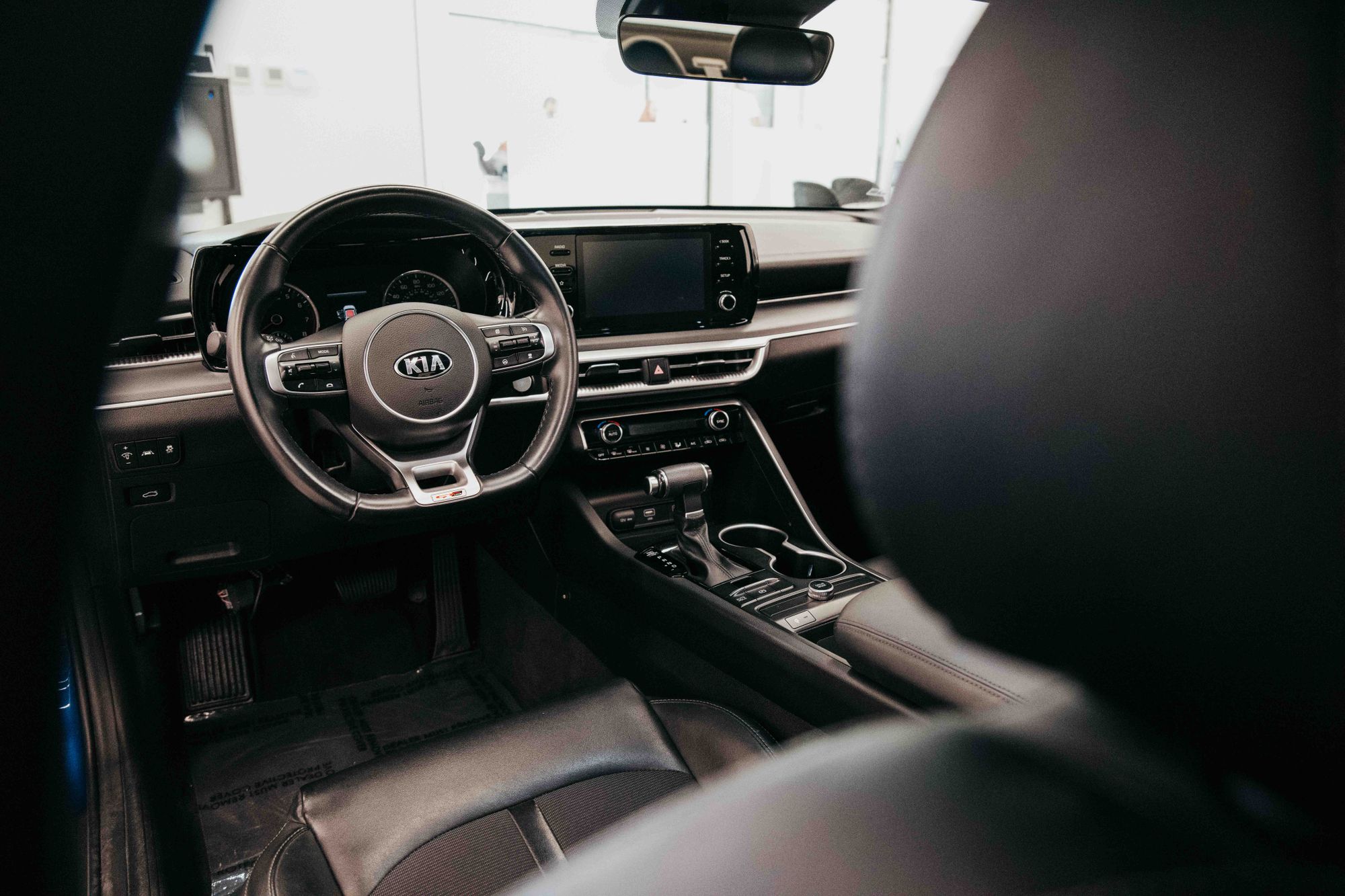
Some consistent leaders in interior quality rankings — Kia, Genesis, and Hyundai among them — have invested in oversized, dual-position center console designs with spring-loaded inserts that accommodate wide-base tumblers without rattling. Their recurring presence near the top of interior quality studies reflects deliberate engineering investment in the details buyers encounter daily.
Truck buyers have historically been reasonably well-served. Full-size pickups from Ford, Ram, and GM tend to offer more center console real estate than most passenger cars. But even in that segment, the jump from a 20 oz bottle to a 40 oz tumbler has exposed gaps in what “large” actually means on a spec sheet. A console that felt generous in 2020 can feel behind today.
Luxury brands are not automatically winning this category. Several premium European models still ship with shallow, narrow holders engineered around smaller European café-format drinks rather than American large-format tumbler habits. If you are spending $60,000 or more and you commute with a 32 oz container every morning, that is a trade-off worth verifying before you sign the paperwork.
Watch for these specific failure modes during any test drive:
- Cup holders positioned directly over HVAC vents — cold drinks warm up, hot drinks cool down unpredictably, and temperature control becomes unreliable
- Holders that block the wireless charging pad in its natural resting position
- Rear holders that only function with the armrest in one specific angle, making them effectively unusable for taller passengers or anyone who adjusts seating position
- Holders with no adjustability that rattle a half-full 30 oz tumbler at highway speed
- Placement that forces a choice between using the holder and accessing the gear selector, armrest, or center console storage simultaneously
The Bigger Picture: How Cup Holders Reshaped American Driving Culture

This is not a trivial trend. As the history of the car cup holder illustrates, the feature fundamentally altered how Americans occupy the space between departure and arrival. Commutes became eating and drinking occasions, and the center console evolved from a storage cavity into a functional daily-use zone. That behavioral shift created the expectations you now bring to every test drive, whether you articulate them or not.
Automakers now design the cup holder ecosystem — drink holder plus storage shelf plus wireless charger plus armrest height — as a single ergonomic unit, because buyers evaluate it that way even when they cannot articulate exactly why one center console feels right and another feels frustrating. Interior quality trends now track consumer lifestyle changes in near real time, and the rise of large-format reusable tumblers is the same force that has pushed some brands to redesign center consoles mid-cycle on existing platforms rather than wait for the next generation.
The downstream effect: interior packaging — how the space around you is allocated and how well each element functions with the others — is increasingly the real differentiator between vehicles that feel premium and those that feel dated, regardless of sticker price.
What to Actually Check on Your Next Test Drive
Bring your actual daily drink container to the dealership. Not a generic bottle — your bottle, the one you carry every morning. Test every cup holder position in both rows before you sit down to discuss pricing. If it does not work in the parking lot, it will not perform better on your commute.
Check whether the holder blocks gear selection, the wireless charging pad, or the armrest in the position you would realistically use. A cup holder you cannot use comfortably is effectively not a cup holder, regardless of how many positions the spec sheet lists.
Cross-reference the vehicle’s most recent J.D. Power interior quality score, then spend fifteen minutes reading owner forum threads specifically about the center console. Six months of real-world owner feedback is more predictive than a twenty-minute test drive on a dealer route designed to flatter the vehicle’s strengths.
One honest trade-off to accept before you walk in: the brands with the strongest cup holder engineering right now are not always the brands with the lowest transaction prices or the longest reliability track records. You may find that the vehicle that best accommodates your tumbler sits at a price point you were not planning on. Rank your priorities deliberately rather than letting a single feature make the decision — but do not pretend the feature does not matter, because the quality data says it does, and so does your daily routine.