
Nick Mason has owned more significant cars than most collectors will ever see in person — and he has never sold one. That changes in 2025, when chassis 10R, his 1996 McLaren F1 GTR, goes to RM Sotheby’s Monterey with an estimate north of $35 million, and the automotive world is paying close attention.
The Drummer Who Never Sells — Until Now

If you follow serious car collecting, you already know Mason’s name. Pink Floyd’s drummer has spent decades assembling one of the most credible private collections in existence, built on a principle that sounds simple but is genuinely rare: once you buy it, you keep it. That discipline is what makes the 2025 sale of chassis 10R so significant. This is not a portfolio shuffle or a quick flip. Mason acquired the F1 GTR in 1999 and held it for 26 years. When a collector with that kind of discipline breaks a hold that long, it is worth understanding exactly what he is selling and why the market is prepared to pay a record price for it.
If the hammer falls at or above $35 million, chassis 10R becomes the most expensive McLaren ever sold at auction — a landmark not just for the F1 model but for the entire McLaren collector market. You need to know precisely what justifies that number before you treat it as either obvious or absurd.
What Chassis 10R Actually Is — The Specs That Justify the Price

Start with the car itself. Chassis 10R is a 1996-specification McLaren F1 GTR, and that year designation matters more than it might appear. The 1996 GTR was a distinct evolution from the earlier race variants, developed specifically to meet revised GT1 homologation rules and to answer competitive pressure from Porsche and Mercedes. McLaren built only nine cars to this specification. Chassis 10R is the first of those nine — a positional fact that collectors pay a documented premium for, and one that will follow this car through every future transaction.
Before Mason took ownership, McLaren used 10R as an active development and testing car. That factory provenance matters enormously. You are not relying on a previous private owner’s service records or a dealer’s verbal history — the car’s early life is documented at the factory level, which is a concrete, verifiable asset, not marketing language. Magneto Magazine’s coverage of the RM Sotheby’s listing sets out the full factory testing background in detail worth reading before you form a view on valuation.
The hardware reinforces the case. The F1 GTR runs a BMW S70/2 V12 producing approximately 600 bhp in race specification, paired with a sequential gearbox and a carbon-fibre monocoque chassis. Race weight sits near 1,020 kg. That power-to-weight ratio still benchmarks credibly against current GT machinery thirty years later — which tells you something about how far ahead of its time the original engineering was.
Nick Mason’s Collection — Context That Calibrates the Value
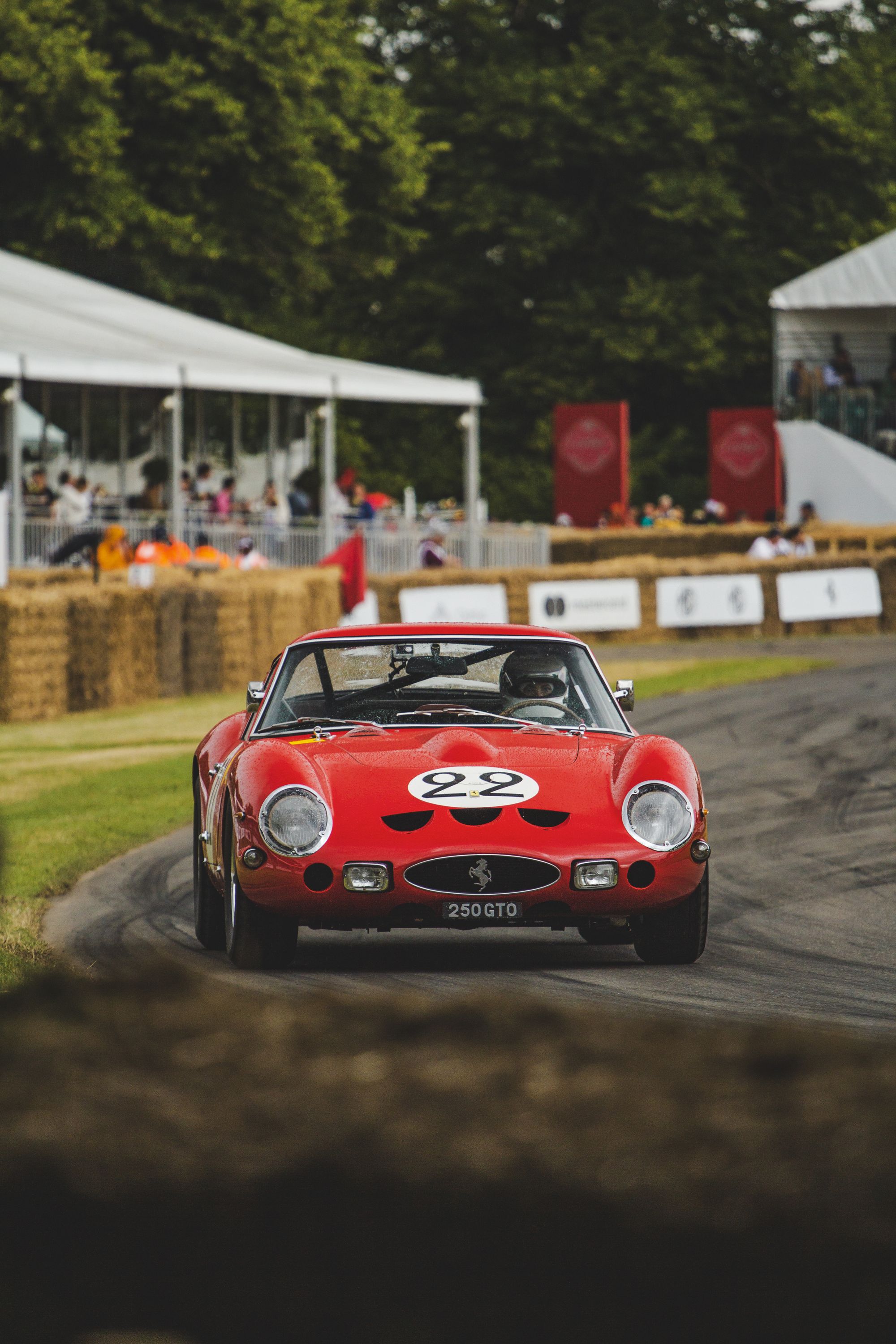
The McLaren F1 GTR story does not stand alone. To understand what Mason’s ownership actually means for 10R’s value, you need to understand the collection around it. Mason’s garage spans Ferrari 250 GTOs, a Bugatti Type 35, a Birdcage Maserati, and other machinery that makes him one of the few private collectors whose taste functions as genuine validation rather than just purchasing power. When a car carries his name in its ownership history, it carries an implied endorsement from someone who has demonstrated over decades that he knows what he is buying.
His buy-and-hold philosophy means every car in the collection has had consistent, knowledgeable stewardship. For the F1 GTR specifically, 26 years of single-owner custody from a collector of this calibre removes the provenance anxiety that follows most race cars through multiple ownership cycles. Hidden modifications, unreported incidents, degraded carbon structures — these are the concerns that suppress prices on race cars with fragmented histories. With chassis 10R, a buyer does not carry those concerns.
Mason is sometimes compared to Rowan Atkinson as a celebrity McLaren F1 owner. The comparison has a hard ceiling: Atkinson’s car is a road-going example. Chassis 10R is a factory-tested race car built to the most competitive GT specification McLaren produced. They are different assets in different markets, and treating them as equivalent because both owners are famous misreads what you are actually buying.
This photo feature on chassis 10R gives you a clear look at the car’s current condition and specification — useful if you want a practical sense of what 26 years of careful stewardship looks like on a car of this type.
Le Mans Lineage — Why the GTR Designation Changes the Maths

The McLaren F1 GTR won Le Mans outright in 1995. That result is the foundation of the model’s entire collector premium, and subsequent GTR variants competed at the highest level of GT racing through 1997. Chassis 10R is not the 1995 Le Mans winner itself, but it is a direct technical descendant of that programme — built to the revised specification McLaren developed because the competition had caught up and the factory needed to respond decisively.
That context positions 10R precisely in the market hierarchy. You are buying the evolution of the Le Mans-winning programme, produced in a run of nine, as the first example of that run, with factory testing history intact. Each of those factors individually commands a premium. Together, they create a defensible valuation argument that does not depend on sentiment or celebrity association to hold up.
Only nine 1996-specification GTRs exist. The number of those nine that also carry factory testing provenance and a 26-year single-owner history is smaller still. Scarcity at this level is not a marketing claim — it is a structural feature of the asset that any serious buyer will have stress-tested before the auction room opens.
The $35 Million Question — How This Stacks Against the Market

Standard McLaren F1 road cars have traded in the $15-20 million range at major auctions. That baseline is the right starting point for understanding the GTR premium. Race specification, factory history, positional significance as the first 1996-spec car, and the Mason provenance layer all justify a meaningful step up from that figure. At approximately double the road car baseline, $35 million is the territory where the arithmetic of scarcity and documented history starts to make the number look conservative rather than aggressive.
The current auction record for a McLaren sits below the $35 million estimate. A sale at or above that figure is a landmark transaction, not a routine result. For the broader F1 collector market, it recalibrates every other F1 and GTR currently held privately. If you own one, or advise someone who does, the Monterey result is a data point you will incorporate into your thinking regardless of whether you are bidding.
- Scarcity: Nine 1996-specification GTRs exist globally.
- Positional significance: Chassis 10R is the first of those nine.
- Factory provenance: McLaren development and testing history, documented at source.
- Single-owner tenure: 26 years under a collector with a known, credible track record.
- Market baseline: Road-going F1 examples at $15-20 million provide a defensible floor for GTR premium calculations.
What a Buyer Actually Needs to Know

The GTR is a race car, and you should be clear-eyed about what that means operationally. There is no meaningful road usability. Maintenance requires a small and specialist pool of qualified technicians. Storage, insurance, and periodic recommissioning at this specification level will run well into six figures annually before you turn a wheel. These are not reasons to avoid the asset — they are costs you need to model accurately before you bid.
Liquidity is the other realistic constraint. The pool of buyers capable of transacting at $35 million-plus for a single-marque race car is small. A major auction house platform is the only realistic exit if and when you decide to sell — you cannot move this privately on a short timeline at full value. That is a genuine limitation, and it means your holding horizon needs to be long enough that you are not forced into a suboptimal timing decision.
The counterbalance is that documented scarcity, institutional provenance, and a 26-year single-owner record create conditions where this car is structurally less speculative than the headline price implies. For a buyer with the right horizon and the financial capacity to absorb the carry costs, the risk profile is conservative relative to other assets at this price point — particularly those without chassis 10R’s depth of verifiable history.
Why Mason’s Sale Matters Beyond the Hammer Price
When a collector of Mason’s discipline breaks a 26-year hold, it signals something worth paying attention to — whether that is optimal market timing, estate planning, or a deliberate statement about where the McLaren F1 GTR sits in its own historical arc. The RM Sotheby’s Monterey platform is the correct venue for a transaction at this level. It reaches the global buyer pool capable of completing the deal, and Monterey Car Week creates the competitive environment that maximises realised price. The combination of the right car, the right seller history, and the right venue is not accidental.
Whatever the hammer price, the ownership narrative surrounding chassis 10R cannot be manufactured or compressed into a shorter timeline. Factory test car. First 1996-specification GTR. Twenty-six years with a Pink Floyd drummer who had never sold a car before. That record is not a sentimental footnote — it is the final layer of a provenance argument that has been accumulating since 1999, and it only exists because Mason chose to hold rather than sell every time the market moved.
That is the real story behind the $35 million estimate. The car earned its price over thirty years of racing history. The provenance earned its premium over twenty-six years of careful ownership. You are not buying a moment — you are buying a record that no future owner will ever be able to replicate.