
Most buyers spend more time checking the cupholders on a test drive than evaluating the audio system — and then spend every commute after that regretting it. The factory sound system is the one interior feature you interact with every single time you’re in the car, and it’s the spec most people ignore until it’s too late to change without paying twice.
The Upgrade You’ll Wish You’d Chosen at the Dealership

Retrofitting a premium sound system after purchase is expensive in a way that catches most buyers completely off guard. Purchasing an upgraded sound system for your vehicle can cost thousands of dollars once components, labor, wiring adapters, and dash kits are factored in. That same upgrade, selected as a factory option at signing, might cost significantly less. The math is not subtle.
This isn’t a niche concern. The global in-car audio system market was valued at $9.6 billion in 2022 and is projected to reach $25.4 billion by 2032, growing at a compound annual rate of 10.9%. Automakers and their audio partners know exactly how much this matters to buyers. The question is whether you do before you sign the paperwork.
What follows covers the specs worth checking, the questions worth asking at the dealership, and how to avoid locking yourself into a system you’ll be listening to unhappily for the next five to seven years.
The One Spec Most Buyers Skip: RMS Wattage
Most buyers see a wattage figure in the brochure, assume higher is better, and move on. That number is almost always a peak wattage rating — a marketing figure describing a momentary maximum output under ideal conditions. It tells you almost nothing useful about real-world performance.
What you want is the RMS wattage — root mean square — which represents continuous power output under normal operating conditions. That’s the number that actually describes how a system sounds when you’re driving. A base system might list 200W peak but deliver only 40W RMS across four speakers. A premium tier in the same vehicle might offer 600W RMS through a dedicated amplifier. Those two systems sound nothing alike, and peak wattage alone won’t tell you that.
Speaker count is another figure that gets misused in marketing. Some factory systems offer up to 36 speakers, but raw speaker count is not the same as audio quality. A well-tuned 12-speaker setup with proper placement and quality drivers can outperform a poorly designed 20-speaker array. Placement, driver quality, and amplification matter far more than the number of cones in the doors.
When you’re at the dealership, ask specifically for the RMS rating, the amplifier wattage, and whether the system uses a dedicated external amplifier or relies on head-unit power. That single question separates informed buyers from everyone else — and it will immediately tell you whether the salesperson actually knows what they’re selling.
OEM vs. Aftermarket: What You’re Actually Choosing Between

Factory (OEM) audio systems are integrated into the vehicle’s CAN bus — the communication network that connects all of the car’s electronics. That integration means steering wheel controls, driver-assist chimes, parking sensors, and navigation audio all work together seamlessly. Aftermarket installs can and frequently do disrupt parts of this integration, depending on the vehicle and the quality of the installation.
Aftermarket upgrades offer real advantages: component flexibility, stronger performance per dollar at the component level, and the ability to upgrade incrementally. But labor, wiring harness adapters, and custom dash kits add cost and complexity quickly. A comparable aftermarket retrofit in a mid-range vehicle can cost thousands of dollars once professional installation is included — and that’s before accounting for any integration issues with driver-assist systems.
For most buyers who aren’t dedicated audiophiles, the OEM premium tier hits a better value point when you factor in seamless integration, no installation risk, and coverage under the vehicle warranty. The trade-off is clear: you have to choose it before you sign. Once the car leaves the lot at base trim, your options get more expensive and more complicated.
How to Actually Evaluate a Sound System on a Test Drive

Dealerships know how to make a stock system sound acceptable. The showroom is quiet, the playlist is carefully chosen, and the volume is set at the level where most systems sound their best. Your job is to break that setup.
- Bring your own test tracks. Use music you know well across multiple genres — something with deep, defined bass; clean midrange vocals; and detailed high-frequency content. You know what these tracks are supposed to sound like. The dealership’s curated playlist is not a useful reference point.
- Test at two volume levels. Listen at conversation volume — roughly 40% of the dial — and again at highway volume, around 70 to 80 percent. Distortion that appears at higher volumes almost always signals a weak amplifier or underpowered speakers. A quality system should remain clean and composed at both levels.
- Check imaging and staging. Voices and lead instruments should feel like they occupy a defined space in front of you, a soundstage. If everything washes together across the doors without clear positioning, the system lacks the amplification and driver quality to create proper stereo imaging.
- Turn off all processing modes. Surround enhancement, bass boost, spatial audio, EQ presets — disable all of it and listen to the flat, unprocessed output. That baseline is what you’re actually buying. Sound processing can mask a weak system, and manufacturers know it.
Factory Audio Brand Tiers: What the Badge Actually Signals
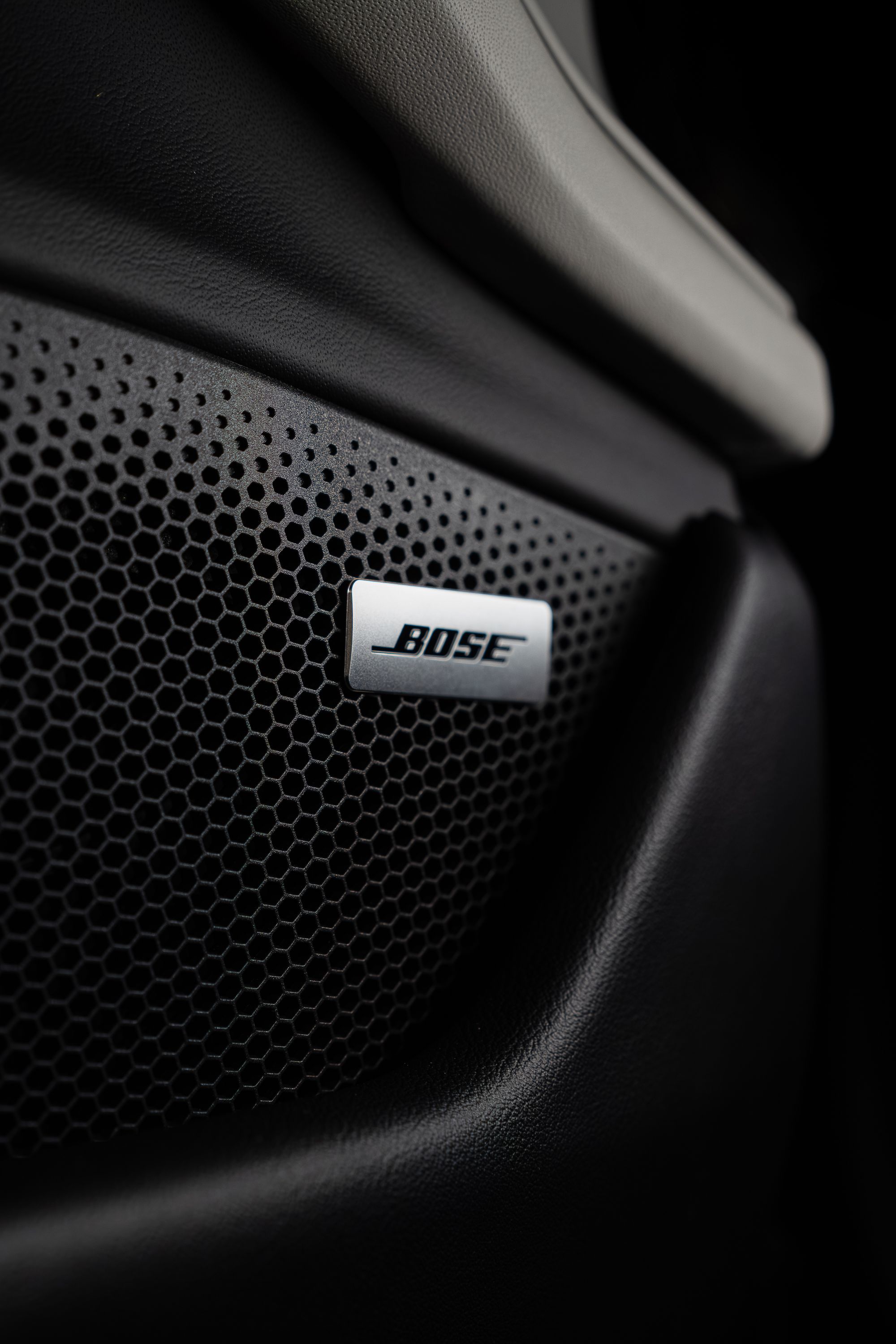
Not all named audio brands on window stickers represent the same level of performance. The same audio partner can produce meaningfully different results across vehicle platforms — the badge is a starting point, not a guarantee. Check model-specific assessments of the best factory sound systems before assuming a familiar brand name means consistent quality across the lineup.
That said, understanding the general tier structure helps you know where to focus your attention:
- Base OEM audio (entry and mid-range trims): Typically 6 to 8 speakers, low wattage, no dedicated amplifier. Functional for casual listening at moderate volumes. Not enjoyable on longer drives or highway commutes where road noise competes with the output.
- Mid-tier premium options (Bose, Harman Kardon, Sony): Generally 300 to 600W RMS, 10 to 16 speakers, dedicated amplifier. This is where the listening experience makes a meaningful jump. Expect to pay more over the base audio package — usually worth it for regular drivers.
- Flagship systems (Bang & Olufsen, Burmester, Mark Levinson, Meridian): 600W RMS and above, often 20 or more speakers, frequently with active noise cancellation integration. Systems at this tier genuinely rival quality home audio setups. They’re not for everyone, but they’re not marketing fiction either.
Is the Factory Audio Upgrade Worth It for You?

| Buyer Profile | Recommendation |
|---|---|
| Daily commuter, 45+ minutes each way | Yes. Audio quality directly affects fatigue and enjoyment over time. A premium factory package pays back in quality of life quickly when you’re in the car for an hour or more every day. |
| Financing at the limit of your budget | Skip the upgrade at purchase. Revisit a targeted aftermarket component upgrade — amplifier and speakers — in 12 to 18 months for better cost control and flexibility. |
| Used car buyer | Factor the cost of a full aftermarket system into your offer if the trim level doesn’t include premium audio. That expense belongs in your negotiation, not in your budget after signing. |
| Primary listener via Bluetooth streaming | Compressed Bluetooth audio limits even the best system. Confirm whether the vehicle supports lossless streaming via Apple Music or Tidal through CarPlay or Android Auto before committing to flagship audio. |
What to Check Before You Sign
Pull the window sticker and find the audio package line item. If it lists a named brand partner and a dedicated amplifier, you’re in the right tier. If it reads something like “AM/FM/6-speaker audio,” assume base-level performance and decide whether the upgrade cost on the options sheet is worth it to you before you’re sitting in the finance office.
Ask your dealer directly whether the premium audio package can be added post-purchase at the same price. Sometimes it can be dealer-installed. Often it can’t — and the moment you hear that answer is precisely when most buyers realize they should have asked two hours earlier.
The competitive pressure in this segment is only increasing. The in-car audio market is projected to reach $40.69 billion by 2035, growing at 11.6% annually. Automakers are investing heavily across the board, which means audio specs across shortlisted models are worth comparing directly — right alongside horsepower, cargo volume, and fuel economy figures.
Spend 10 deliberate minutes evaluating the sound system on your test drive. Bring your own music, disable the processing modes, push the volume, and ask for the RMS numbers. It’s the interior feature you’ll use every single day you own the car — and it’s the one spec most buyers ignore until it’s too late to change without paying for it twice.