
In 1990, a 400-horsepower car meant a Corvette ZR-1 or a Ferrari — something rare, expensive, and deliberately antisocial. Today, a Dodge Durango SUV produces 360 hp in its base V8 trim, and a Chrysler Pacifica minivan — a vehicle designed to haul car seats, soccer bags, and juice boxes — ships from the factory with 287 hp. Somewhere between then and now, the number stopped meaning what it used to. The real question isn’t whether that’s impressive. It’s whether you’re paying for power you’ll never actually use.
What Horsepower Actually Measures (And Why Most Buyers Misread It)

Horsepower is a rate of doing work — specifically, the rate at which an engine can move a load over time. HowStuffWorks notes that moving a relatively modest load requires surprisingly little horsepower — as little as 4.24 horsepower to move a one-foot load in one second — which puts the 300-hp family crossover in genuinely absurd perspective. The physics of moving one or two people to work or school do not require the output of a late-1990s muscle car. Yet here we are.
Part of the confusion comes from conflating horsepower with torque. Torque is the rotational pulling force you feel when you press the accelerator from a standstill — it’s what gets a heavy vehicle moving. Horsepower is what sustains acceleration at higher speeds. When you merge onto a highway or pass a slow truck on a two-lane road, you’re drawing on both. But the peak horsepower figure on the window sticker is measured at high RPM under controlled dynamometer conditions. It is not a number your engine approaches during your morning commute, your school run, or your Saturday errands. It is, in practical terms, a ceiling your daily driving rarely reaches.
That distinction matters for your wallet. You pay — in purchase price, fuel costs, and sometimes insurance premiums — for a peak output your driving habits may never trigger. Understanding the gap between that peak number and your real-world usage is the most useful thing you can do before visiting a dealership.
Horsepower Inflation: How the Average Family Car Got This Powerful
The progression is real, and it has a logic to it, even if the end result looks a little out of hand. The 2000 Honda Accord produced 135 hp. The 2024 model starts at 192 hp in base four-cylinder trim. That’s not primarily because engineers wanted to give you a faster commute — it’s because the 2024 Accord is significantly heavier, loaded with safety systems, driver-assistance technology, and comfort equipment that the 2000 model never carried. More weight requires more power just to deliver a comparable driving experience. The spec sheet looks more impressive, but the actual performance gain for everyday use is modest.
Three forces drove this inflation across the entire industry. First, weight gain from mandatory and consumer-demanded safety equipment added hundreds of pounds to virtually every vehicle class. Second, buyer expectations shifted toward effortless, instant acceleration — the sense that a vehicle should respond immediately regardless of load or speed. Third, and most cynically, automakers discovered that horsepower is an easy number to advertise. It wins spec-sheet comparisons at the dealership even when it contributes almost nothing to the actual ownership experience.
The rise of turbocharged small-displacement engines added another layer of complexity. A 2.0-liter turbocharged four-cylinder producing 250 hp sounds significant, but that power often arrives in a narrow RPM band that requires sustained throttle to access. In everyday driving conditions — partial throttle, moderate speeds, stop-and-go traffic — the real-world feel is frequently closer to a naturally aspirated 180-hp engine. You’re buying the peak number, not the full experience that number implies.
The trade-off is worth stating plainly: more horsepower typically means more mechanical complexity, higher repair costs when things go wrong, and in non-hybrid applications, measurably worse fuel economy. Those costs arrive long after the showroom excitement fades.
The Real Numbers: How Much Horsepower Do You Actually Need?

Jalopnik’s analysis concludes that 200 horsepower is adequate for most driving tasks, 300 hp is plenty for virtually anything, and anything above 300 is effectively excess for daily use. That framing is worth internalizing before you walk into a dealership.
Here’s a practical framework based on how you actually drive:
| Driving Profile | HP Range Needed | Notes |
|---|---|---|
| City commuter, mostly local roads | 150-180 hp | More than adequate; fuel economy matters more here than output |
| Highway cruiser, light towing | 200-250 hp | Comfortable passing and sustained speed without strain |
| Family hauler, frequent merging and passing | 250-300 hp | Covers loaded-vehicle weight and confident highway use |
| Performance driving or heavy towing | 300+ hp | Justified use case; this is where the number earns its keep |
At 300 hp, you have confident highway merging, safe and decisive passing on two-lane roads, and comfortable towing of a small trailer or boat. The real-world gap between 300 hp and 450 hp is measured in tenths of a second on a 0-60 run — tenths that most drivers never trigger because they’re not at full throttle in traffic. Above 400 hp, you are largely buying a lower 0-60 number and a more exciting spec sheet. Both are legitimate things to want. Neither improves your Tuesday morning commute.
Five Cars, Five Power Levels: What the Numbers Actually Cost You

The comparison below uses base MSRP figures and EPA combined fuel economy ratings current at time of writing. Trim levels and options affect all figures — treat this as a directional comparison, not a configurator quote.
| Vehicle | Horsepower | EPA Combined MPG | Base MSRP (approx.) | Real-World Verdict |
|---|---|---|---|---|
| Toyota Corolla (base) | 169 hp | 32 mpg | ~$22,000 | Handles 95% of daily driving without complaint |
| Toyota Camry (2.5L four-cylinder) | 203 hp | 32 mpg | ~$28,000 | The practical sweet spot for most buyers |
| Honda Accord Hybrid | 204 hp (combined system output) | 44 mpg | ~$31,000 | Demonstrates that adequate power and strong efficiency aren’t a trade-off |
| Chrysler Pacifica (3.6L V6) | 287 hp | 22 mpg | ~$40,000 | Output driven by vehicle weight and buyer expectations, not by what a minivan’s mission actually requires |
| Ford Mustang GT (5.0L V8) | 486 hp | 16 mpg | ~$38,000 | Double the Camry’s power, half the fuel economy — the cost compounds significantly over a vehicle’s lifetime |
The Pacifica column is where the article’s central irony lands hardest. That minivan does not need 287 hp to move a family safely. It carries that output because it weighs over 4,300 pounds and because buyers conditioned by horsepower inflation expect a vehicle to feel effortless regardless of load. The physics of the school run don’t demand that output. The marketing of the vehicle that does the school run does.
The Camry-to-Mustang comparison makes the long-term fuel cost visible. Doubling your horsepower — from 203 to 486 — roughly halves your combined fuel economy, from 32 mpg to 16 mpg. Across 150,000 miles at current fuel prices, that gap compounds into thousands of dollars spent at the pump rather than anywhere else. That is the tangible, recurring cost of buying power you don’t use.
When More Horsepower Is Actually Worth It
This is not an argument that power is inherently wasteful. There are legitimate, specific reasons to prioritize a higher output figure, and you should understand them clearly so you can make the decision honestly.
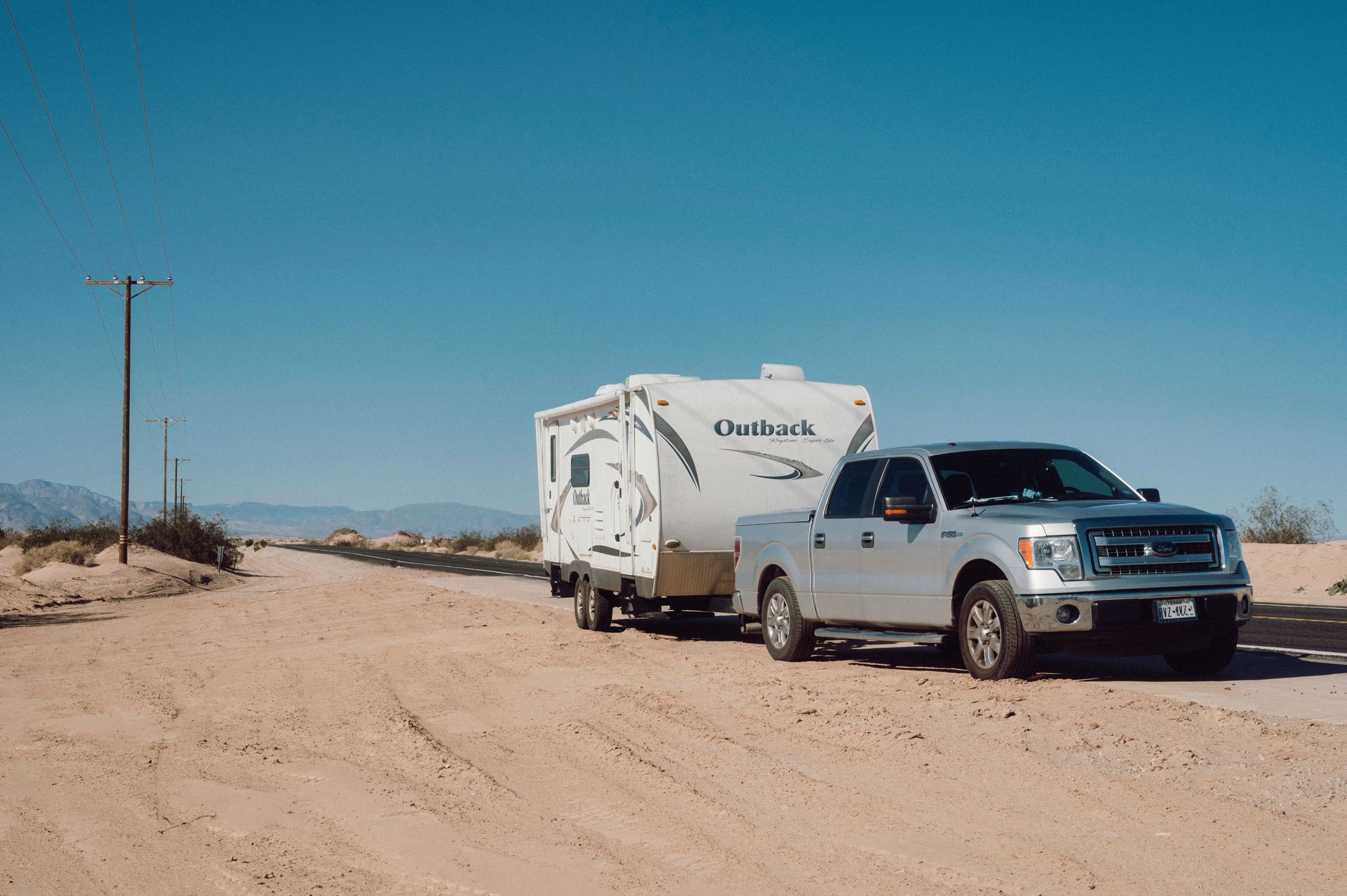
- Regular towing near a vehicle’s rated capacity. If you’re pulling a trailer, a boat, or a camper at or near the vehicle’s tow rating, sustained power matters. An undersized engine working at the edge of its capability runs hotter, wears faster, and fatigues the driver. Stepping up to 300-plus hp in this scenario is entirely defensible.
- Mountain commutes or sustained grades. Significant elevation changes punish underpowered vehicles in ways that flat-highway driving never reveals. If your daily route involves meaningful climbing at highway speeds, engine output that felt sufficient during a test drive on flat terrain may feel perpetually strained within a week of ownership.
- Frequent high-speed interstate merging in congested corridors. Short merge ramps, high traffic density, and large speed differentials are real scenarios where available acceleration has a safety dimension. That said, 200 hp handles this confidently. You don’t need 400 to merge safely.
- Electric vehicles deserve a separate note. An electric motor delivers its full torque output from zero RPM, with no lag, no narrow power band, and no need for the engine to spool up. A 300-hp EV genuinely feels and performs like a 300-hp vehicle in everyday driving in a way that a turbocharged internal combustion engine often does not. The horsepower figure carries more real-world weight when it’s backed by instant, linear torque delivery across the entire speed range.
There is a safety argument sometimes made for high-horsepower vehicles — the idea that more power in reserve means more margin for emergency maneuvers. That argument has a narrow kernel of truth, but it is easily overstated. A 200-hp vehicle gives you more than enough acceleration to execute a safe passing maneuver or avoid a road hazard. The incremental safety benefit of 500 hp over 250 hp in a real-world emergency situation is vanishingly small compared with the price and running-cost difference between those two vehicles.
A clean purchase filter: if your driving life includes a genuine tow rating requirement, a mountain commute, or regularly congested high-speed interstate merges, stepping to 280-320 hp is a rational decision. Beyond that, interrogate honestly whether you’re buying a capability you’ll use or an identity you want to project. Both can be valid — just know which one you’re doing, and price accordingly.
The Bottom Line: What to Do With This at the Dealership

For the majority of buyers — urban and suburban commuters, school-run parents, highway travelers covering mixed terrain — the practical sweet spot is 200 to 250 hp. That range delivers confident acceleration, safe highway behavior, and the occasional light-towing task without punishing your fuel budget or your purchase price. The Honda Accord Hybrid at 204 hp and 44 mpg is not a compromise vehicle. It is a well-engineered answer to what most drivers actually do, day after day.
When a salesperson leads with horsepower — and they will — redirect the conversation. Ask about the torque curve and where in the RPM range it peaks. Ask about real-world fuel economy from owner forums and independent testing rather than EPA window-sticker estimates. Ask about towing capacity if it applies to you, and confirm that the tow rating doesn’t require a specific higher-output trim that costs considerably more. Those numbers describe how a car actually behaves in your life. The peak horsepower figure describes how it performs on a dynamometer at full throttle under ideal conditions.
There is nothing irrational about enjoying the sensation of strong acceleration, and the market will keep providing it at every price point. But a meaningful portion of the horsepower figure on that window sticker exists to win a spec-sheet comparison against the car parked two rows over — not to improve your drive home. Know what you’re buying, and make sure the number you’re paying for is one you’ll actually use.
300 hp is plenty for virtually every driver reading this. The question worth asking before you sign isn’t whether your car can sprint to 60 mph in 5.2 seconds. It’s whether you’re paying for that number every time you fill the tank — for the next decade.