
Ford has issued 51 recalls in 2026 alone—more than any other automaker, and nearly triple the count of every other automaker. If you own a Ford, are shopping for one, or just traded one in, that number isn’t background noise. It’s a direct signal about your safety, your resale value, and what you should do before your next drive.
The Scale of Ford’s 2026 Recall Problem

According to NHTSA data, Ford—headquartered in Dearborn, Michigan—has issued 51 recalls since January 1, 2026, making it the runaway leader among all automakers. This isn’t a modest gap. Ford’s 2026 recall count is nearly triple that of every other automaker, a margin that rules out bad luck as an explanation.
Zoom out to a rolling six-month window and the picture gets worse. Ford has issued 53 recalls in just six months—a volume that stretches credibility as coincidence. That’s not a rounding error across a large fleet. That’s a pattern, and it deserves a straight answer about what’s actually driving it.
What Ford Is Actually Recalling: The Full Failure Menu

The scope of Ford’s recall list is one of the most telling details. This isn’t one faulty component rippling through one model line. The failures span nearly every critical vehicle system: software glitches, rearview camera failures, trailer brake malfunctions, windshield wiper failures, seat belt defects, and transmission problems. When recalls cut across software, mechanical, and safety-restraint systems simultaneously, you’re looking at a quality control problem that crosses engineering disciplines—not a single bad batch of parts.
One of the most alarming actions warned owners of more than 741,000 U.S. vehicles that their cars could roll away without warning. A vehicle that moves when it shouldn’t is not a software inconvenience—it’s a life-threatening failure. Separately, more than 1.3 million vehicles tied to Ford’s two Louisville-area manufacturing plants are caught up in these actions, concentrating risk in specific production lines and suggesting that plant-level quality processes are a meaningful part of the story.
The Model Year Window That Tells the Real Story

Ford’s own data points directly at a specific era. The company states that 90% of its 2026 recalls involve model years 2015 through 2022—vehicles that were engineered roughly between 2013 and 2020. That window maps closely onto a period when Ford was executing some of the most ambitious product launches in its recent history simultaneously: the aluminum-body F-150 redesign, a complete Explorer overhaul, the Bronco platform launch, and a major push into electric vehicles.
Spreading engineering resources thin across multiple high-profile launches is a known, documented quality risk in automotive development. The recall data now puts hard numbers on what that cost. If you own a Ford from model years 2015 through 2022, you are statistically inside the highest-risk window. Check the NHTSA recall database by VIN before your next drive—not next month, before your next drive.
Ford vs. the Competition: Recall Count in Context
Context matters when reading recall numbers. High recall counts can sometimes reflect a proactive safety culture, where an automaker self-reports aggressively rather than waiting for regulatory pressure. That is a legitimate credit to give. But the sheer volume and severity of Ford’s 2026 situation makes that charitable reading difficult to sustain at face value.
Toyota and GM are both high-volume manufacturers with U.S. sales footprints comparable to Ford’s. Neither has approached Ford’s recall pace in the same period, which undercuts the argument that Ford’s numbers are simply a function of fleet size. When you’re cross-shopping a Ford against a competitor, recall frequency is a legitimate reliability metric with real-world consequences: dealer downtime when your vehicle is pulled in for repairs, parts shortages that delay fixes, and diminished resale value on a model with a documented recall history.
Which Ford Models Carry the Most Risk Right Now
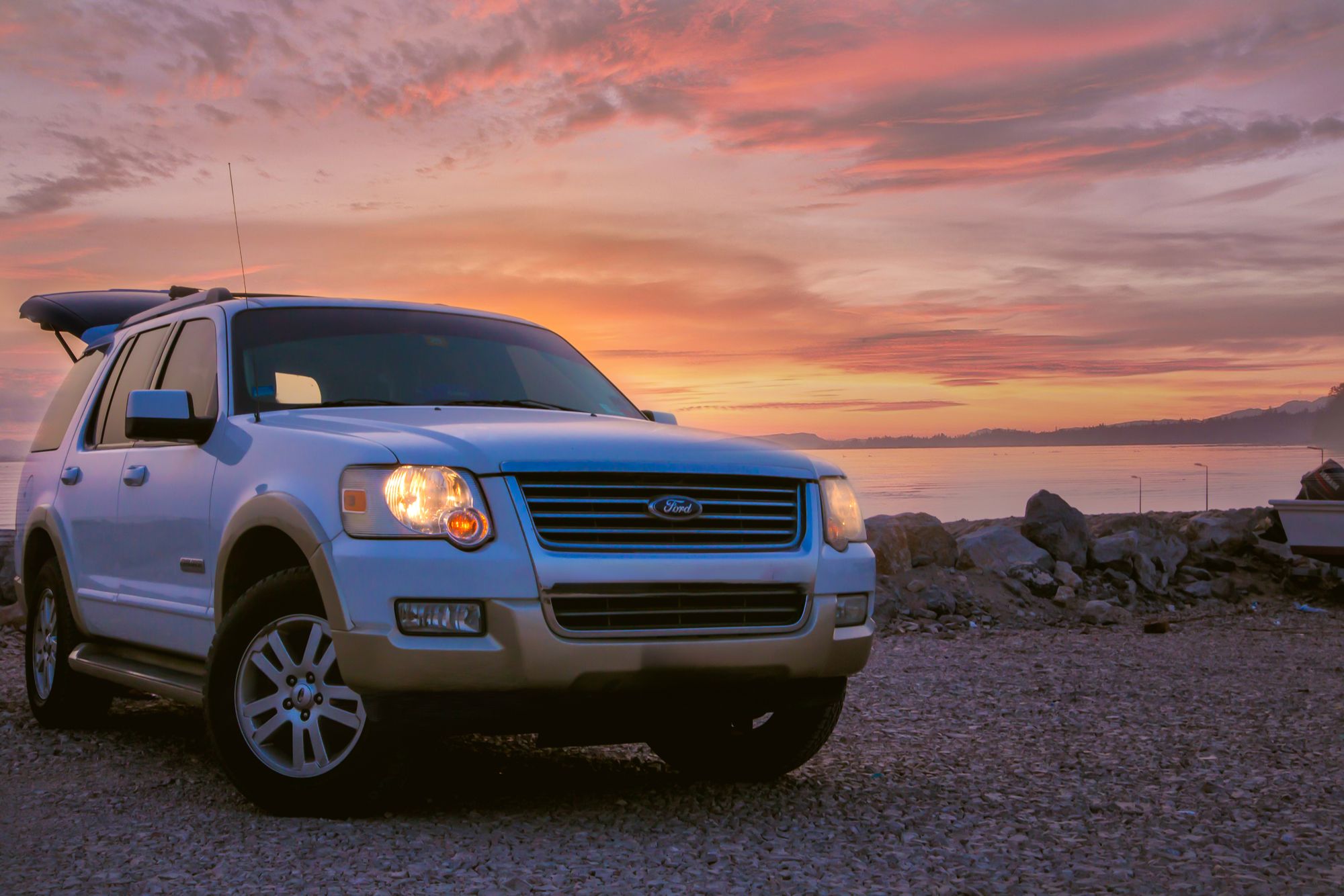
Not every Ford in the lot carries equal risk, but the exposure is broad. Here is where the concentration is highest based on available recall data:
- Ford Escape, Ford Explorer, and Lincoln Corsair: The Louisville plant concentration implicates these production runs most directly in the 1.3-million-vehicle recall pool.
- F-Series, Explorer, and Edge: The roll-away warning affecting more than 741,000 vehicles cut across multiple nameplates. Owners of any of these should verify their VIN status immediately.
- 2017-2020 F-150, Explorer, and Expedition: Transmission and software recalls historically hit models mid-cycle, making this ownership group a priority for an NHTSA lookup.
Use NHTSA.dot.gov or Ford’s owner portal with your 17-digit VIN. Do not rely on dealer notification alone—recall letters routinely lag the official NHTSA filing by weeks, and during that gap you are driving a vehicle with a documented, unresolved safety defect.
What This Means If You Are Buying a Ford Right Now

A high recall history does not automatically mean a vehicle is unsafe today. Most recalls are remedied at no cost to you, and a properly repaired vehicle can be entirely sound. But “can be” requires verification, and Ford’s recall leadership in 2026 means verification is not optional—it is the first step of any purchase decision.
Here is how to protect yourself at each stage of the buying process:
- Used Ford buyers (model years 2015-2022): Treat every unit as recall-suspect until VIN-checked. An open recall can complicate financing, insurance, and future resale. An unrepaired recall is also a documented leverage point—use it to negotiate a price reduction or require the dealer to complete the repair before delivery.
- New Ford buyers: Ask the dealer to print the NHTSA recall report for the specific VIN on the lot—not the model in general. Confirm in writing that all open actions are cleared before you sign anything.
- Current Ford owners: Check your VIN now at NHTSA.dot.gov. If you have an open recall, schedule the repair promptly. Deferring a recall repair on a vehicle with a roll-away or seat belt defect is not a low-stakes delay.
The Bottom Line: Pattern, Not Coincidence
Fifty-one recalls in 2026, nearly triple every other automaker’s count, spanning software failures to seat belt defects to vehicles that can roll away on their own—that is a pattern, not a statistical anomaly. Ford’s own acknowledgment that 90% of affected vehicles come from a specific seven-year engineering era points to structural decisions made during a period of overextended product development. The ambition of that era was real. So is the recall bill it generated.
The practical upside: recalls are public, free to fix, and fully searchable. You have more actionable safety information available to you than any previous generation of Ford owner. Use it. Monitor NHTSA alerts for your specific VIN, do not defer recall repairs regardless of how minor they sound, and factor Ford’s current quality trajectory honestly into any buy, sell, or keep decision you are facing. The data is there. The only question is whether you act on it.