
A Florida man walked into an O’Reilly Auto Parts, watched a store worker spray-paint an engine component, and was told the job would add 25 or more horsepower. The story spread quickly online — and it resonated, because almost anyone who has spent time in DIY car culture has encountered some version of the same pitch. The details change. The pattern never does.
What Actually Happened at O’Reilly
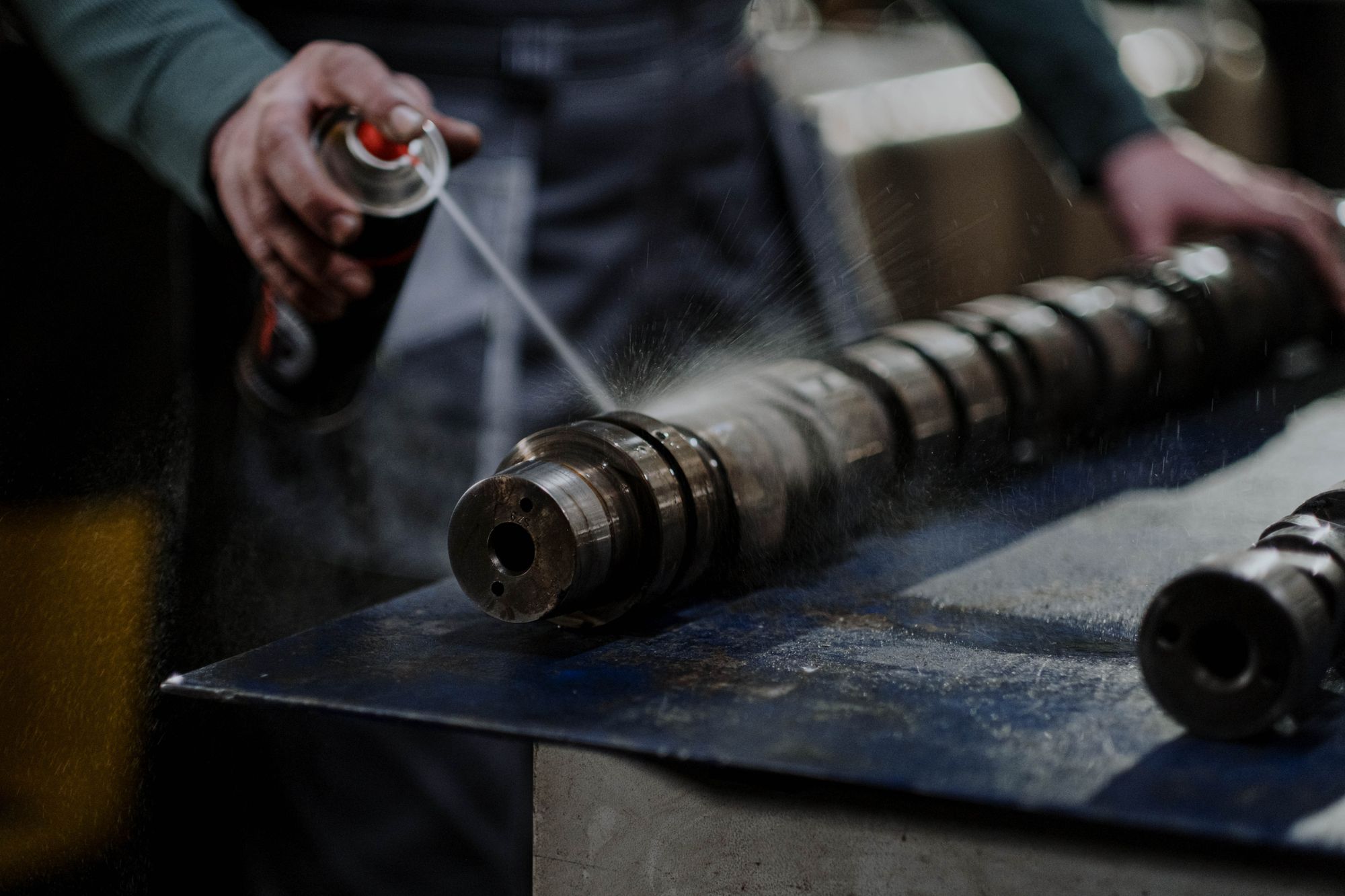
The incident, which circulated widely on social media, involved a worker applying spray paint to an engine part and claiming the coating would produce a significant, specific horsepower gain. That claim is false. It was false at the moment it was made, it is false now, and understanding precisely why it is false will protect you from every variation of this scam you encounter going forward — because you will encounter them again.
Before you spend a dollar on any modification: can spray paint on an engine part add measurable horsepower? No. Not 25 horsepower. Not five. Not one. Not a fraction of one. Here is the engineering reason, the psychological reason, and what you should be doing with your modification budget instead.
What Horsepower Actually Is — and Why Paint Cannot Touch It

Horsepower is a measurement of combustion efficiency converted to mechanical work. Your engine produces power through four fundamental variables: the air-fuel mixture entering the cylinder, the compression ratio squeezing that mixture, the ignition timing firing it, and the exhaust flow clearing the spent gases. Every legitimate performance modification — every single one — works by improving at least one of those four variables in a measurable, repeatable way.
A surface coating applied to the outside of an engine component changes none of them. Spray paint does not alter displacement. It does not raise compression ratio. It does not improve valve lift, increase airflow through the intake tract, or alter ignition timing by a single degree. It sits on the outside of a part and does what paint does: it covers a surface.
A dynamometer measures real wheel horsepower under controlled, repeatable conditions. No credible, independent dyno test has ever recorded a gain from spray-painting an engine component, because there is no physical mechanism by which that result could occur. If someone presents you with a dyno sheet claiming gains from spray paint, examine carefully what else changed between the baseline run and the pull — because the paint is not what moved the needle.
This baseline understanding is genuinely protective. Any time someone pitches you a modification, your first question should be: which of the four variables does this affect, and where is the independent dyno data proving it?
Why People Believe It Anyway: The Placebo Mod Problem

Fake modifications persist not because people are foolish, but because the human brain is wired for confirmation bias. When you spend money and effort on a modification, you are primed to perceive a difference. The car feels snappier. Throttle response seems crisper. You find yourself pressing the accelerator with more confidence. None of that is deliberate self-deception — it is a predictable cognitive response when expectation is involved.
Social media amplifies this dramatically. A post claiming “25 horsepower from spray paint” generates shares, arguments, and engagement for days. A post showing a flat dyno overlay with zero gain between baseline and test gets ignored by the algorithm within hours. Every major platform’s incentive structure rewards the dramatic and suppresses the measured, which is why these myths outlive their debunking by years.
There is one narrow area where thermal coatings and paint-adjacent products have a legitimate engineering role — but the role matters. High-temperature ceramic coatings applied to exhaust headers can reduce heat soak and protect nearby sensors, wiring, and rubber components from thermal degradation. That is a reliability benefit. It is not a power benefit. Those coatings prevent power loss under sustained high-heat conditions; they do not generate power that was never there. And they are professional, high-temperature-rated products applied to specific surfaces for specific thermal engineering reasons — not rattle-can jobs performed in a retail parking lot.
The line between a legitimate thermal management product and a spray-paint horsepower scam is crossed the moment the marketing language promises power gains without a dyno sheet tied to a specific platform to support the claim.
Real Modifications vs. Fake Ones: Where the Numbers Actually Stand

The table below lets you evaluate common modifications against documented results. Use it as a quick filter before anything leaves your wallet.
| Modification | Documented HP Gain | Approximate Cost | Reliability Impact |
|---|---|---|---|
| ECU tune (turbocharged platform) | 15-50+ hp (platform-specific) | $300-$800 | Neutral to positive when performed correctly |
| Cold air intake (naturally aspirated) | 5-15 hp depending on platform | $150-$400 | Neutral; verify fitment and filter quality |
| Aftermarket cat-back exhaust | 5-20 hp depending on platform | $400-$1,500+ | Neutral to positive; typically increases cabin noise |
| Spark plugs and ignition service | Restores baseline power; not an addition | $30-$150 | Strongly positive — eliminates misfires and fuel waste |
| Spray-painted engine components | 0 hp | $8-$15 per can | Neutral to hazardous near heat sources or sensors |
| Fuel-line magnet devices | 0 hp | $20-$80 | Neutral — simply ineffective |
| Fuel additives (no underlying fuel system issue) | 0 hp | $10-$30 | Neutral to mildly negative; some formulations can harm oxygen sensors |
The pattern in that table is worth pausing on. A quality ECU tune on a turbocharged platform — often the single highest-value modification available per dollar spent — costs under $800 and delivers gains you can read on paper and feel in real traffic. A can of spray paint costs $8 and delivers nothing. If a product cannot produce independent dyno data tied to a specific vehicle platform, treat the horsepower number as fiction regardless of how confidently it is stated.
When Coatings Near an Engine Actually Have Engineering Merit

To be precise about the subject: there are narrow, legitimate cases where coatings applied near or on engine components serve a real engineering purpose. You should understand the difference so you do not dismiss every coating product reflexively.
- High-temperature exhaust header coatings rated to 1,200-2,000°F can meaningfully reduce under-hood temperatures, which protects sensors, wiring harnesses, and rubber hoses from heat-related degradation over time. The benefit is reliability and component longevity, not horsepower.
- Valve cover and intake manifold paint applied for aesthetic purposes is completely harmless and entirely cosmetic. If you want a cleaner engine bay presentation, the work is reasonable. A dyno number will not change as a result.
- Professional thermal barrier coatings on piston crowns and combustion chamber surfaces exist in legitimate motorsport applications, but these are applied by specialists using controlled processes to internal surfaces — not by a retail worker with a rattle can in a parking lot.
The practical rule: if a coating is a professionally applied thermal management solution for an internal or exhaust surface, it may have genuine engineering value. If someone is spray-painting an external engine part in a retail parking lot and claiming a round horsepower number as the result, leave.
How to Identify a Fake Horsepower Claim Before You Spend Anything

Protecting your modification budget consistently comes down to four questions asked before any purchase.
- Ask for independent dyno data. Legitimate performance products — intakes, exhausts, tunes — have third-party dyno results tied to specific vehicle platforms. If the only evidence offered is testimonials and subjective impressions, that is not data and should not be treated as data.
- Be skeptical of universal claims. Real power gains are platform-specific. A product claiming to work on any car with any engine is a strong signal that it works on none of them in any measurable way.
- Search the product name alongside “dyno test” or “independent review.” If the only results are the seller’s own content, that absence is itself informative. Enthusiast communities and independent shops test popular products thoroughly. Genuine performers accumulate independent documentation quickly.
- Do not use price as a quality filter in either direction. Some of the highest-value modifications are inexpensive. An ECU tune is frequently the cheapest horsepower available per dollar on turbocharged platforms. Expensive snake oil is still snake oil, and cheap legitimate maintenance still works.
Where to Actually Spend Your Modification Budget
If you want measurable horsepower gains on a limited budget, here is an honest priority order built on what the data supports rather than what sells well in a parking lot conversation.
Start with spark plugs and a full ignition service. This restores your engine to its designed baseline and eliminates misfires that are quietly costing you power and fuel economy every time you drive. It is unglamorous work that consistently outperforms any number of trendy add-ons.
Follow that with an ECU tune if your platform supports one. Calibration is almost always the highest-value modification available on any car with a modern engine management system, because it optimizes the variables your engine is already working with rather than adding hardware that may or may not complement the factory tune.
After those two steps, intake and exhaust modifications make sense if your tuned platform shows documented gains on those specific components and your use case supports the trade-offs — including noise, emissions compliance in your area, and real-world fuel economy changes rather than just peak dyno numbers.
Factor fuel economy into every decision. A modification that adds 30 horsepower but costs four miles per gallon is a trade-off you pay for at every fill-up, week after week. Ownership math over 12 months usually tells a more honest story than a single dyno pull.
The Florida O’Reilly story is easy to laugh at until you recognize that drivers spend real money on exactly this category of claim every day — in stores, in forums, and in comment sections. Spray paint, magnets, mystery additives, and miracle stickers all rely on the same mechanism: a plausible-sounding claim, a confident delivery, and a buyer who has not yet asked which of the four combustion variables the product actually improves. Ask that question first, every time, and the answers will filter the scams from the substance faster than any product review.