
The Chrysler 300 is gone. After 2023, Stellantis ended production of the last rear-wheel-drive, V8-powered full-size sedan available in America for under $60,000. If you’re only now paying attention, the history you missed is more complicated — and more interesting — than most obituaries have acknowledged.
The Letter Series: Where the Bloodline Actually Starts (1955-1965)

Before the 300 became a status symbol or a fleet staple, it was a factory-built race weapon. The Chrysler 300 Letter Series — running from the C-300 in 1955 through the 300L in 1965 — were not luxury sedans with sporting pretensions. They were engineered to win at Daytona and dominate NASCAR. The 1955 C-300 produced 300 horsepower at a time when that figure barely existed outside dedicated race machinery. That is where the name originated: not a model code, not a displacement reference, but 300 horsepower in a production sedan.
The engine behind that claim was the FirePower Hemi — Chrysler’s hemispherical-combustion-chamber V8, which gave the company a genuine performance advantage that Ford and General Motors spent years working to neutralize. The Hemi’s design placed spark plugs at the center of a dome-shaped combustion chamber, improving burn efficiency and allowing more aggressive tuning than the wedge-head engines most competitors were running. On the salt flats and banked ovals of the era, Letter Series cars were legitimate threats, not promotional props.
What followed, however, requires honesty. After the 300L left the line in 1965, the nameplate drifted badly. Through the late 1960s, 1970s, and into the 1980s, Chrysler attached the 300 badge to ordinary family sedans and front-wheel-drive models that shared nothing meaningful with their ancestors. The badge survived. The engineering lineage did not — not until 2005. That 40-year detour matters for understanding why the modern revival landed with the force it did.
The 2005 Comeback: When Chrysler Actually Surprised the Market

The first generation of the modern Chrysler 300 ran from 2005 through 2010, and the platform choice alone was a statement. At a moment when the American auto industry had largely committed to front-wheel drive for cost and packaging efficiency, the 300 arrived on a rear-wheel-drive architecture shared with the Dodge Magnum and Charger. All-wheel drive was available, but the default layout was RWD — the configuration that actually defines how a car of this type should drive.
The 2005 300C’s 5.7-liter Hemi V8 was not a nostalgia exercise dressed up as a powertrain. It was a functioning performance engine in a sedan priced in the low-$30,000 range, and it made the car genuinely quick for its size and price point. The Hemi name returned with something real behind it.
The trade-offs were real too. Gen 1 interior quality was underwhelming against European benchmarks — materials that a BMW 5 Series or Mercedes-Benz E-Class buyer would have found unacceptable, and technology that dated quickly. But the value equation was difficult to argue against: a genuine V8, rear-wheel drive, bold proportional styling, and a price that undercut the German competition by tens of thousands of dollars. The market responded accordingly. The 300 became a mainstream success and embedded itself in American popular culture in ways Chrysler had not managed in decades.
Generations at a Glance: What Changed and What Didn’t

If you are shopping for a used example, understanding what you are actually buying across the two modern generations is essential. The table below gives you the key distinctions:
| Generation | Model Years | Platform | Key Engine Options | Notable Updates |
|---|---|---|---|---|
| Gen 1 | 2005-2010 | LX (RWD/AWD) | 2.7L V6, 3.5L V6, 5.7L Hemi V8, 6.1L SRT8 V8 | Original revival; bold exterior design, value-focused pricing |
| Gen 2 | 2011-2023 | LX revised (RWD/AWD) | 3.6L Pentastar V6, 5.7L Hemi V8, 6.4L SRT V8, 6.2L Hellcat V8 | Improved interior materials, revised suspension tuning, Uconnect infotainment, 2015 exterior refresh |
The Gen 2 update in 2011 addressed the interior quality criticism directly. Materials improved across trim levels, the Uconnect infotainment system gave the cabin a functional technology stack, and suspension tuning became more refined without erasing the car’s character. For used buyers, the 2015 styling refresh represents a meaningful inflection point — you get the improved Gen 2 build quality, updated exterior design, and enough depreciation to make the price genuinely attractive. A 2015-2020 example with documented service history is the strongest window the modern 300 ever occupied.
What never changed across 18 model years of modern production: the car stayed large, stayed rear-wheel-drive by default, and kept the Hemi available throughout. That consistency is either the 300’s greatest virtue or its primary limitation, depending entirely on what you need from a car.
The 2023 Chrysler 300: Final Specs, Real Prices, Honest Assessment
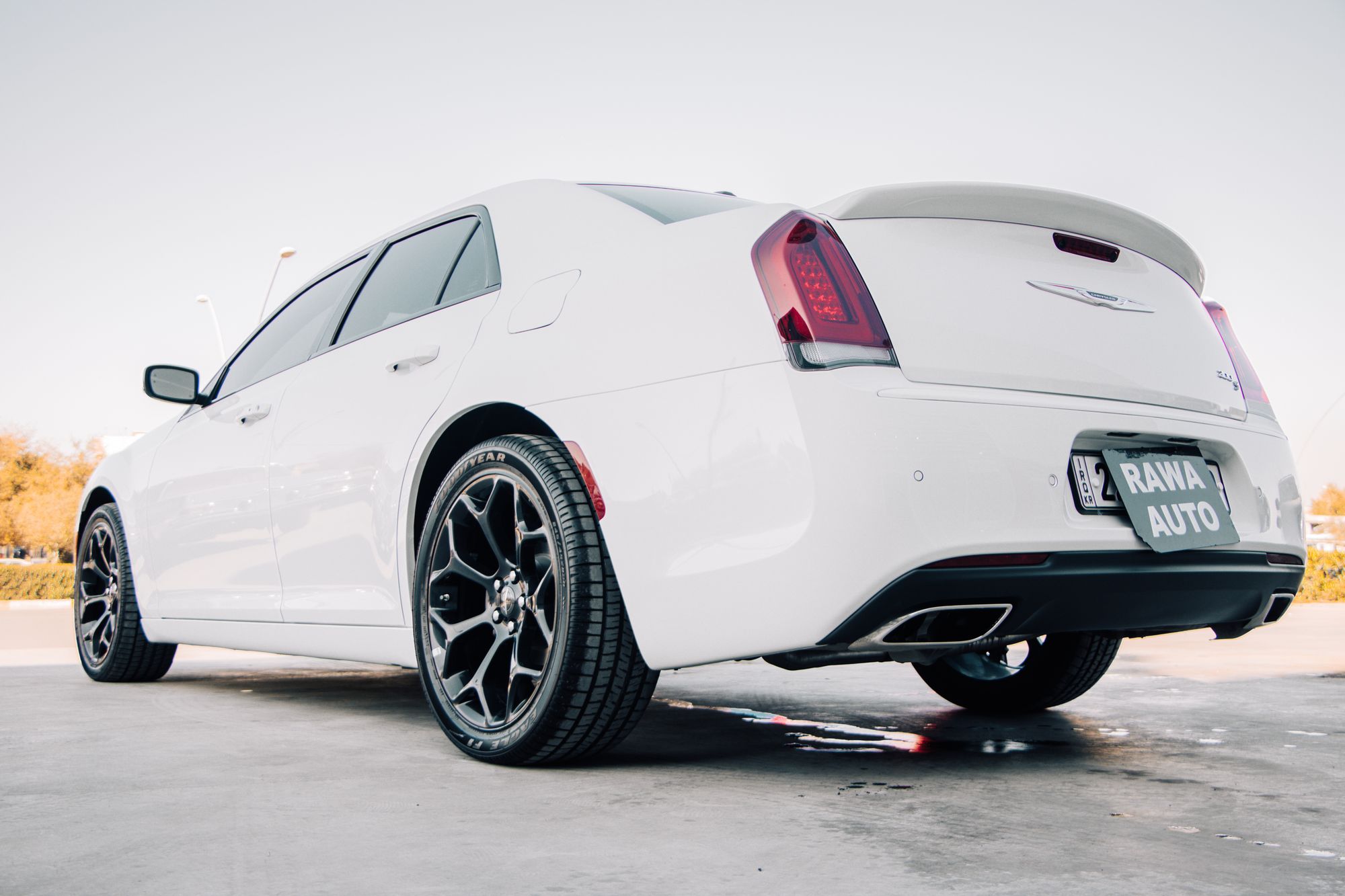
For buyers considering a new or certified pre-owned 2023 model, here are the numbers that actually matter. The 2023 Chrysler 300 carried a base MSRP of $37,740 and topped out at approximately $56,595 in Hellcat configuration. The powertrain choices define the ownership experience more than any other variable:
| Engine | Displacement | Horsepower | Torque | Est. Fuel Economy (combined) |
|---|---|---|---|---|
| Pentastar V6 | 3.6 liters | 292 hp | 260 lb-ft | ~23 mpg |
| 5.7L Hemi V8 | 5.7 liters | 363 hp | 394 lb-ft | ~19 mpg |
| 6.2L Hellcat V8 | 6.2 liters (supercharged) | 485 hp | 475 lb-ft | ~16 mpg |
The platform’s age is the 2023 model’s most honest limitation. The LX architecture has been in continuous production for nearly two decades, and it shows most visibly in the infotainment experience relative to current competitors. The Uconnect interface is functional and generally intuitive, but it feels a generation behind what newer rivals offer. Fuel economy on V8 trims is unimpressive by any modern standard. These are daily costs that belong in your planning before the horsepower numbers take over your decision-making.
The counterargument is the Hellcat’s performance-per-dollar ratio, which remains genuinely difficult to match. At or near the $56,595 price point, 485 horsepower in a full-size rear-wheel-drive sedan is a combination that costs substantially more to replicate in any European alternative. If you are shopping a remaining 2023, note that limited new inventory means prices are not falling at the typical end-of-cycle pace. Focus your negotiation on dealer fees and financing terms rather than expecting significant sticker reductions.
Reliability and Ownership: What the Record Actually Shows

The 300’s reliability history is genuinely mixed, and you deserve the direct version. Early Gen 1 models — particularly 2005 through 2008 — had documented transmission and electrical issues. If you are shopping in that vintage, a pre-purchase inspection by an independent mechanic familiar with Chrysler products is non-negotiable, not optional. Post-2012 examples are meaningfully more solid, and the 5.7-liter Hemi in Gen 2 specification has demonstrated durability over the long term when maintenance has been kept current.
One specific issue warrants inspection on any high-mileage Hemi: the Multi-Displacement System (MDS), which deactivates four cylinders under light load to improve fuel economy. On examples above 80,000 to 100,000 miles, MDS-related lifter and camshaft wear has been a documented concern in the ownership community. Request full service records and have the engine inspected specifically for this before purchase. A well-maintained example with this wear pattern addressed is not necessarily a deal-breaker, but unaddressed MDS wear is a meaningful cost risk.
The long-term ownership picture has one clear practical advantage: the 300 shares major mechanical components with the Dodge Charger and Challenger. Parts availability is currently strong across the aftermarket and dealer network, and given the volume of Chargers and Challengers on the road, that supply is likely to remain stable as these cars age. That shared parts ecosystem is a real benefit that separates the 300 from orphaned platforms with dwindling support.
Budget honestly before committing: roughly 19 mpg combined on 5.7-liter trims, elevated insurance costs on Hellcat configurations, and standard large-sedan service intervals. None of this is prohibitive, but it needs to fit your actual monthly budget rather than the aspirational version of it.
The Verdict: Should You Buy One, and What Does Its Discontinuation Mean?

If you want a full-size American sedan with genuine V8 power, rear-wheel drive, and room for four adults and their luggage, the 300 is no longer one option among several. It is the option — and available examples are growing scarcer every month.
The strongest used-market play right now is a 2015-2020 300S or 300C equipped with the 5.7-liter Hemi, under 60,000 miles, and a documented service record. That range delivers the refined Gen 2 interior, updated suspension calibration, and sufficient depreciation to make the acquisition price genuinely compelling. You are buying a car that was already strong value new and is now attractively priced used.
The discontinuation of the 300 after the 2023 model year is not simply a product-line rationalization. It closes a line — however interrupted across decades — of American performance sedans that traces back to 1955. No current Stellantis product directly replaces what the 300 offered at its price point. The Charger is transitioning to an electric platform. There is nothing in the announced pipeline that delivers a Hemi V8 in a rear-wheel-drive full-size sedan at this price.
You may not need 485 horsepower to commute, handle errands, or cover road-trip miles. The Chrysler 300 spent nearly two decades making a credible argument that you should have the option regardless. That argument is now officially closed.