
When Goldfinger hit cinemas in 1964, the silver Aston Martin on screen wasn’t a prop car dreamed up by a production designer — it was a road car pulled directly from Aston Martin’s lineup, already a year old and already regarded as one of the finest grand tourers in the world. That distinction matters more than most people realize, and it’s exactly where the DB5’s real story begins.
A Legend Before Bond Ever Touched It

The Aston Martin DB5 launched in 1963 as the successor to the DB4, wearing coachwork designed and built by Italian firm Carrozzeria Touring Superleggera. This was not a rushed refresh. Touring’s Superleggera construction method — lightweight aluminum panels stretched over a tubular steel framework — gave the DB5 a combination of visual elegance and genuine structural efficiency that contemporary rivals struggled to match.
By the time EON Productions came looking for a car to place beside Sean Connery, the DB5 already had credibility entirely on its own terms. Producers didn’t manufacture a fantasy vehicle. They borrowed one of the best grand tourers available to any private buyer with £4,175 in their account. That pre-existing pedigree is precisely why the Bond association took hold so completely and has held for six decades.
Specifications That Still Command Respect

The DB5 is powered by a 4.0-liter dual-overhead-cam inline-six, derived from the earlier DB4 engine and fed by triple SU carburetors. That configuration prioritized mechanical refinement and linear power delivery over headline output figures — the right engineering decision for a car intended to cover long distances at sustained speed without drama.
| Specification | Detail |
|---|---|
| Engine | 4.0-liter DOHC inline-six |
| Induction | Triple SU carburetors |
| Power output | 282 bhp |
| Kerb weight | 1,468 kg |
| 0-60 mph | 7.1 seconds |
| Top speed | 148 mph |
| Original price (Saloon) | £4,175 |
| Original price (Convertible) | £4,490 |
| Total production (all variants) | Approximately 1,059 |
| Production years | 1963-1965 |
One structural trade-off deserves early attention: the Superleggera aluminum bodywork is beautiful and was genuinely lightweight by 1960s standards, but aluminum over steel is a corrosion trap when maintenance lapses. Proper restoration requires coachbuilding expertise, not a general bodyshop. That distinction should factor into any purchase calculation from the outset.
The Bond Connection: What Actually Happened
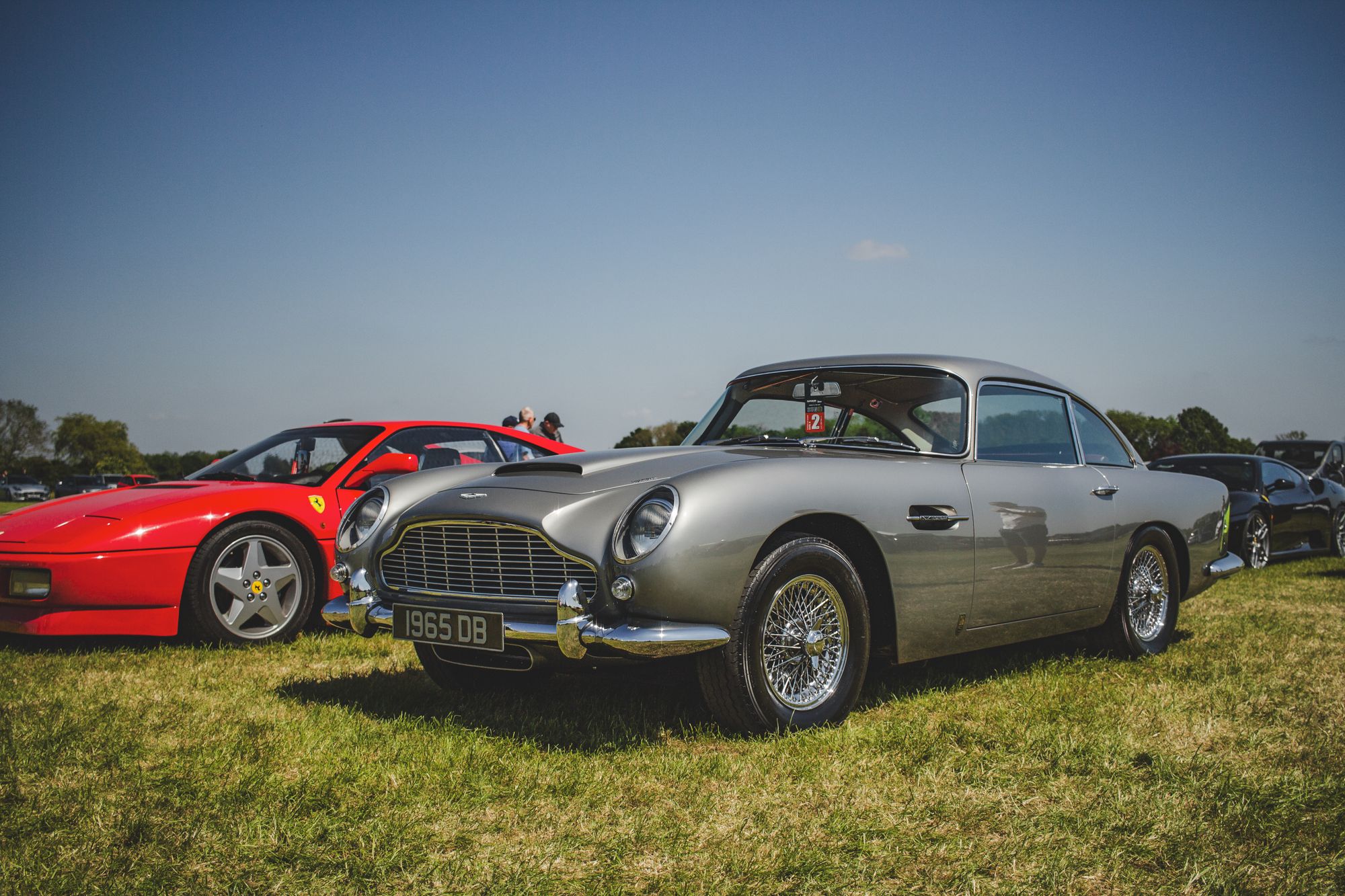
Aston Martin supplied cars to EON Productions for Goldfinger, and the production team worked with two vehicles: one modified with gadgetry for close-up sequences, one used as the primary driving car. Neither was a one-off creation built to a film brief. Both were production road cars, which is the detail that made the association culturally durable rather than merely decorative.
The DB5 went on to appear in Thunderball, GoldenEye, Tomorrow Never Dies, Casino Royale, Skyfall, Spectre, and No Time to Die. Each appearance compounded the mythology. None of those later films diminished the collector status of the original 1963-64 cars — if anything, they reinforced it by keeping the nameplate in front of successive generations of audiences.
In the collector market, cars with documented production dates from 1963-64 occupy a distinct tier. They represent the original, unmanufactured connection between a working grand tourer and a cultural phenomenon. That authenticity is not replicable.
Why Scarcity and Age Work in the Same Direction

Approximately 1,059 DB5s were built across all variants between 1963 and 1965. Surviving, unmodified examples with clean provenance are genuinely rare, and every legitimate Bond-era car is now more than 60 years old. The three variables that determine real market value are provenance, originality, and documentation. These are not soft qualifiers — they are the practical difference between a £500,000 car and one valued at multiples of that figure.
The DB5 entered Bond as a proven, publicly available grand tourer. That authenticity made it aspirational in a way no concept car or bespoke prop could replicate — audiences understood they were looking at something real, something theoretically available to buy. That grounded quality is part of why the image has held for six decades, and why the scarcity of surviving original examples carries real financial weight.
The honest counterbalance: age and rarity push values upward, but they also mean parts availability is constrained, specialist labor rates are high, and hidden structural corrosion is a realistic risk on any car being evaluated. A pre-purchase inspection by someone who works on these cars regularly is not optional. A general classic car appraiser is not sufficient.
What the Market Is Actually Telling You
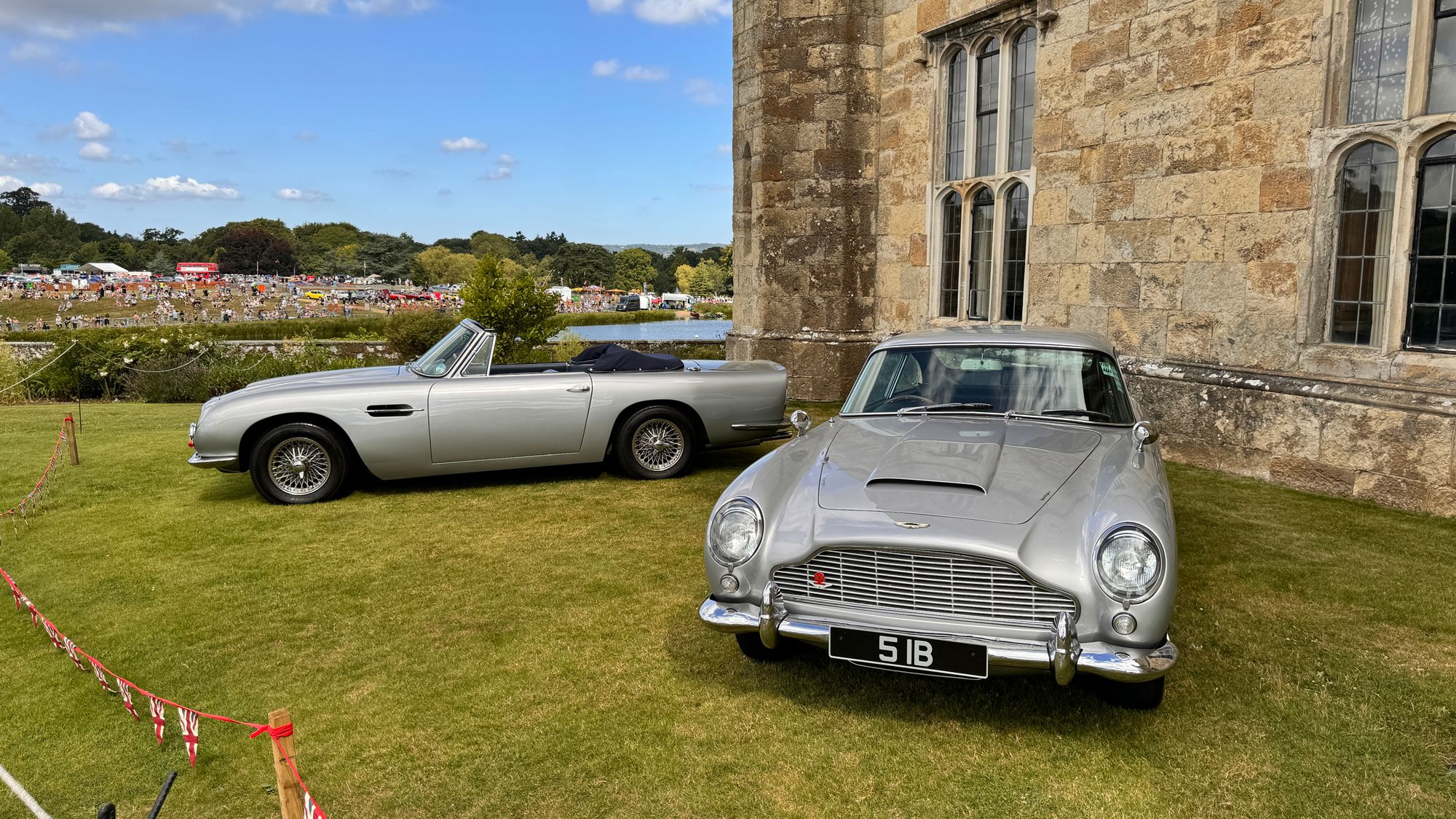
Well-documented DB5s in good condition have sold at auction and privately in the £500,000-£1.2 million range. Exceptional examples with strong provenance, matching numbers, and complete ownership history exceed that significantly. Current transaction data is trackable through the Aston Martin DB5 market index, which provides a live read on where prices are settling across private sales and major auctions.
The 2019 Aston Martin DB5 Goldfinger Continuation series — 25 cars built at approximately £2.75 million each — provides a useful reference point. These are not original cars, but the price the market accepted for a factory-authorized, gadget-equipped recreation signals clearly how the nameplate is valued at the top of the range. It also indicates the ceiling that authentic originals can credibly approach when documentation is genuinely in order.
When evaluating a purchase, four factors should anchor any offer:
- Matching numbers — engine, gearbox, and body numbers aligned to the factory build record
- Original interior — period-correct trim that hasn’t been replaced or over-restored
- Complete service history — documented maintenance with no significant gaps
- Verifiable ownership chain — a traceable sequence of custodians from new
Any gap in these four areas is a negotiating lever. It should be used as one.
Owning a DB5 in Practice

The triple SU carburetor setup rewards regular use. A DB5 that sits unused develops fuel delivery problems and carburetor gumming faster than one driven on a consistent schedule. Specialists who work with these cars routinely advise driving them rather than storing them — which aligns directly with what the car was engineered to do.
Fuel economy is period-appropriate: expect 15-18 mpg under normal conditions. The 4.0-liter inline-six was built for character and longevity at speed, not efficiency. Plan accordingly on longer routes.
Reliability on a properly sorted car is manageable. The DOHC six is not a fragile engine, but deferred maintenance compounds quickly at the parts and labor rates appropriate to a car of this value and age. Budget for specialist servicing, periodic carburetor tuning, and the realistic possibility of aluminum bodywork attention. None of this is optional maintenance on a 60-year-old car, and none of it is inexpensive.
The practical upside is significant. Aston Martin positions the DB5 and DB5 Convertible as cars built for long cross-continental drives at sustained speed — and that description remains accurate today. Regular road use is not only feasible; it is what keeps these cars in the best mechanical condition. A DB5 driven well, maintained by the right people, and documented carefully is a stronger car and a stronger asset than one sealed in a climate-controlled garage.
For context on where these cars were originally built and how they were assembled, Aston Martin Works has documented the original production facility, which adds useful background for anyone researching the car’s manufacturing history and heritage.
What the DB5 Means for a Buyer Today
The DB5’s value proposition is genuinely unusual. It is simultaneously the most recognizable car in cinema history and a legitimate, drivable piece of 1960s British engineering. Neither quality undermines the other. The Bond mythology works because the car underneath it deserved the attention before the cameras arrived.
For buyers approaching this as a long-term asset, the market has rewarded patient, well-documented DB5 ownership consistently. Treat any financial return as the byproduct of owning a correctly maintained car rather than as the primary investment thesis — that framing produces better decisions at the point of purchase and better outcomes over time.
For buyers who intend to drive, the instruction is simple: buy the best car you can afford with the cleanest documentation available, and use it. The DB5 was built as a grand tourer. After more than 60 years, that is still what it does best — and the Bond mythology, formidable as it is, will never be the most important thing about it.