
AEMO has officially classified electric vehicles as part of Australia’s energy infrastructure — not in a future strategy document, but in the binding 2026 Integrated System Plan that network operators, investors, and state governments are already working from. If you’re shopping for an EV right now, or wondering whether bidirectional charging is worth caring about, that single fact changes the calculation.
What AEMO’s 2026 ISP Actually Says — Cut Through the Jargon

The Integrated System Plan is Australia’s 20-year electricity roadmap. When AEMO puts something in it, that’s not a vision statement — it’s a signal with real consequences for infrastructure spending, network planning, and commercial investment. And in the 2026 ISP, EVs are in it.
Specifically, EVs and charging infrastructure are now formally classified alongside rooftop solar and home batteries as consumer energy resources (CER) — or more broadly, distributed energy resources (DER). That means the grid is being actively designed around them. As the Electric Vehicle Council reported following the ISP’s release, AEMO has confirmed that EVs are no longer just cars — they are formally part of Australia’s energy system.
To back this up operationally, AEMO runs a dedicated DER Program specifically focused on understanding and integrating high levels of distributed energy resources into everyday grid operations. EVs sit squarely within that program’s scope.
The headline number from the ISP: roughly 80% of all vehicles on Australian roads are forecast to be electric by 2050. At that scale, how those cars charge and discharge doesn’t just affect individual owners — it defines grid stability for the entire country.
Vehicle-to-Grid in Plain English: What It Means for You as an Owner

Vehicle-to-grid (V2G) means your EV’s battery can push electricity back into the grid — or directly into your home (vehicle-to-home, V2H) — during peak demand periods. In return, you earn credits or offset your electricity bill. Think of it as your car doing a second job while it sits in the driveway, which for most vehicles is around 95% of the day.
The value proposition is real, but it’s conditional. You need four things to align before this works in practice:
- A vehicle with bidirectional charging capability (not all EVs have it)
- A compatible bidirectional charger at home
- A retailer offering a V2G or export tariff in your area
- Ideally, rooftop solar so you’re charging cheaply before exporting at peak rates
Miss one of those, and the economics don’t stack up. That’s the honest trade-off — and it’s why buying on the promise of V2G alone is a mistake right now. But AEMO’s ISP tells you the direction of travel: the regulatory and commercial frameworks to make all four of those things align are being built now, not in some distant future.
PV Magazine Australia’s coverage of the ISP release makes clear this is infrastructure policy, not a pilot program. The planning horizon is the present.
The Numbers That Matter: Scale, Capacity, and What 80% EV Uptake Actually Looks Like

Run the numbers on 80% electrification and the storage potential is substantial. A typical EV battery sits between 60 and 80 kWh — enough to cover roughly three to five days of average Australian household electricity consumption. Multiply that across tens of millions of vehicles and you have a distributed storage network of enormous aggregate scale.
Even if only a fraction of the fleet participates in managed charging and discharging, the aggregate effect on peak demand is significant. AEMO’s own modelling indicates that well-managed EV integration could defer or reduce the need for billions of dollars in traditional grid infrastructure investment. That’s the economic basis for why network operators and investors are paying close attention, independent of any environmental framing.
The 80% forecast also isn’t optimistic fantasy. It aligns with state government EV targets, federal tax incentives including the fringe benefits tax exemption on eligible EVs, and the consistent downward trajectory of battery costs that has already brought entry-level EVs within striking distance of comparable petrol vehicles on purchase price.
What often goes undiscussed is the timing asymmetry: the infrastructure commitments being made now — in transmission planning, network investment, and retailer product development — are based on that 80% figure. By the time EV penetration reaches the levels where V2G becomes routine, the commercial and regulatory rails will already be in place. The window for consumers to benefit most is the period between now and that normalisation point.
Specs Comparison: V2G-Capable vs Standard EVs in Australia

Not all EVs sold in Australia today support bidirectional charging, and the distinctions matter more than marketing language suggests. Terminology in particular is worth clarifying before reading any comparison:
- V2L (vehicle-to-load): Powers external appliances — a kettle, a power tool, a camping setup — directly from the car’s battery via an outlet. Does not connect to your home circuit or the grid.
- V2H (vehicle-to-home): Powers your whole home via a dedicated bidirectional charger and switchboard integration. Provides blackout resilience but typically doesn’t export to the grid for credits.
- V2G (vehicle-to-grid): Exports electricity from your car’s battery to the broader grid, enabling retailer credits or tariff offsets. Requires grid-connected bidirectional hardware and a compatible retailer tariff.
Here’s where the Australian market currently stands on bidirectional capability:
| Model | Bidirectional Type | Charging Standard | Max Export (approx.) | Key Considerations |
|---|---|---|---|---|
| Nissan Leaf (older generation) | V2G / V2H | CHAdeMO | ~6 kW | CHAdeMO infrastructure declining in Australia; factor charger availability into decision |
| Nissan Ariya | V2H (announced) | CHAdeMO / proprietary | ~6 kW | Confirm local availability and charger compatibility before purchase |
| Mitsubishi Outlander PHEV | V2H | CHAdeMO | ~1.5 kW AC | Smaller battery limits home backup duration; home use only, no grid export |
| BYD Atto 3 / Seal / Sealion | V2L (V2H evolving) | Proprietary / CCS2 | ~3.3 kW (V2L) | V2H capability developing across model range; verify by model year and variant |
| Tesla Model 3 / Y (current) | None | Tesla proprietary / CCS2 | N/A | No bidirectional support in current production vehicles; no confirmed roadmap |
| Hyundai Ioniq 5 / 6 | V2L standard | CCS2 | ~3.6 kW (V2L) | V2G and V2H trials underway in Australia; not yet available at retail level |
| Kia EV6 / EV9 | V2L standard | CCS2 | ~3.6 kW (V2L) | Shares E-GMP platform with Ioniq; V2G trials at similar stage |
Three things to read clearly from this table. First, V2L is not a substitute for V2G or V2H — it won’t earn you grid credits or meaningfully power your home during an outage. Second, CHAdeMO is a legacy standard; if V2G functionality is a priority, the long-term availability of compatible charger hardware is a legitimate risk to factor in. Third, and most importantly: check battery warranty terms explicitly before signing. Some manufacturers restrict warranty coverage when a vehicle is used regularly for grid export. That’s a cost that needs to be priced into the total ownership calculation, not discovered after purchase.
The Household Energy Stack: How V2G Actually Fits Together

V2G doesn’t exist in isolation — it functions as one layer in a home energy system. Understanding how the pieces connect is what separates a genuinely useful setup from an expensive underperformer.
The complete stack looks like this: rooftop solar generates cheap daytime electricity → stored in the EV battery (or a home battery) → exported to the grid at peak evening rates via a bidirectional charger → credited against your bill by a participating retailer. Each link in that chain has to be functional for the economics to work.
If you already have rooftop solar, you’re one step ahead — and the combined financing of solar plus an EV changes the payback period on both assets. If you don’t have solar, run the numbers on a combined installation before treating V2G as a standalone proposition.
Retailer participation is the current chokepoint. V2G-compatible tariffs are available in parts of Australia but are not universally offered, and which vehicles qualify varies by retailer. Before purchasing any V2G-capable EV, confirm with retailers in your area which vehicles and charger combinations they actually support. This is a moving target — the list is expanding — but it’s not yet comprehensive.
What This Means If You’re Buying an EV in the Next 12 Months
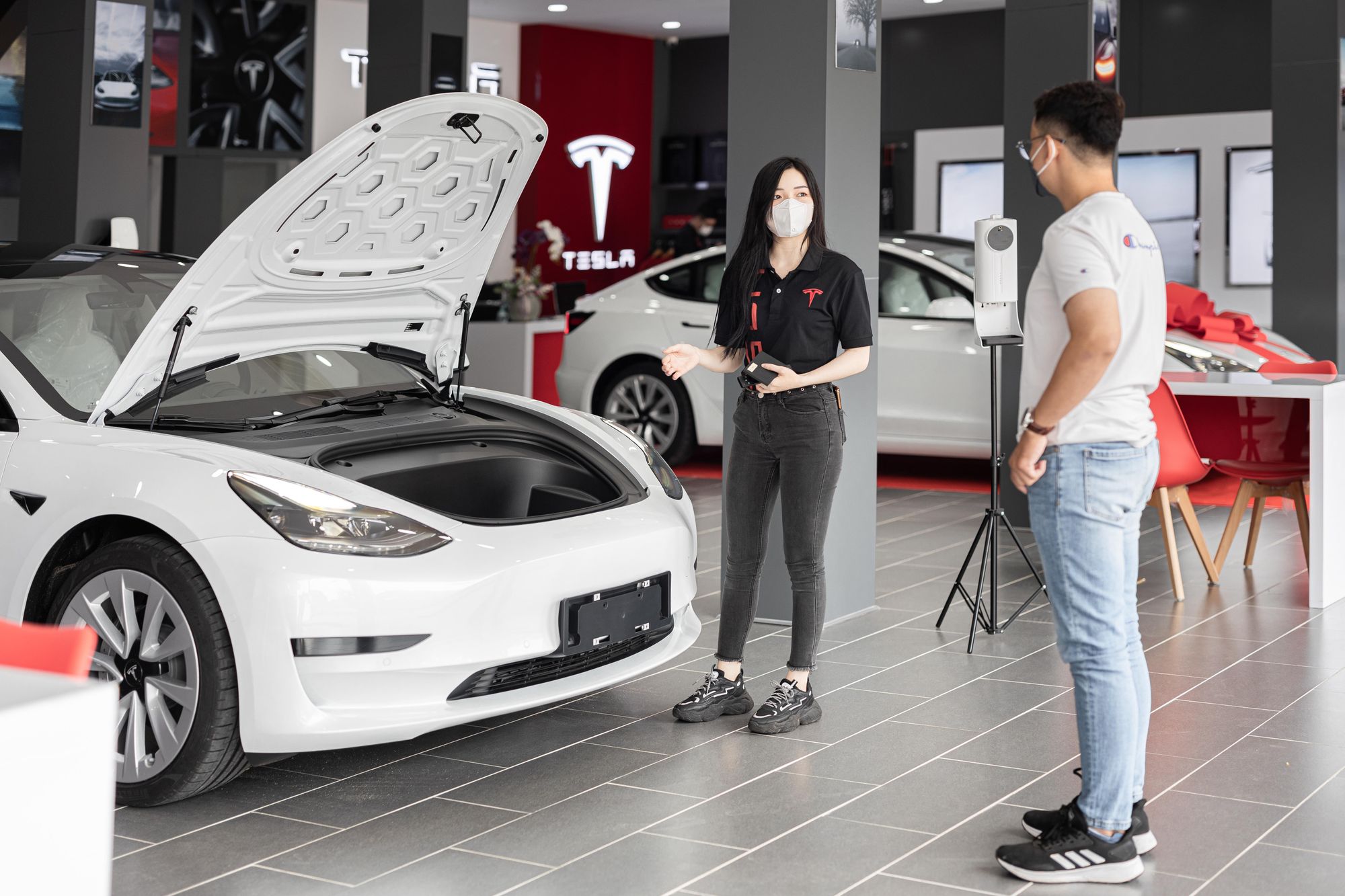
AEMO’s recognition of EVs as grid assets is a concrete reason to factor bidirectional capability into your shortlist — even if you won’t use it on day one. Future-proofing has a real dollar value when the policy environment is moving this fast.
When you’re at the dealership or configuring online, ask three direct questions:
- Does this vehicle support V2G or V2H, and what specific charger hardware does that require?
- Does using grid export affect the battery warranty, and under what conditions?
- Which Australian retailers currently offer V2G tariffs compatible with this vehicle and charger combination?
These aren’t trick questions. A dealer who can’t answer them clearly is telling you something useful about the current depth of their V2G support chain — and about what after-sales assistance you can expect if you’re trying to activate that functionality later.
To size the opportunity for your own household, start with three numbers: your average daily driving distance in kilometres, your household’s average daily electricity consumption in kWh, and your current peak electricity tariff rate per kWh. How much you could export, what you’d earn, and whether your battery provides meaningful outage cover all follow from those three inputs. Everything else is secondary.
As Mirage News noted in its coverage of the ISP release, AEMO’s integration of EVs into grid planning represents a structural shift, not an incremental update. The infrastructure being built around that plan will define what EV ownership looks like across the decade ahead.
The Bottom Line: Australia’s Grid Is Being Built Around Your Car
AEMO putting EVs in the 2026 ISP is the clearest possible signal that vehicle-to-grid in Australia is infrastructure policy, not an experiment. The EV you buy today or in the next few years will exist in a meaningfully different energy market before you sell it — one where your car’s battery is a recognised grid asset with commercial frameworks built around it.
The practical guidance is straightforward: buy the car that fits your life and budget today. Don’t stretch financially for V2G capability you can’t use yet. But do put bidirectional charging support on your checklist, confirm the warranty terms in writing, understand what home setup you’d need to make it work, and verify retailer compatibility in your area before committing.
The regulatory groundwork is being laid now. The gap between V2G-capable and V2G-active is closing faster than most buyers expect — and the vehicles being purchased in the next two to three years are the ones that will still be on the road when that gap closes.
Your driveway is becoming part of Australia’s energy infrastructure. That’s not marketing language — it’s what AEMO’s 2026 Integrated System Plan says, in black and white.