
The EV story grabbing attention right now isn’t happening in California, Texas, or any U.S. state — it’s happening in a country of 3.7 million people wedged between the Black Sea and the Caucasus Mountains, and the numbers are too clean to ignore.
The Other Georgia Is Making EV Headlines

While U.S. media cycles through the familiar domestic EV adoption debate, Georgia the country just posted a 39.3% surge in electric vehicle imports for the first half of 2026 — 6,087 vehicles worth $89 million, with the United States ranking as the top source market. That is not a rounding error, and it is not a one-year anomaly. In H1 2025, Georgia’s EV imports jumped 88% year-on-year. Two consecutive years of explosive growth signals a trend, not a blip.
Beneath the headline figure sits real purchase-decision data: who is selling what, at what price point, and why one country is winning Georgia’s EV market. That tells you something concrete about global EV competition that big-market noise tends to drown out. What follows is the data and what it actually means.
What 6,087 EVs and $89 Million Actually Tell You

Scale matters before you can judge growth. For a country of roughly 3.7 million people, importing 6,087 EVs in six months is a meaningful per-capita rate — approximately 1.6 EVs imported per 1,000 residents in a single half-year. That context makes the headline figure land harder.
The average import value is equally telling: $89 million divided by 6,087 units works out to approximately $14,600 per vehicle. That single number reveals almost everything about the Georgian EV market’s character. This is not a premium-segment story. Georgian buyers are gravitating toward affordable or used EV inventory, and that price point shapes every competitive dynamic that follows.
Here is the growth trajectory in plain terms:
| Period | Year-on-Year Growth | What It Means |
|---|---|---|
| H1 2024 (baseline) | — | Pre-surge reference point |
| H1 2025 | +88% | Near-doubling from a modest base |
| H1 2026 | +39.3% | Stacking on a much larger base |
Deceleration from 88% to 39% looks like a slowdown until you account for the base effect. Thirty-nine percent on top of eighty-eight percent means Georgia’s EV import volume has more than tripled in two years. The moderation is the healthier signal — it indicates a market maturing rather than cooling off.
Why the U.S. Leads — and What It Is Actually Selling
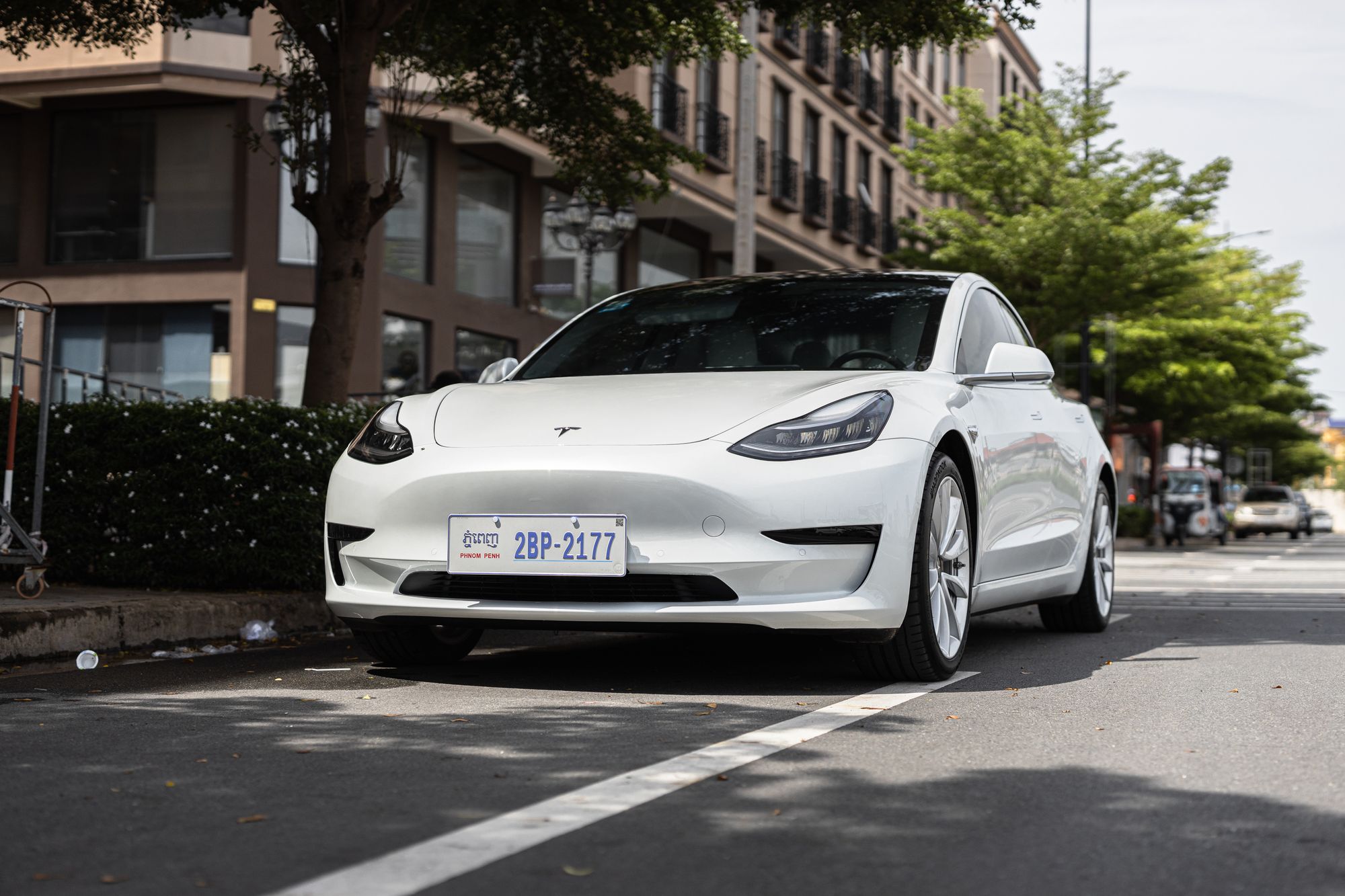
The United States topping Georgia’s EV import rankings is a striking headline that requires honest unpacking. In import statistics, “U.S. origin” generally means manufactured in America — not sold new from a U.S. dealer. What is almost certainly moving through Georgian trading channels is pre-owned American EV inventory: Tesla Model 3s, Model Ys, Chevrolet Bolts, and similar vehicles originally sold in the U.S. market and now finding second-life buyers abroad.
The ~$14,600 average import price confirms it. A new Tesla Model 3 does not land at that figure anywhere. A 2020-2022 Model 3 with 40,000-60,000 miles on it is precisely where used U.S. Tesla inventory prices out in emerging markets.
The trade-offs for Georgian buyers in this segment are real and worth naming directly:
- What you get: A proven platform, an extensive real-world knowledge base, documented range performance — typically 150-250 miles depending on variant and battery degradation — and the most mature used EV resale ecosystem on the planet.
- What you give up: Active manufacturer warranty coverage, over-the-air software update continuity, and guaranteed parts availability through official channels within Georgia.
Tesla’s dominance in global used EV exports means Georgian buyers are receiving vehicles with documented performance histories and parts that independent shops are increasingly experienced in sourcing. That is a meaningful advantage over an unfamiliar platform — but it is categorically different from buying new.
There is also a structural tailwind worth acknowledging. Georgia’s relatively open import regime and its historically Western-leaning trade posture create an environment where U.S.-origin goods face fewer friction points than in some neighboring markets. American EVs are not winning here by accident.
China’s Play: A 12% Share and a Familiar Playbook
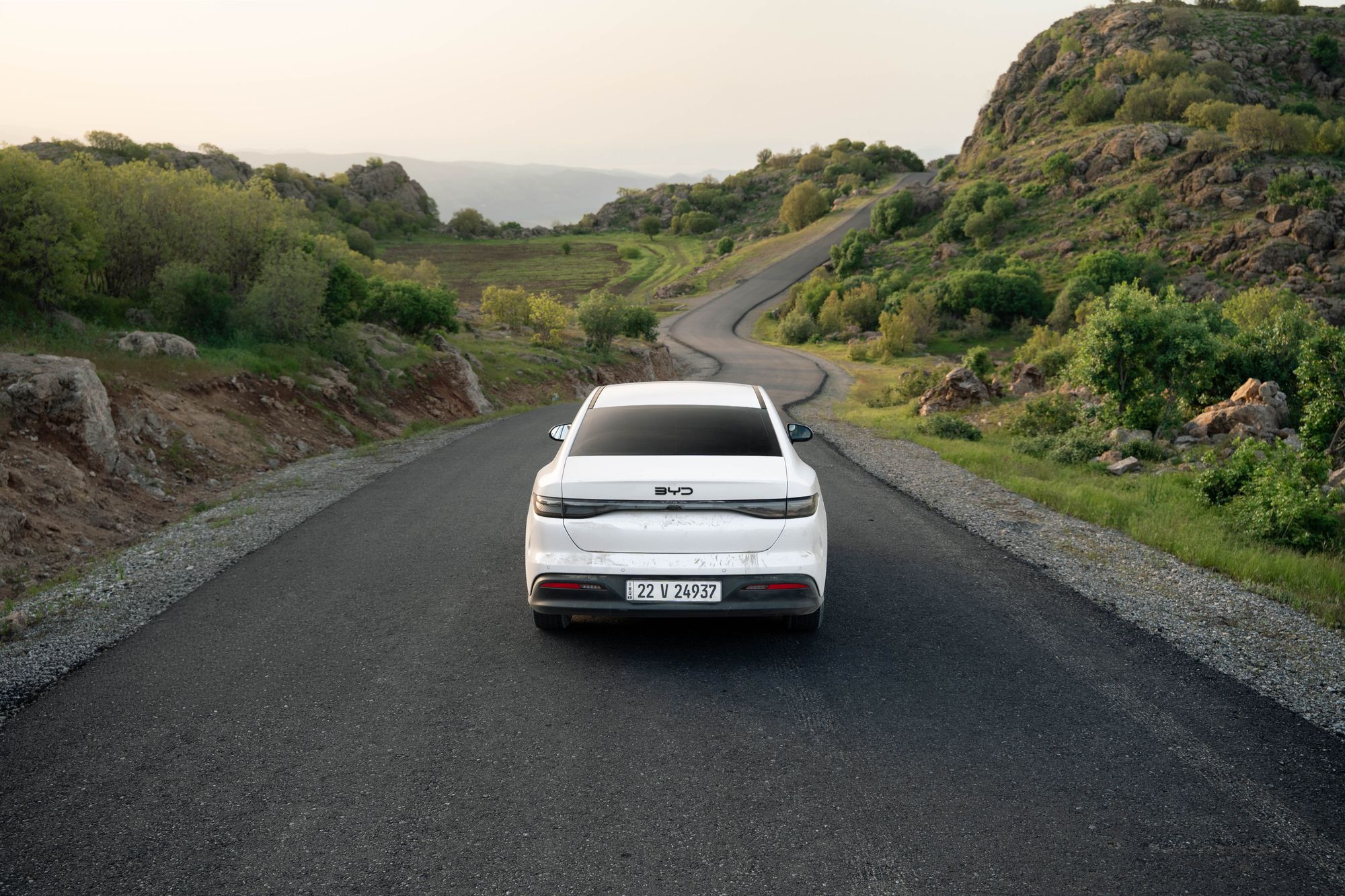
China holds a 12% share of Georgia’s EV imports, with BYD as the lead brand. That figure deserves more scrutiny than it typically receives. Chinese EVs are actively reshaping Georgia’s auto market, and BYD’s value proposition in emerging markets is straightforward: new vehicles, factory warranty, increasingly competitive range figures, and sticker prices that undercut European alternatives by a significant margin.
BYD’s Dolphin and ATTO 3 — the models most relevant to this market — post WLTP range figures of approximately 265 miles and 260 miles respectively. Those are credible numbers for everyday driving. The Blade Battery’s lithium iron phosphate chemistry delivers strong cycle life and better thermal stability than some older NMC competitors, which carries weight in a climate that swings between Caucasus winters and summer heat.
The honest comparison for any Georgian buyer weighing U.S.-origin used inventory against a new BYD: you are choosing between a proven platform with uncertain post-sale support and a factory-fresh vehicle backed by a warranty but an as-yet limited service network. Neither option is without cost.
The pattern to watch is BYD’s established playbook in other emerging markets. In Southeast Asia and Latin America, the sequence was consistent: establish distribution, build service infrastructure, then accelerate volume. If BYD executes the same strategy in the Caucasus over the next 12 to 18 months, that 12% share has significant room to grow.
Buyer Comparison: U.S.-Origin Used EVs vs. New BYD in Georgia

For anyone evaluating this from a consumer perspective — or trying to understand what Georgian buyers are actually weighing — the core comparison looks like this:
| Category | Used Tesla Model 3 (U.S.-origin) | BYD Dolphin (new) | BYD ATTO 3 (new) |
|---|---|---|---|
| Estimated market price (Georgia) | $12,000-$18,000 | $22,000-$26,000 | $28,000-$33,000 |
| Real-world range | 150-250 miles (varies by year and degradation) | ~230 miles (estimated real-world) | ~220 miles (estimated real-world) |
| Warranty status | Likely expired or non-transferable internationally | New vehicle warranty | New vehicle warranty |
| Parts and service | Growing independent network; no official Tesla service center in Georgia | Limited but expanding BYD network | Limited but expanding BYD network |
| Platform maturity | High — years of documented real-world data | Moderate — newer to Caucasus conditions | Moderate — newer to Caucasus conditions |
The bottom line for a price-sensitive market: if budget is the primary constraint, U.S.-origin used inventory wins decisively on entry price. If new-car peace of mind justifies a higher outlay, BYD is currently the only realistic option at that tier in Georgia. No new U.S.-brand EV is competing at $22,000-$26,000 in this market today.
What Georgia Signals for the Broader Emerging-Market EV Story

Georgia is a useful bellwether precisely because it is small. The data is not distorted by large-scale policy incentives, import composition reflects genuine buyer preference, and the market is growing fast enough that patterns surface early. This is the emerging-market EV adoption playbook running in real time and at a readable scale.
The arc is consistent across comparable markets: price-sensitive buyers enter through affordable used inventory — often U.S.- or European-origin — then new Chinese OEMs arrive with factory-fresh alternatives at competitive price points and begin pulling share. Georgia’s 39% EV import growth represents this story at an early, legible stage.
For anyone tracking U.S. EV exports as a global force: this data confirms that American-manufactured EVs are competing internationally without a formal government export strategy supporting them. The used market is doing the heavy lifting — and it is working, for now.
The next limiting factor is not demand. It is infrastructure. Charging network density, grid reliability, and service center coverage will determine whether Georgia’s EV growth compounds or hits a ceiling. Early adopters tolerate infrastructure gaps; early majority buyers do not. Georgia appears to be crossing that threshold, which makes the next two years in this market worth watching closely.
The Bottom Line
If you are tracking where EVs actually move in the world, Georgia’s H1 2026 numbers are a clean proof point: price wins, platform familiarity matters, and the U.S. holds a structural advantage in used EV exports that China is actively working to neutralize with new, affordable product. The 39% growth figure represents real momentum stacking on real momentum — two consecutive years of explosive import growth signals that EV adoption in Georgia has crossed from early-adopter territory into something more durable.
Watch BYD’s infrastructure moves in the Caucasus over the next 12 to 18 months. That is the single variable most likely to shift the current market-share equation. If BYD builds a service network capable of backing up its sales, the competitive picture in Georgia looks meaningfully different by 2028.
Whether you are tracking global EV market dynamics, evaluating U.S. automaker export health, or trying to understand where the EV adoption curve heads next — small, open markets like Georgia deliver cleaner signals, faster, than any of the large ones. The country the headlines keep confusing with a U.S. state is worth paying attention to.