
Every EV you buy comes with an invisible purchase attached: a charger. Whether that’s a wall unit in your garage, a stall at a highway plaza, or a Level 2 pedestal outside your apartment complex, the charging infrastructure behind your vehicle is just as real a cost — and just as real a constraint — as the car itself. Here’s what the market numbers actually mean for you.
The Charger Gap Is Real — And It’s About to Get Expensive to Ignore

The Edison Electric Institute forecasts nearly 12.2 million annual EV sales in the U.S. by 2035, with more than 78 million total EVs on American roads by that same year. Every one of those vehicles needs somewhere to plug in. Right now, infrastructure is running behind the vehicles — and that gap has direct consequences for your resale value, your daily convenience, and your total cost of ownership.
The electric vehicle supply equipment (EVSE) market is projected to reach anywhere from roughly $100 billion to over $1,400 billion by 2035, depending on which research firm you consult. That range is not a rounding error. It reflects genuine disagreement about scope, adoption speed, and what counts as EVSE spending in the first place. If you’re buying an EV today, in two years, or in five, this build-out directly affects you — so it’s worth cutting through the market-report noise and understanding what the numbers actually represent.
What the Market Numbers Actually Tell You (And What They Don’t)

The spread in EVSE forecasts is enormous, and understanding why helps you read headlines without being misled by them. Researchers are measuring different things: some count hardware only, others fold in software platforms, installation labor, grid upgrade costs, and managed charging services. Scope definitions vary, and so do the EV adoption curves baked into each model. A firm that assumes aggressive EV penetration globally and includes grid infrastructure spending will produce a dramatically larger number than one counting only charging unit hardware in a single region.
Here is a side-by-side look at the major projections currently on the table:
| Source | Base Year Value | 2035 Projection | CAGR |
|---|---|---|---|
| Precedence Research | $92.57B (2025) | $1,434.55B | ~32% |
| GM Insights | $33.5B (2026) | $209.3B | 22.6% |
| Fortune Business Insights | $119.19B (2026) | $1,056.29B (2034) | 31.4% |
| Business Research Insights | — | $100.08B | 29.1% |
| Persistence Market Research | $65.9B (2026) | $323.0B (2033) | — |
| Wise Guy Reports | $12.75B (2025) | $100B | ~23% |
The Precedence Research figure — $1,434.55 billion by 2035 — is the most aggressive on the table. It assumes near-universal EV adoption curves and a broad scope that encompasses grid infrastructure investment alongside charging hardware and software. GM Insights’ $209.3 billion at a 22.6% CAGR is more conservative in both scope and adoption assumptions, but still represents explosive compound growth from today’s base. Wise Guy Reports’ $100 billion figure, the most restrained estimate, reflects a hardware-focused lens — and even that signals a near-eight-fold increase over the decade.
The honest takeaway: even the lowest credible EVSE market size estimate for 2035 represents an infrastructure build of historic scale. The direction is unambiguous. The speed, the scope of what gets counted, and the regional distribution of investment are what remain genuinely uncertain.
Level 1, Level 2, DC Fast: Which Charger Actually Matters for You

Before getting lost in trillion-dollar projections, you need to understand what you’re actually buying and using day to day. There are three charging tiers, and they are not interchangeable in real-world terms.
- Level 1 (120V standard outlet): Adds roughly 3-5 miles of range per hour. If you drive fewer than 40 miles a day and park at home overnight, this can work. For most drivers, it’s impractically slow — replenishing perhaps 30-40 miles of range across an eight-hour overnight window.
- Level 2 (240V, 7-19 kW): This is the real workhorse of residential charging. It delivers 10-30 miles of range per hour depending on your vehicle’s onboard charger capacity. For most owners, a Level 2 unit installed at home is the only charging equipment they will ever truly need for daily driving. Professional installation typically runs $500-$1,500 all-in, including the unit and electrician fees — a one-time cost that pays back quickly in convenience.
- DC Fast Charging (50-350 kW): These are the highway stalls capable of adding 100-200 or more miles of range in 20-30 minutes. They are essential for long-distance travel. Most drivers will not need one at home. It is also worth knowing that frequent heavy DC fast charging sessions can accelerate battery degradation on some battery chemistries — a real trade-off for drivers who rely on public fast charging as a primary daily source, though a minor one for most owners who charge primarily at home.
The market split between these tiers matters when you read EV charging growth figures. Home Level 2 units dominate in raw unit volume and drive the fastest segment growth by count. DC fast charger revenue per unit is dramatically higher — a single 350 kW installation can run $100,000 or more including civil and electrical work — which skews dollar-based market figures upward. When a forecast cites 30% annual market growth, it is often the DC fast charging segment pulling that number disproportionately.
Who Is Actually Building This Infrastructure — And Who Is Paying
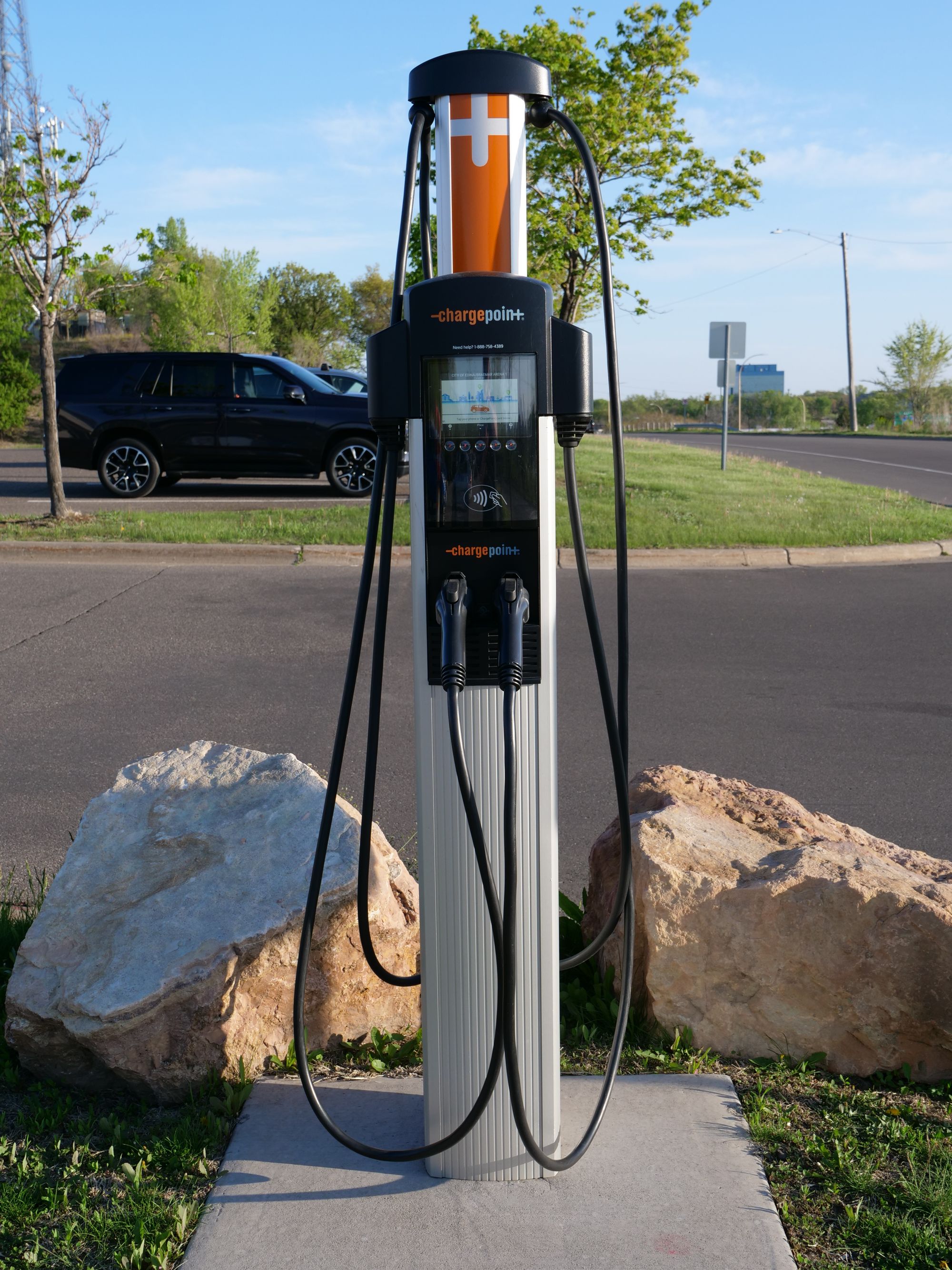
The major players in the EVSE market include ChargePoint, EVgo, Blink, ABB, Siemens, and Schneider Electric on the hardware and network side. Tesla’s Supercharger network — now partially open to non-Tesla vehicles — remains the single most reliable public fast charging network in the United States by most third-party assessments, a product of years of investment in redundant hardware, remote monitoring, and rapid maintenance response. Ionna, the consortium backed by GM, Ford, Honda, and several other automakers, is actively building toward a competing network of high-reliability fast chargers along major corridors.
Federal funding under the National Electric Vehicle Infrastructure (NEVI) program committed $5 billion toward fast charging corridors along U.S. highways. However, actual charger deployment has lagged permit approvals significantly, and the program’s implementation pace has varied considerably by state. If you are planning a road-trip-capable EV lifestyle outside Tesla’s ecosystem, this gap is worth tracking — because the map of approved NEVI corridors looks very different from the map of chargers physically in the ground today.
Utilities are the quiet giants in this story. Companies like Duke Energy and Eversource are investing in the grid upgrades that determine whether public and workplace charging can actually scale to serve tens of millions of EVs. A single DC fast charger draws as much power as a small commercial building. Without grid reinforcement at the distribution level, hardware can be installed and still deliver unreliable charging sessions during peak demand windows — a problem that is already visible in dense urban markets.
The underlying business model tension is worth understanding clearly. Public fast charging is expensive to build, difficult to permit and site, and often underutilized outside peak travel periods. Margins are thin and many network operators are not yet profitable at scale. Home charging is economically efficient and scalable for utilities, but invisible in public infrastructure counts. These two markets are interdependent: without adequate public fast charging, EV adoption stalls among apartment dwellers and non-homeowners; without robust home charging, public networks face unsustainable and uneven load demand. Neither market functions well without the other.
What Slow Charging Rollout Means for Your EV Purchase Decision

This is where the market forecasts translate into a practical decision framework.
If you own your home and can install a Level 2 charger, the current state of public infrastructure is largely a road-trip problem — real and worth planning around, but manageable. Your 90% of daily driving gets handled overnight in your garage. You plan public fast charging the way you’d plan fuel stops through rural Montana: you know where they are before you leave.
If you rent or live in a multi-unit building without dedicated parking, the public network becomes your primary charging option, and the adequacy of that network in your specific area should be a meaningful factor in your purchase decision. EV charging station growth is deeply regionally uneven. California, the Northeast corridor, and major metro areas are comparatively well-served and improving. Rural Midwest and Southeast markets remain genuinely underserved — a reality that affects both daily convenience and resale value in those regions.
Reliability, not just availability, is the sharpest real-world pain point. Third-party audits have documented non-functional charger rates as high as 20-25% at some public networks. That statistic lands very differently when you have 200 miles of remaining range versus when you are 15 miles from empty. When evaluating which EV to buy, the native charging network access associated with it — and that network’s documented reliability — is a legitimate specification to compare alongside range and price.
The Bottom Line: Infrastructure Is the Hidden Variable in Every EV Purchase

The EVSE market size forecasts for 2035 — whether you find the $100 billion or the $1.4 trillion figure more credible — all point in the same direction. Charging infrastructure is a multi-decade, capital-intensive build that is accelerating but not yet complete. The gap between where the infrastructure is today and where it needs to be is real, measurable, and closing — but unevenly, and not on a schedule guaranteed to match your specific ownership window or geography.
For buyers, the practical priority checklist looks like this, ordered by actual impact on daily life:
- Home charging capability first. Can you install a Level 2 unit at your residence? If yes, this solves the overwhelming majority of your charging needs permanently and economically.
- Workplace charging second. If your employer offers Level 2 charging, you have covered nearly every daily-driving scenario without ever depending on a public network.
- Public network density and reliability third. Map the fast chargers along your regular long-distance routes before you commit. Consult third-party reliability data, not just charger counts listed by the operators themselves.
The EVSE market is growing fast enough that the vehicle you buy today will be better served by public charging infrastructure in 2028 than it is right now — but that is a forward-looking bet, not a present-day guarantee. Buy the EV for the driving experience and the total cost of ownership math. Evaluate the charger network as seriously as you would evaluate fuel availability if you were relocating to a new region — because in 2025, for many drivers in many markets, it is still exactly that variable.