
A bureaucratic fight in Brussels over a product label might sound like the last thing worth your attention — but if you’re buying, leasing, or part-exchanging a car built in Britain over the next few years, the outcome of the EU’s ‘Made in Europe’ debate will land directly in your wallet.
The Label That Could Cost You More at the Forecourt
The EU is drafting rules that would attach a ‘Made in Europe’ designation to electric vehicles built with sufficient local content. Earn that stamp, and your vehicle qualifies for preferential treatment in government and corporate fleet procurement across EU member states. Lose it, and you’re competing on an uneven playing field for the highest-volume, most margin-rich sales channel in the European car market.
The critical question — and the one currently being fought over in Brussels — is what ‘local’ actually means. A narrow EU-only definition would exclude factories in the UK, Turkey, and Morocco, all of which are deeply integrated into European automotive supply chains. That matters to you as a buyer because around 60% of all cars built in Britain are exported to the EU. European market access isn’t a secondary consideration for UK plants — it’s the primary one.
The political weather is shifting in a more favourable direction. France has signalled it could allow UK-made vehicles to qualify for ‘Made in Europe’ subsidies — a significant move from historically the most protectionist voice in EU auto policy. And now ACEA, the European Automobile Manufacturers’ Association, has formally backed UK inclusion alongside Turkey and Morocco, giving the pro-inclusion camp serious industrial firepower.
What the Scheme Is Actually Trying to Do

The ‘Made in Europe’ initiative is not protectionism for its own sake. It is a direct response to the US Inflation Reduction Act and China’s state-backed EV manufacturing programmes, both of which use local content requirements to anchor production — and jobs — at home. Brussels wants to prevent European EV manufacturing from migrating to cheaper production hubs, and a procurement preference for locally made vehicles is one of the tools on the table.
The problem is that ‘European’ automotive manufacturing has never been contained neatly within EU borders. Supply chains for major vehicle platforms cross the Channel, the Bosphorus, and the Strait of Gibraltar as a matter of routine. A rule that ignores that reality does not protect European industry — it disrupts it.
That is precisely the argument ACEA has made in its formal position paper on ‘Made in Europe’ content requirements. Volkswagen Group, Stellantis, and Renault — together accounting for about 60% of Europe’s car output — are aligned with ACEA’s position. Their own production networks span multiple countries, and a narrow EU-only rule would create costly internal inconsistencies that ultimately get passed on somewhere in the pricing chain.
Why UK Car Factories Are Directly in the Crosshairs
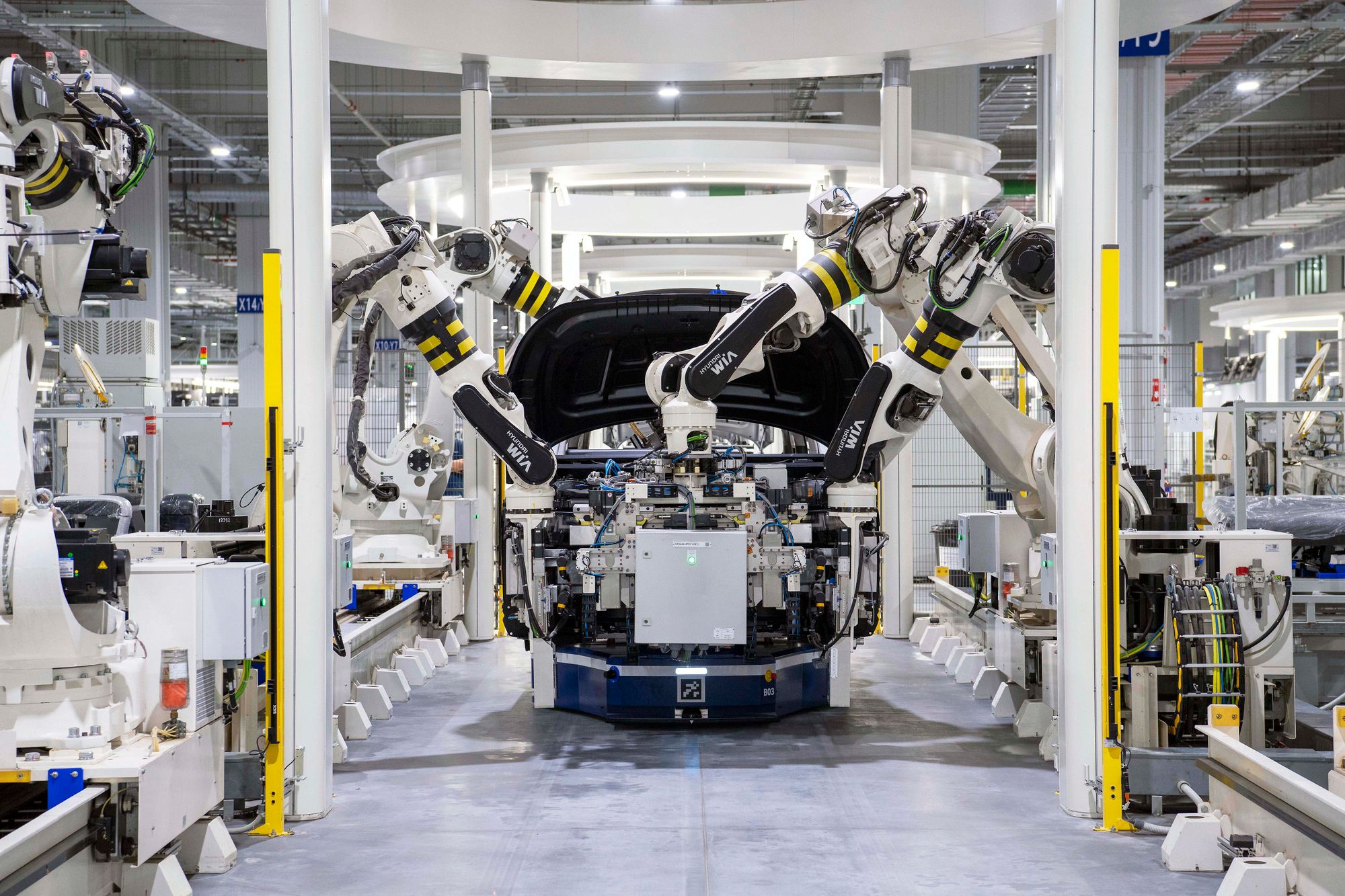
The plants at risk are not abstract. Nissan’s Sunderland factory produces the Qashqai and Juke. Toyota’s Derbyshire plant builds the Corolla. Jaguar Land Rover’s UK facilities turn out the Range Rover Sport and Defender. These are not niche, low-volume models — they compete directly against EU-assembled rivals for the corporate fleet contracts that make or break production volumes.
SMMT chief executive Mike Hawes has been explicit: the ‘Made in EU’ proposal poses a direct danger to the UK auto industry, specifically because it would exclude UK-made cars from EU corporate fleet tenders. That is not a theoretical risk. Fleet sales represent a substantial proportion of new car volumes in major European markets. Losing preferential access to that channel is a structural commercial disadvantage, not a rounding error.
There is also a legal argument for UK inclusion that does not require new political creativity: Britain’s existing free trade agreement with the EU already provides a potential basis for UK-made vehicles to qualify. The question is whether the political will exists to use it — and France’s recent shift suggests the answer may be moving toward yes.
The Key Players and Where They Stand

- ACEA — formally calling for the scheme to cover the UK, Turkey, and Morocco, arguing that artificially tight boundaries would disrupt supply chains built over decades. ACEA’s push to include the UK, Turkey, and Morocco in local content rules represents the unified voice of the European industry, not a fringe position.
- Volkswagen, Stellantis, Renault — aligned with ACEA, their backing carries weight because these three groups account for about 60% of Europe’s car output. Their production logic depends on cross-border supply chains functioning without artificial barriers.
- France — historically the loudest advocate for tight EU-only rules, its softened stance is the single most important political development in this debate. Without French resistance, a broader geographic definition becomes considerably more achievable.
- SMMT — the UK manufacturers’ lobby, treating this as a red-line trade issue. Its public warnings signal that British industry views exclusion as an existential threat to certain production lines, not a manageable inconvenience.
What Is Actually at Stake Commercially

If UK-built EVs are locked out of EU fleet schemes, manufacturers face three choices: absorb the margin hit themselves, shift production into EU member states, or pass costs on to retail buyers on both sides of the Channel. None of those outcomes benefit you. The first compresses manufacturer investment budgets. The second reduces your model choice. The third raises your invoice price directly.
Conversely, UK inclusion in the scheme could accelerate EV investment in British plants. Higher volumes driven by fleet access mean better production economics, which eventually feeds through to lower retail prices and stronger residual values on the models you are considering.
The EU has been urged to exempt UK manufacturers from the most damaging version of these rules, and the political coalition backing that outcome is now broad enough to carry real weight. But the process is ongoing, and no final decision has been reached.
What This Means for the Car You Buy Next

If you are currently buying or financing a UK-assembled EV, the model’s fleet-sale volume matters to you even as a private buyer — because fleet demand underpins residual values. A model that loses fleet appeal depreciates faster, which hits your finance deal or your part-exchange price when you come to change. That is a concrete financial exposure worth factoring in before you sign a 36- or 48-month PCP agreement.
If manufacturers respond to exclusion by shifting production to EU plants, UK-built variants of popular models could be reduced in specification or quietly discontinued. You would end up with fewer choices, or choices built to a different specification than the UK market currently receives.
The more likely near-term outcome — given ACEA’s formal position, France’s softened stance, and the existing FTA framework — is that UK inclusion gets agreed in some form. That said, nothing is confirmed. If you are considering a UK-built EV and you are sensitive to residual value risk, particularly on a long finance term, it is worth monitoring manufacturer investment announcements in UK plants over the next 12 to 18 months. A confirmed EV production commitment at Sunderland or Ellesmere Port tells you more about long-term model availability than any statement from Brussels.
The Bottom Line
The ‘Made in Europe’ label fight is not abstract trade policy for industry lobbyists to sort out among themselves. It connects directly to which models get built in the UK, how many are produced, and what they cost you at the point of sale. The direction of travel is cautiously positive: ACEA’s formal endorsement of UK inclusion, France’s political shift, and the legal foundation of the UK-EU free trade agreement all point toward a workable resolution.
But nothing is agreed yet. The rule of thumb is straightforward: inclusion confirmed means more stability, more investment, and better pricing dynamics on UK-built models. Exclusion means higher residual value risk, less manufacturer incentive to keep UK lines running at capacity, and a real possibility of costs filtering through to your next invoice. Follow the policy, then pick your car.