
When Nvidia, Mercedes-Benz, Nissan, Stellantis, Microsoft, AMD, Arm, and Qualcomm Ventures all write checks to the same autonomous vehicle startup, the funding round itself is almost beside the point. What matters is what that cross-industry alignment signals: a specific technical bet on how cars will drive themselves within the next decade — and who will supply the software that makes it happen.
The $8.6 Billion Valuation Behind Wayve’s Funding Round

Wayve has raised $2.8 billion in total funding, anchored by a $1.2 billion Series D closed in February — one of the largest single autonomous vehicle funding rounds in recent memory. The company’s valuation now sits at $8.6 billion, well below Waymo’s reported valuation but well above the graveyard of AV startups that burned through capital before reaching meaningful deployment.
The investor roster is what makes this round analytically interesting, not its size. Automakers, chipmakers, and platform companies participated across the table. That kind of cross-industry alignment does not happen by accident. It happens when serious technical players examine an architecture and conclude it solves a problem their own internal teams have not cracked. The question worth answering: what problem, exactly?
What Wayve Actually Does — And Why End-to-End AI Is More Than a Buzzword

Wayve’s core technology is end-to-end AI for autonomous driving. In practical terms, the system ingests raw sensor data and outputs driving decisions without breaking the task into hand-coded rules or requiring the vehicle to have previously driven a specific road. The company describes this as Embodied AI: the vehicle learns to read and respond to new environments through accumulated experience rather than memorization of a pre-built map.
The contrast with conventional autonomous driving architectures is the crux of the story. Waymo has invested billions constructing precise 3D maps of specific cities. Its vehicles perform exceptionally well inside those mapped operational zones and essentially cannot function outside them without a new, expensive mapping effort. Wayve’s system is engineered to drive roads it has never encountered in a mapped dataset. If that capability holds at scale, it is the difference between autonomous technology that works in San Francisco and autonomous technology that works in your city — wherever that happens to be.
That generalizability is the specific bet the investor coalition is making. It is also the claim that still needs to be proven under sustained real-world conditions.
Wayve vs. Waymo vs. Tesla FSD: An Honest Comparison

Before assessing whether Wayve’s technology is relevant to you, it helps to place it clearly against the two names most consumers already recognize.
| Factor | Waymo | Tesla Autopilot / FSD | Wayve |
|---|---|---|---|
| Core method | HD maps + rule-based systems | Vision-based neural network | End-to-end AI, map-light |
| Primary sensors | Lidar-heavy | Camera-first | Scalable sensor suite, reduced lidar reliance |
| Geographic flexibility | Geo-fenced operational zones | Broad but driver-supervised | Designed to generalize to unmapped roads |
| Deployment model | Robotaxi operator (Waymo One) | Proprietary vehicle stack | Software licensing to automakers |
| Data advantage | Deep mapped-city data | Massive fleet-scale real-world data | Building through OEM partnerships |
Waymo’s mapped-city model delivers strong reliability inside its operational footprint. The honest trade-off is that expanding to a new city requires substantial investment in fresh mapping — a cost traditional automakers are not positioned to absorb on top of existing R&D obligations.
Tesla’s Full Self-Driving benefits from a fleet of millions of vehicles feeding real-world data back to a central neural network. That is a genuine scale advantage. But in most jurisdictions FSD remains a supervised system: drivers are legally required to remain attentive and ready to intervene. That is advanced driver assistance, not full autonomy, regardless of the product name.
Wayve is positioning itself differently: generalizable AI that automakers can license without building their own mapping infrastructure or proprietary data pipelines from scratch. That distinct value proposition is why Wayve is drawing serious attention from traditional automakers looking to stay competitive without underwriting full internal AV programs.
Why Automakers Are Investing Rather Than Building In-House
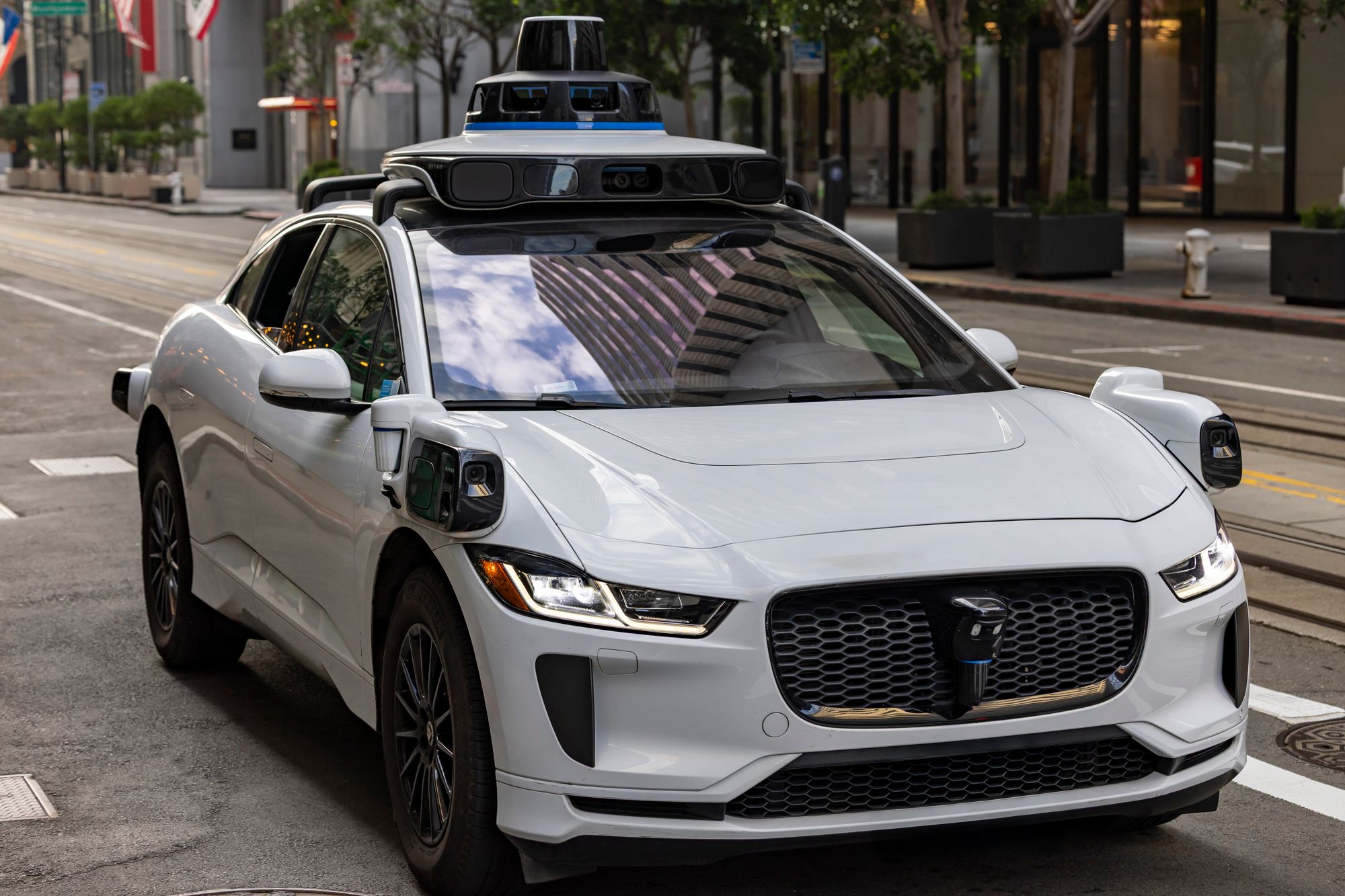
Developing autonomous vehicle capability internally means billions in R&D, dedicated engineering teams, years of proprietary data collection, and still no guarantee of a shippable product on a competitive timeline. That burden is straining even the largest OEMs. Several have already retreated from ambitious AV schedules or wound down internal programs after spending heavily with little to show for it in production vehicles.
Wayve’s licensing model offers a structural alternative: partner with a specialist, share the investment burden, and integrate a tested system rather than building one from the ground up. For any automaker trying to remain competitive in the 2027-2030 model window without betting its balance sheet on internal AI development, that is an attractive proposition.
Stellantis’s participation is the most concrete commitment on record. Stellantis plans to integrate Wayve’s self-driving software into future vehicles, with a robotaxi deployment in the pipeline. That is not a speculative hedge or a minority research investment — it is a commercial relationship with a specific product outcome attached.
The chipmaker participation carries its own signal. AMD, Arm, and Qualcomm Ventures investing alongside automakers indicates that the hardware supply chain is aligning around Wayve’s software architecture. For autonomous systems to reach production scale, the silicon layer must be designed with the software layer in mind. When those two sides are funding the same company, the integration path from development to production gets materially shorter.
The Real Trade-Offs You Should Understand Before Getting Excited

Wayve’s architecture is designed to reduce dependence on expensive lidar arrays and pre-built HD maps — two of the largest cost drivers in autonomous vehicle programs. Lower hardware and infrastructure costs theoretically compress the price floor for broad deployment, which matters if the goal is mainstream vehicles rather than premium robotaxis in selected cities.
There are legitimate trade-offs to acknowledge. End-to-end AI systems are harder to audit and explain than rule-based systems. When something goes wrong, identifying precisely why the system made a specific decision is more complex — and that is a genuine concern for regulators and insurers who require clear accountability chains. This is not a theoretical objection. It is an active challenge the autonomous vehicle industry has not resolved, and Wayve is not exempt from it.
Wayve is also still in the commercial partnership and pre-deployment phase. The technology is not on any vehicle you can purchase today. The Stellantis robotaxi deployment is the near-term proof point that matters most. Sustained real-world reliability data from that program will tell you far more about Wayve’s actual capability than any funding announcement or valuation figure can.
What This Means If You’re Buying or Leasing in the Next Three to Five Years

If you are cross-shopping vehicles with advanced driver assistance features today, Wayve’s technology is not yet a factor in your decision. But its trajectory will shape which automaker partners accelerate or pull back on autonomous features in the 2027-2030 model years — and that affects the long-term capability of vehicles you might purchase now on a three-year lease cycle.
Practically speaking, Stellantis brands — Jeep, Ram, Peugeot, Fiat, and Chrysler among others — are the most likely first vehicles to carry Wayve-derived autonomous capability in a production context. If you are already considering Stellantis vehicles, this partnership is worth monitoring over the next 18 to 24 months as the robotaxi program generates performance data.
The broader investor coalition matters for a different reason: stranded technology is the real risk in autonomous vehicles. Systems that work technically but never reach the scale needed for broad deployment or regulatory approval represent the consistent failure mode in this space. When Nvidia, Microsoft, and multiple major automakers fund the same platform, the odds of that platform becoming an industry standard — rather than another well-capitalized casualty — improve meaningfully. Co-investment at this level creates commercial incentives across the supply chain to make the integration succeed.
Bottom Line: Technically Differentiated, Still Needs to Prove It at Scale
Wayve has assembled a credible investor coalition and a technically differentiated approach to autonomous driving. Generalizable, map-light, end-to-end AI is a sound architectural direction for scaling autonomy beyond geo-fenced corridors — provided it performs reliably in the messy, unpredictable conditions of real roads. That qualification is doing significant work, and it is the honest place to leave the assessment.
The $2.8 billion raised provides meaningful runway, and the Stellantis deployment gives Wayve a concrete commercial proving ground that pure research programs never reach. The unresolved questions — regulatory approval timelines, edge case handling in genuinely novel environments, and real-world failure mode behavior — are the variables that will determine whether this investment thesis pays off or joins a long list of well-funded AV programs that could not bridge the gap from promising to production.
Watch the Stellantis robotaxi performance data as it becomes available. That is the metric that matters more than the valuation. If the system handles unfamiliar roads reliably and earns regulatory confidence, Wayve becomes a serious force shaping how your next car — or the one after it — drives itself. If the edge cases prove harder than the funding round implies, it adds another chapter to the established pattern of autonomous vehicle programs that looked transformational from the outside and fell short on the road.