
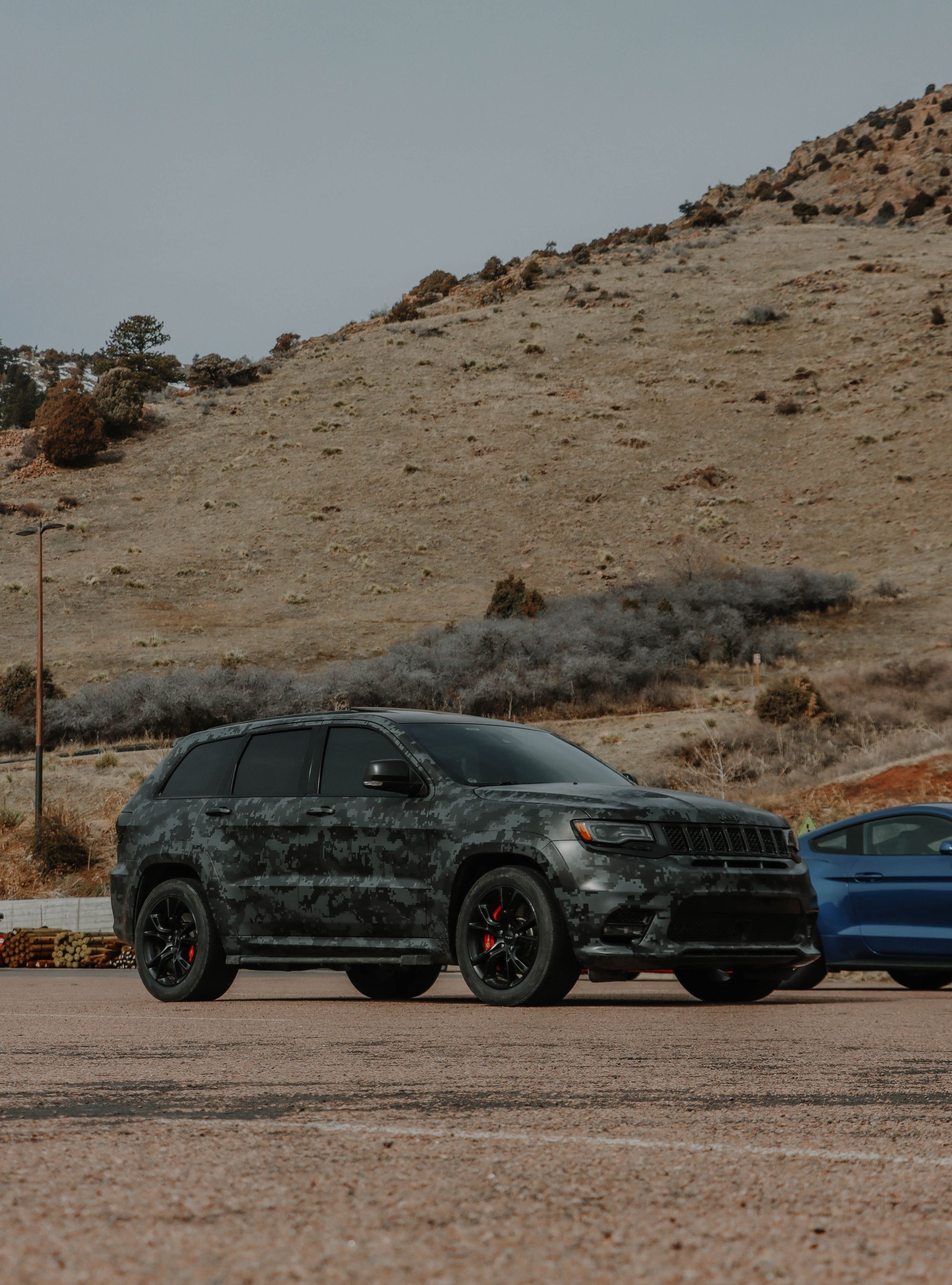
A 2018 Jeep Grand Cherokee Trackhawk that started life as a $92,530 factory order — already one of the most audacious performance SUVs ever built — was pushed past 1,000 horsepower with more than $60,000 in documented modifications. That truck exists, it has been verified, and the used market has responded in ways that reward careful buyers and punish careless ones in roughly equal measure.
What Jeep Actually Built: The Factory Case for 707 Horsepower

The Trackhawk’s powertrain comes directly from the Dodge Challenger and Charger Hellcat — the same supercharged 6.2-liter V8 block, the same basic architecture, transplanted into a full-size SUV with all-wheel drive and genuine five-adult seating. Jeep’s engineering contribution was routing 707 horsepower through an 8-speed automatic and a Quadra-Trac active transfer case without destroying the drivetrain downstream. That it mostly worked is an achievement worth acknowledging.
At launch, the base price was $90,070. By the 2021 model year, it had climbed to $91,665, and a fully optioned example pushed past $105,000 — genuine Porsche Cayenne Turbo territory at the window sticker. According to CarBuzz, the Trackhawk produces 707 horsepower from the factory, with a 0-60 mph time of approximately 3.5 seconds and a quarter-mile in the low 11-second range. Those numbers made it the fastest production SUV in the world at launch. Tuners looked at those figures and treated them as a starting point.
The 1,000-HP Reality: What It Takes and What It Actually Costs

Reaching 1,000 horsepower in a Trackhawk is not a matter of a tune and a cold-air intake. One documented 2018 Trackhawk received a “Demon Package” upgrade requiring more than $60,000 in modifications on top of its $92,530 MSRP — encompassing an upgraded supercharger, comprehensive fuel system work, intercooler upgrades, and the calibration time necessary to make the combination run reliably. The modified 6.2-liter reportedly produces approximately 969 lb-ft of torque alongside the four-digit horsepower figure. For context, that torque output exceeds what a stock Lamborghini Urus generates at its peak.
A separate documented example: a low-mileage 2021 Trackhawk listed with the Hennessey H1000 upgrade — a turnkey path to four-digit horsepower from a shop with a certified process, published output numbers, and a verifiable track record. That provenance matters considerably when you are buying someone else’s build on the used market.
Here is the trade-off that deserves direct language before the excitement about horsepower numbers takes over: every modification that pushes this truck beyond factory output voids the factory warranty entirely. Tuning quality varies enormously between shops. When you purchase a modified Trackhawk on the used market, you are buying another person’s parts choices, calibration decisions, and maintenance habits — sight unseen. The price must reflect that inherited risk, and sellers who do not acknowledge it are telling you something important about how the transaction will go.
Used Market Snapshot: Where Trackhawk Prices Actually Land

The used Trackhawk market divides into two reasonably clean segments. Stock examples with real-world mileage cluster toward the lower end of the range. Edmunds has shown 2018 models listed between $47,995 and $59,590 — reasonable entry points for a 707-horsepower example where a Carfax pull and verified service records tell you exactly what you are buying.
CarGurus listings for used Trackhawks currently span from roughly $45,862 to $120,353 — a spread that looks like a data error but is not. That gap represents the full distance between a high-mileage stock example and a low-mileage, professionally modified truck with documented dyno sheets, receipts, and a verifiable four-digit horsepower figure. The modified segment is a genuinely different market with genuinely different rules.
Professionally tuned, low-mileage, fully documented builds from shops like Hennessey or Lingenfelter command $80,000 to $120,000 or more. That premium is real, and for the right build it is defensible. For an anonymous tune on a truck with 80,000 miles and a fragmented service history, no asking price is low enough to offset the unknowns.
What the market did not fully anticipate when the Trackhawk launched was how stubbornly these trucks would retain value. Limited production, the discontinuation of the nameplate without a direct performance successor, and a capability envelope that still embarrasses many newer rivals have all kept the floor surprisingly high. The question of what a 1,000-horsepower Trackhawk is actually worth is one the market continues to negotiate in real time.
Specs and Price Comparison: What You Are Actually Comparing
| Configuration | Horsepower | Torque | Original MSRP | Current Market Range | Warranty Status |
|---|---|---|---|---|---|
| Stock 2018 Trackhawk | 707 hp | 645 lb-ft | $92,530 | $47,995-$59,590 | Eligible (age and mileage dependent) |
| 2018 Trackhawk — Demon Package | 1,000+ hp | ~969 lb-ft | $92,530 + $60,000+ in modifications | $80,000-$120,000+ | No factory warranty |
| 2021 Trackhawk — Hennessey H1000 | 1,000 hp | Comparable to above | $91,665 base | Varies; documented build commands premium | Hennessey certification; no Jeep factory warranty |
| Stock Example — CarGurus Market Low | 707 hp | 645 lb-ft | — | From $45,862 | Condition and mileage dependent |
The stock market range gives you a clear anchor. A clean, verifiable example between $50,000 and $65,000 is a reasonable transaction. Any price above that must be earned — through demonstrably low mileage, a complete service record, or proven modifications that a qualified independent shop has inspected and can speak to directly. Sellers who resist that inspection are answering the question for you.
Trackhawk vs. Hellcat: Which One Actually Fits Your Situation
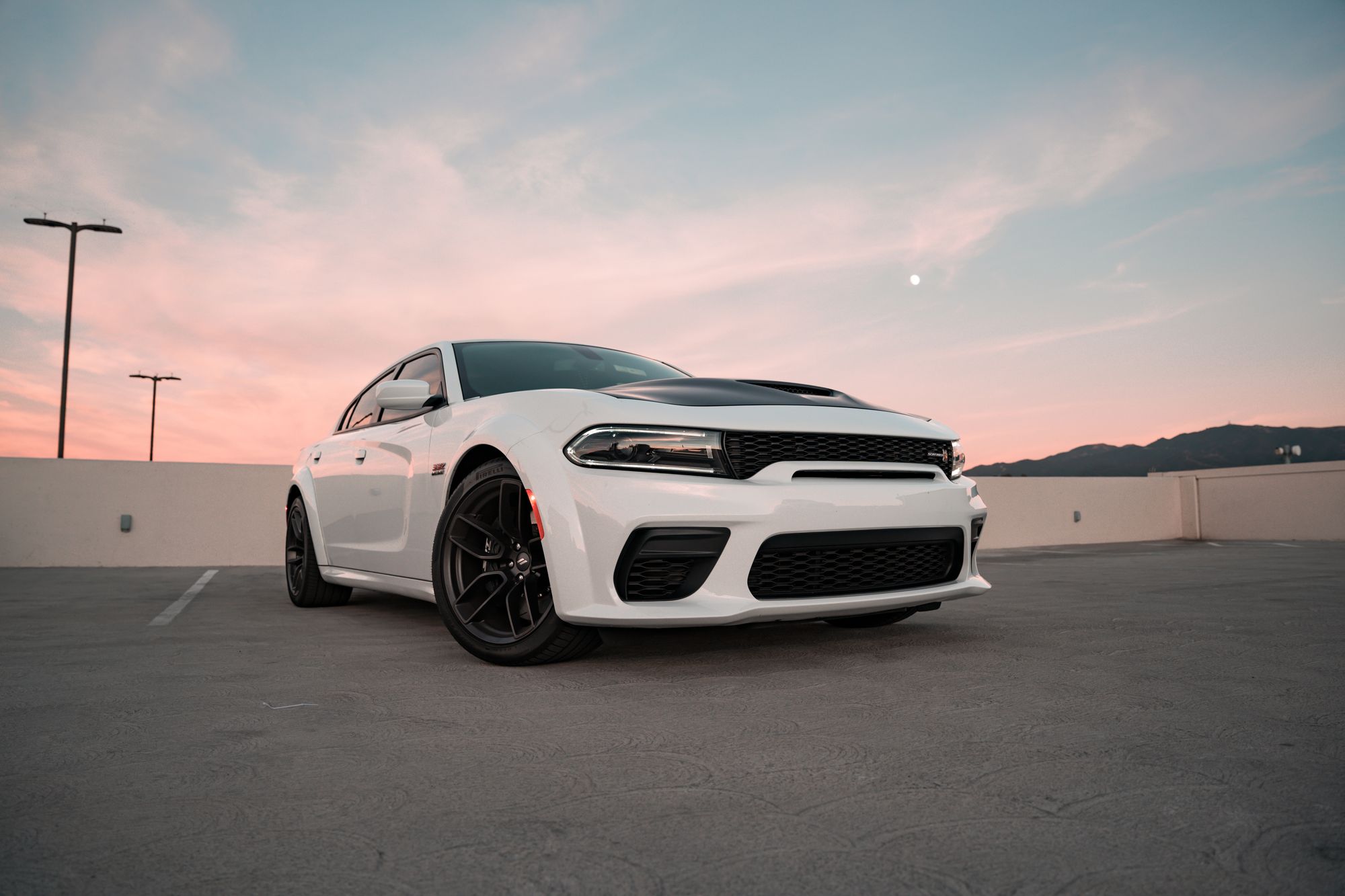
This comparison deserves honest treatment before any money changes hands. A Hellcat-powered Dodge Challenger or Charger delivers the same supercharged 6.2-liter V8 in a lighter, simpler, two-wheel-drive package. Used examples in decent condition are available for $40,000 to $55,000, meaning a stock Trackhawk commands a $15,000 to $25,000 premium for the SUV wrapper around essentially the same core powertrain.
That premium buys specific, tangible things: full all-wheel drive, five-adult seating, a 7,200-pound tow rating, meaningful cargo capacity, and genuine ground clearance — all while running 0-60 mph in approximately 3.5 seconds. Car and Driver’s comprehensive Trackhawk coverage makes clear that no direct competitor packages that combination of daily utility and track-capable performance in quite this way. If school pickups, ski trips, and the occasional trailer matter to your actual life, the Trackhawk’s value proposition is genuine and largely unreplicated.
If you are chasing pure performance per dollar spent, a Hellcat coupe wins without argument. The Trackhawk’s case rests on the complete package, not the powertrain in isolation.
For the 1,000-horsepower modified segment specifically: a documented build from a reputable shop commands a premium that a serious buyer can validate with receipts, dyno sheets, and a direct conversation with the shop that performed the work. An undocumented tune on a neglected truck is worth nothing at any claimed horsepower figure, regardless of what the listing says.
Should You Buy One? The Honest Summary

Here is what ownership of a modified Trackhawk actually involves, stated plainly:
- Fuel economy: Expect approximately 11 mpg city and 17 mpg highway on a stock calibration. Modified examples running more aggressive tunes will perform worse under hard driving. This is not a vehicle you optimize into a favorable cost-per-mile calculation — buy it knowing what it is.
- Reliability above 800 horsepower: The factory drivetrain — transmission, driveshafts, rear differential — was engineered for 707 horsepower. Sustained output significantly above that figure accelerates wear on components the factory did not design for those loads. Independent pre-purchase inspection and complete maintenance documentation are not optional on a modified example; they are the purchase condition.
- The sensible entry point: For most buyers, a clean 2018-2021 stock example between $50,000 and $65,000 with verifiable service history is the correct move. You receive the factory 707 horsepower — still an extraordinary amount of power in a five-seat SUV — and retain the option to modify it yourself, with a shop you have researched and chosen, on a schedule you control.
- The 1,000-horsepower builds: They are legitimate, technically impressive, and fast in ways that are genuinely difficult to describe with restraint. But you are paying a substantial premium for another person’s decisions. Only proceed if the specific truck comes with full documentation: dyno sheets, parts receipts, shop contact information, and a clean pre-purchase inspection from an independent technician familiar with the platform.
The Trackhawk was always built for buyers who refused to choose between luxury, utility, and track-capable performance. The 1,000-horsepower versions push that premise well beyond anything Jeep engineered or intended. Whether that is worth $80,000 to $120,000 of your money is a question only answerable once you have established exactly which problem you are trying to solve — and whether this particular truck, with its specific history and documentation, actually solves it.