
The GMC Canyon and Chevy Colorado roll off the same platform, share the same engine, and haul roughly the same loads — yet spend time inside both trucks back-to-back and something becomes clear: the Canyon feels like it belongs in a higher class. That is not badge engineering. It is a deliberate product decision, and it matters considerably when you are writing a check in the $45,000-$60,000 range.
The Truck That Stopped Playing Second Fiddle

For years the Canyon was easy to dismiss as a Colorado wearing a fancier grille. The current generation changed that. GMC, General Motors’ truck and utility division built around “professional grade” branding, used the shared platform as a floor rather than a ceiling. The result is a mid-size truck with a sharper interior, more meaningfully differentiated off-road tiers, and a trim structure that gives buyers something real to choose between — not just cosmetic badge options.
If you are shopping for a mid-size truck in 2024-2025, the Canyon deserves your first look, not a consolation glance after a competitor falls through. This piece covers exactly where the Canyon wins, where it concedes ground, and whether it belongs in your driveway.
Quick Specs: What You Are Actually Getting

The 2024 GMC Canyon runs a 2.7-liter turbocharged four-cylinder producing 310 horsepower and 430 lb-ft of torque — the same engine family used in the Colorado, tuned identically, so neither truck holds a power advantage over the other. Output is genuinely strong for the mid-size segment. Maximum towing is rated at 7,700 lbs and maximum payload at 1,573 lbs, numbers that comfortably handle most boat trailers, job-site loads, and weekend toy haulers.
Fuel economy in 2WD configuration is 18 city and 24 highway mpg — respectable given the torque on tap, though the Toyota Tacoma’s available hybrid powertrain now outpaces it on efficiency if running costs are your primary concern. The trim ladder runs five levels: Elevation, AT4, AT4X, Denali, and the AT4X AEV Edition. These are not cosmetic variations. They represent meaningfully different hardware packages, which is one of the Canyon’s genuine structural advantages over competitors that blur the distinctions between trims.
| Specification | 2024 GMC Canyon |
|---|---|
| Engine | 2.7L Turbocharged I-4 |
| Horsepower | 310 hp |
| Torque | 430 lb-ft |
| Max Towing | 7,700 lbs |
| Max Payload | 1,573 lbs |
| Fuel Economy (2WD) | 18 city / 24 hwy mpg |
| Available Trim Levels | Elevation, AT4, AT4X, Denali, AT4X AEV Edition |
Canyon vs. Colorado: Where the Price Difference Goes
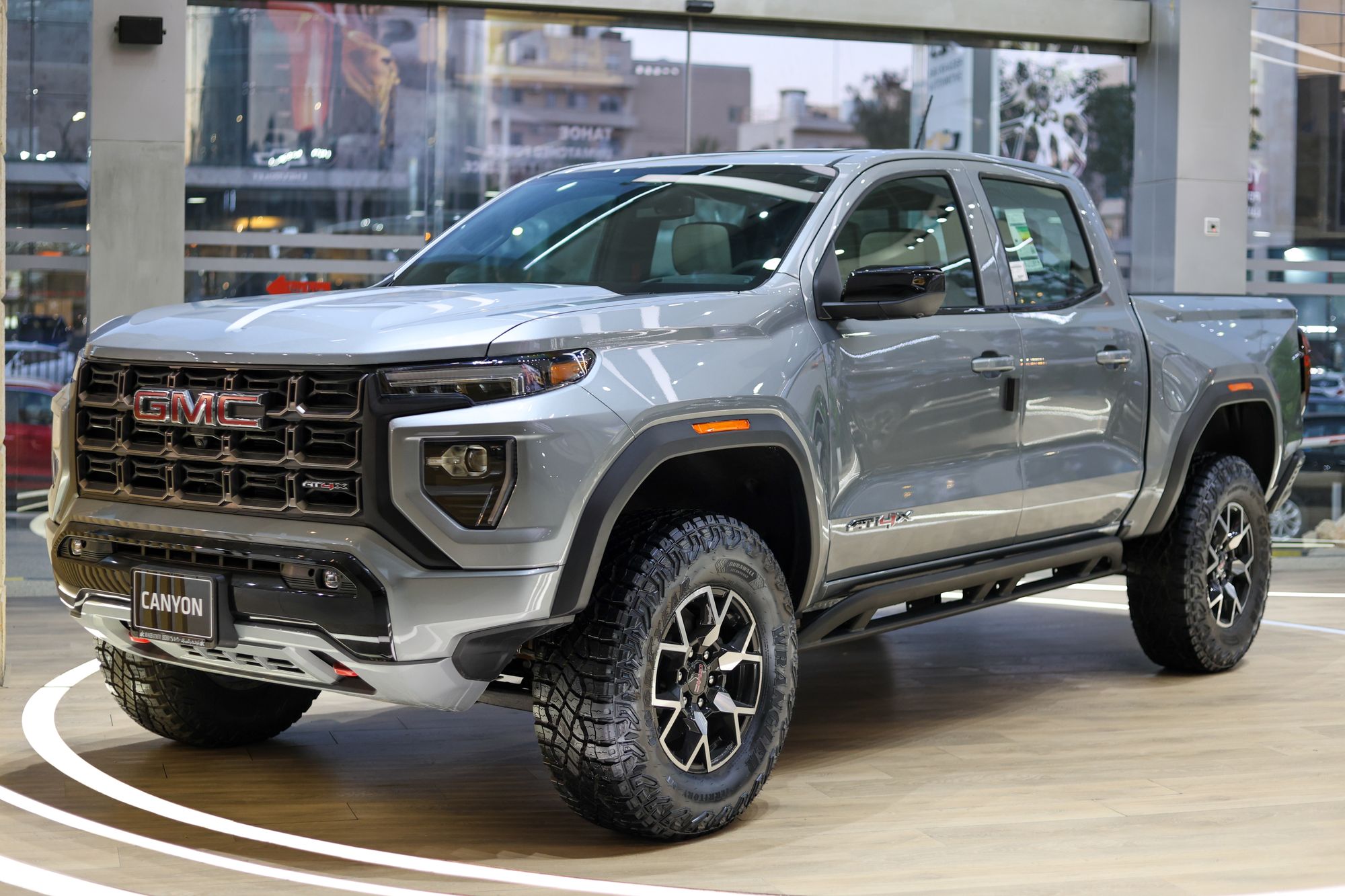
The Canyon typically starts $2,000-$4,000 higher than an equivalent Colorado trim. That gap is not trivial, so it demands a clear accounting of what you are actually receiving. The most immediate difference is the cabin. The Canyon uses higher-grade soft-touch materials, a cleaner dashboard layout, and GMC’s MultiPro tailgate — a six-function folding system that adds genuine utility rather than a mere talking point. The Colorado’s interior is functional and well-built, but at comparable price points it reads noticeably more utilitarian.
The honest trade-off is this: both trucks share the same bed dimensions, powertrain, and underlying suspension architecture. If your truck is primarily a work tool — hauling materials, pulling a trailer, sitting in a job-site lot — the Colorado performs identically for less money. The Canyon’s premium makes the most sense for buyers who spend real hours in the driver’s seat and care what that experience feels like.
Where the Canyon pulls decisively ahead is at the top of the trim stack. The Denali delivers heated and ventilated seats, an 11-inch diagonal infotainment display, Bose audio, and interior appointments that compete credibly with small luxury SUVs — an experience the Colorado does not replicate at any price point. For buyers who want a mid-size truck that transitions naturally between job site and upscale environment, the Denali is the only option in the segment that genuinely gets there.
AT4X: The Off-Road Argument for Paying More

The Canyon AT4X is the trim that most clearly justifies the truck’s existence as a product distinct from the Colorado. It comes standard with a Multimatic DSSV spool-valve damper suspension — the same damper technology found in purpose-built performance vehicles — along with electronic locking front and rear differentials and full underbody skid plate coverage. Ground clearance reaches 9.9 inches, and 33-inch all-terrain tires are fitted from the factory. Those are substantive off-road numbers, not marketing approximations.
The AT4X AEV Edition, developed in partnership with American Expedition Vehicles, adds bead-lock capable wheels and a 1.5-inch body lift for buyers who want the truck trail-ready without spending weekends and additional budget in an aftermarket shop. It is a practical choice if serious off-road use is regular rather than occasional.
Street price for the AT4X lands around $55,000-$60,000 depending on configuration. If genuine off-road capability is your primary use case, that figure is defensible — you are receiving hardware that would otherwise require meaningful aftermarket investment to replicate. If you drive pavement the majority of the time with only occasional light trails, the AT4 trim at roughly $48,000 delivers capable off-road hardware for meaningfully less. Knowing which buyer you are before you configure is the most important decision you will make in this process.
The Honest Reliability Picture

This section warrants careful reading. The current-generation Canyon launched on a relatively new platform with a turbocharged engine that is still accumulating long-term ownership data. Early owner reports have noted some transmission calibration quirks and occasional infotainment software glitches — not dealbreakers for most buyers, but material information before signing. J.D. Power awarded the 2023-2024 Canyon above-average initial quality scores within its segment, which is an encouraging signal. Initial quality and decade-long durability are, however, different measurements that do not always move together.
GMC’s warranty coverage runs on standard GM terms: 3 years or 36,000 miles bumper-to-bumper, and 5 years or 60,000 miles on the powertrain. That is not a class-leading position. The Toyota Tacoma carries a strong reliability track record built across multiple generations, and its long-term ownership costs reflect that history.
The candid summary: the Canyon is the more refined truck to drive. It is not yet the lower-risk long-term ownership bet. Buyers purchasing in the first few model years of this generation would do well to price in an extended warranty as a reasonable hedge. If long-term reliability is your single most important criterion and you are willing to accept a less polished interior in exchange, the Tacoma continues to earn its reputation on that specific dimension.
Who Should Actually Buy the Canyon

- Daily drivers who spend real time in the seat: The Canyon’s interior quality justifies its premium over the Colorado for commuters and road-trip users. The Denali in particular competes with vehicles that do not carry truck beds.
- Off-road buyers who want serious capability without a full-size footprint: The AT4X delivers genuine trail hardware in a truck you can park in a standard space and operate as a daily vehicle without significant compromises.
- Cross-shoppers weighing the Tacoma, Ranger, or Frontier: The Canyon leads on interior quality and towing capacity. The Tacoma leads on resale value and proven reliability. The Ranger and Frontier lead on value at lower price points. Knowing your priority ranking before you walk into a dealership makes the decision straightforward.
- Buyers who primarily need a work tool pulling heavy loads daily: The Colorado performs identical work for less money, and it is the more economically rational choice in that specific use case.
Bottom Line: Is the Canyon Worth It?
The GMC Canyon has built a legitimate identity in a competitive segment. It is not a Colorado with different badges. The interior quality step-up, the AT4X’s factory off-road hardware, and the Denali’s near-luxury appointments make it a genuinely differentiated product at those respective trim levels. Price-to-capability is strongest at the AT4 and Denali trims. The base Elevation is harder to justify when a well-equipped Colorado covers similar ground for less money.
Reliability data on this generation’s platform is still maturing, and that is a legitimate consideration for anyone planning to keep the truck well past 100,000 miles. Budget for an extended warranty if that range matters to you. Shopping certified pre-owned in a year or two is also a reasonable strategy if you want someone else to absorb the early-ownership uncertainty while still accessing the current generation’s improvements.
If you want a mid-size truck that drives with a premium feel, tows seriously, and handles genuine off-road work without aftermarket investment, the Canyon earns a test drive. Review current pricing and trim configurations through Kelley Blue Book’s GMC listings before you visit a dealer — understanding market value before you sit across from a salesperson is among the most useful preparation you can do. Go in clear on what you are paying for and why. The Canyon consistently rewards buyers who understand the distinction between what it is and what the Colorado is, and who are making a deliberate choice rather than defaulting to the more familiar name.