
NASCAR’s decision to drop to 465 horsepower at Daytona — and signal a 750 HP standard at select tracks by 2026 — sounds, on the surface, like the sport quietly admitting defeat. Before you write it off as another round of watered-down racing, it’s worth understanding what the engineers and insiders are actually trying to fix, because the reasoning is more compelling than the headline number suggests.
The Cut That Sounds Like a Disaster — But Isn’t

If you’ve watched NASCAR over the past decade, you already know the real problem isn’t raw horsepower. It’s what too much power inside the wrong aerodynamic package does to the actual racing. Cars stretch out into single-file trains. Fuel strategy replaces wheel-to-wheel battles as the decisive factor. The driver who checked up and saved half a gallon beats the driver who raced hard for 40 laps. That’s not what anyone bought a ticket to see.
This isn’t NASCAR waving a white flag. It’s a calculated engineering reset — a deliberate attempt to realign power, grip, and aerodynamics in a way that puts competition back on the track surface instead of in a pit-strategy spreadsheet. Here’s what the horsepower cut is actually designed to fix, and why it may be the most consequential rules change since the Next Gen car launched.
What NASCAR Is Actually Changing — The Real Numbers

The 2025 Daytona package pairs a 4-inch spoiler with 465 HP. Those two numbers aren’t chosen independently — they’re engineered together to reduce aerodynamic dependence and discourage the fuel-conservation tactics that have turned late-race laps into chess matches. NASCAR’s Daytona rule overhaul frames this explicitly as an effort to push action back onto the racing surface.
The mechanism NASCAR uses to dial power down is a tapered spacer — a smaller opening in the intake that restricts airflow without requiring teams to rebuild or replace their engines entirely. That matters financially: teams keep their hardware investment while NASCAR controls the output equation uniformly across the field.
The 2026 announcement of 750 HP at select tracks signals something more significant than a single one-off reduction. It represents a tiered horsepower philosophy — different power levels mapped to different track types — rather than one blunt number applied uniformly across a 38-race schedule. NASCAR’s 2026 rule change announcement makes clear this is a structured, deliberate approach rather than a reactive panic move.
Wider tires at short tracks are a direct engineering byproduct of the power reduction. Less power means the contact patch can be expanded without generating unmanageable wheelspin — which fundamentally changes the handling balance drivers feel mid-corner and opens the door to more side-by-side racing.
5 Reasons the Horsepower Cut May Actually Save the Sport

1. Less Power Actually Unlocks More Passing
This is counterintuitive, but it’s supported by the aerodynamic data: when you reduce power, drag, and downforce together in the right ratios, cars can attain higher acceleration speeds in clean air, and the performance gap between running in clean air versus turbulent air behind another car gets meaningfully smaller. Why less horsepower is actually better for NASCAR breaks down the aerodynamic logic behind this in detail.
Shrinking that clean-air advantage is the entire ballgame. It’s why a faster car can no longer simply drive away from the field the moment it clears traffic. Closer acceleration curves mean a driver who makes a move has a genuine window to complete it — which is, fundamentally, what racing is supposed to look like. The Daytona package serves as the proving ground for this concept at superspeedway scale before the 750 HP structure extends more broadly in 2026.
2. It Kills the Fuel-Mileage Race Nobody Paid to Watch
Fuel-saving strategy has become one of the most criticized elements of modern NASCAR — cars checking up, drivers nursing the throttle, races decided by pit-road timing rather than on-track position battles. Higher horsepower packages burn fuel faster but also create such large aerodynamic gaps that the racing calculus tips toward conservation over aggression. Why race someone hard for 20 laps when you can manage fuel and inherit position at the end without the risk?
A lower-power package recalibrates that equation. Teams have less incentive to save fuel when the on-track speed differential between hard racing and fuel management is smaller. The 465 HP Daytona spec is explicitly aimed at this problem — moving decisive moments back to the racing surface, where they belong, and away from the timing stand.
3. Short Tracks Finally Get a Package That Fits
Short tracks have been the most contested battleground in the horsepower debate. Too much power on a half-mile oval creates aero-push conditions that make side-by-side racing nearly impossible — the car in front pulls away because the car behind is starved of front-end grip in dirty air. The relationship between horsepower cuts and grip levels at short tracks has been discussed openly inside NASCAR’s engineering conversations for years.
Wider tires, made viable by the power reduction, give drivers more mechanical grip to work with throughout a corner. More mechanical grip relative to aerodynamic grip is the foundational principle of good short-track racing — it’s why fans remember those venues so vividly from earlier eras. The tiered 2026 structure suggests NASCAR is finally mapping horsepower levels to track geometry rather than applying one-size-fits-all specifications, which has been a persistent structural flaw of the Next Gen era.
4. Teams Can Actually Afford to Compete
Here’s the trade-off nobody in the horsepower-cut debate addresses honestly: running engines at the absolute edge of high-output reliability is expensive in ways that systematically kneecap smaller teams. The performance delta between a maximum-effort engine build and a mid-budget build is enormous at high power levels — and that delta translates directly into lap times, stage points, and playoff positioning.
Reducing the power ceiling reduces the arms-race incentive. When the gap between top-dollar and mid-budget engine programs shrinks, mid-tier teams can close the competitive deficit through chassis setup, aerodynamic balance, and driver skill rather than through pure spending power. Tapered spacers are NASCAR’s cost-control lever: the same physical hardware, restricted uniformly across every car on the grid. Long-term, a more financially survivable mid-field is what keeps 36 or more cars competing each week. Without it, you get the slow entry attrition that has quietly cost the sport cars and teams across two decades.
5. It Forces Better Engineering Across the Whole Car
When power is effectively capped and equalized, the competitive variable shifts. Teams cannot simply out-spend the problem with a bigger engine program. The performance conversation moves to suspension geometry, tire management, aerodynamic balance, and driver feedback — the kind of engineering depth that produces genuinely close racing throughout the entire field, not just at the very front.
That’s a healthier competitive ecosystem. It’s also a more attractive one for manufacturers who want to showcase real engineering problem-solving rather than raw horsepower bragging rights on what is otherwise a tightly controlled spec platform.
The Real Trade-Off: What You’re Giving Up
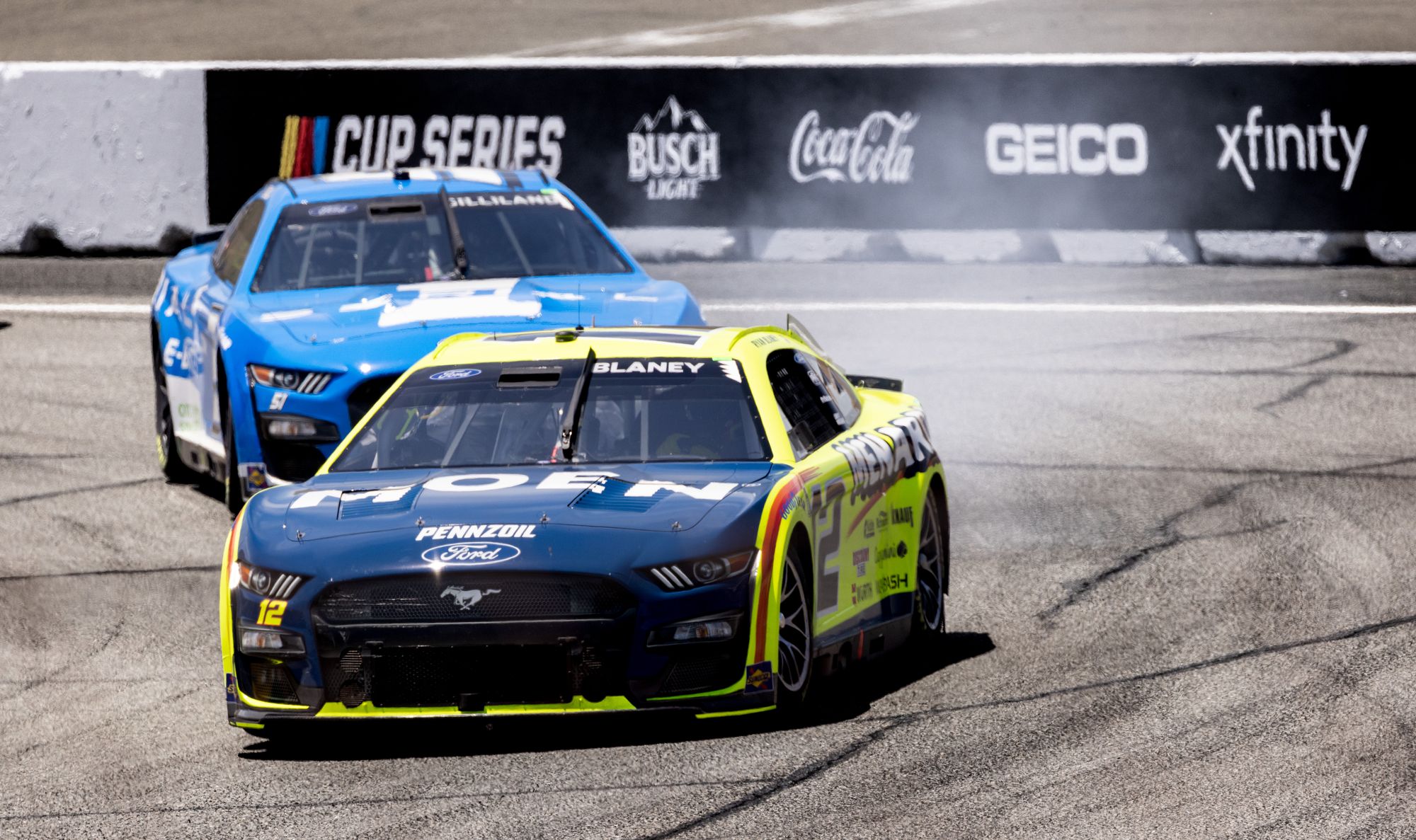
Be honest about the sensory reality: a 465 HP NASCAR Cup car still sounds genuinely dramatic in person. But it is a different experience than higher-horsepower cars of earlier eras, and that loss is real for longtime fans. The sound, the drama of wheelspin on corner exit, the feeling that these machines are barely contained — those things are partly a function of power output, and dialing it back changes what you feel standing at the fence.
The 750 HP 2026 standard at select tracks is a compromise figure — and compromise packages carry a history of satisfying nobody completely. Expect criticism from both directions: fans who wanted more on-track aggression and engineers who would have preferred a cleaner, lower baseline number with less in-season variability.
Wider tires and lower power improve grip and passing potential in engineering terms, but real-world implementation at tracks with older pavement or unconventional banking angles will require meaningful adjustment from both NASCAR and the teams over the course of a full season. Some venues will work far better than others with the new package, and early-season races will produce outliers in both directions before teams fully dial in their setups.
The genuine payoff — closer racing, reduced costs, fuel strategy removed from the decisive headline moment — only materializes if NASCAR holds the line on the package and resists walking it back after a handful of races that don’t immediately deliver the on-screen product the sport needs. That institutional discipline is considerably harder than writing the rule in the first place. It’s the variable worth watching most closely as the 2025 season unfolds.