
The sound hits you before you see the car — a lumpy, aggressive idle bouncing off sandstone hillsides somewhere outside Hazard, Kentucky. The build turning heads on that two-lane blacktop would hold its own at any show in the country. This is coal country, not California, but the fabrication happening in Perry County and the hollows surrounding it is dead serious work. If you’re trying to understand the American hot rod scene without accounting for Eastern Kentucky, you’re missing one of its most distinctive and undervalued chapters.
What Hot Rod Culture Actually Means in Hazard, KY

The hot rod scene centered around Hazard and Perry County isn’t built on Instagram sponsorships or $60,000 restomod budgets. It’s built on salvage yards, inherited shop knowledge, and a function-first fabrication philosophy that comes from knowing you’re 60 miles from the nearest specialty supplier. When builders here choose a platform, they choose it because parts are genuinely available, because they understand it down to the casting numbers, and because it will run reliably on roads that would rattle a show car apart inside a single season.
That reality shapes the aesthetic in ways that are immediately recognizable once you know what you’re looking at. Appalachian builds tend to prioritize drivability over showmanship. Suspension geometry is tuned for crowned, patched, two-lane blacktop rather than a flat drag strip. Carburetors are rebuilt and rejetted rather than swapped for throttle-body injection units that require a laptop to diagnose. These aren’t compromises — they’re deliberate engineering choices made by people who actually drive their cars hard and year-round.
The economic reality is also worth stating plainly. Complete builds in the Hazard area routinely come in between $8,000 and $18,000 all-in. Comparable work at a custom shop in Nashville, Atlanta, or Los Angeles runs $35,000 and up, often significantly more. That gap produces both trade-offs and ingenuity, and understanding which is which matters before you buy, build, or make assumptions about what you’re evaluating.
The Platforms Eastern Kentucky Builders Trust — and Why

Ask builders in Perry County what they’re working on and you’ll hear the same answers with enough frequency to call them regional standards. The 1955-1972 GM A-body — Chevelle, El Camino, Malibu — and the 1960s Ford F-100 truck are dominant platforms here for the same reason they dominate anywhere that values practicality: deep aftermarket support, abundant donor vehicles in the region, and decades of collective knowledge about exactly how far you can push them before something breaks.
The engine of choice is the small-block Chevy 350, typically built out to a 383 stroker for meaningful street performance. A properly assembled 383 with quality forged internals, a mild cam, and a double-pumper carburetor delivers roughly 380-420 horsepower at the flywheel, returns 13-16 MPG at highway cruise depending on gearing and rear axle ratio, and can be rebuilt for under $3,500 using parts stocked at any decent speed shop or available next-day from major distributors. That rebuild cost matters in a region where unexpected expenses hit harder than they do in more economically diverse areas.
On the transmission side, the TH350 and TH400 automatics remain the regional workhorses, and for good reason. A properly rebuilt TH400 handles 500 or more lb-ft of torque reliably and can be had for under $1,200 done right by a competent rebuilder. When the nearest transmission specialist is an hour’s drive in either direction, you want a unit that a skilled local mechanic understands completely — and both of those units qualify.
Fuel injection conversions exist in the region and they aren’t wrong. An LS-based swap adds efficiency and a broader powerband, but it also adds diagnostic complexity that many rural shops aren’t equipped to handle. That’s not an argument against EFI — it’s an argument for knowing your local support infrastructure before you commit to a technology stack you can’t service within a reasonable distance.
Appalachian Build Benchmarks at a Glance

| Platform | Typical HP | Est. Build Cost | Highway Fuel Economy | Reliability Profile |
|---|---|---|---|---|
| Regional 383 SBC Cruiser (Hazard-area build) | ~400 hp | $12,000-$16,000 | 14-16 MPG | High — parts stocked locally or within a 2-hour drive |
| Metro LS-Swap Restomod | ~450 hp | $28,000-$40,000 | 17-20 MPG | Moderate — ECU tuning requires specialist access |
| Regional Ford 390 FE Truck Build | ~340 hp | $9,000-$13,000 | 11-13 MPG | High for experienced owner-mechanics; lower if FE parts sourcing is unfamiliar |
The Real Trade-Offs Before You Buy or Build in This Region

Kentucky does not require emissions testing in most rural counties, including Perry County. For anyone running a carbureted pre-OBD build, that’s a genuine, practical operating advantage — not a loophole, just a regulatory reality that makes older iron viable as daily or frequent-use transportation without the annual compliance burden that complicates ownership in states like California or Virginia.
Parts access is where rural builds take their most consistent hit. Specialty billet components, custom-fabricated headers, and low-production items can mean three-to-seven-day shipping delays even with expedited freight. If you’re managing a build timeline, add 15-20% buffer to any schedule that depends on parts arriving quickly. Builders who account for this finish on time; builders who don’t end up with a car on jackstands for an extra two weeks waiting on a single fitting.
Resale is a question that comes up often, and the honest answer is more encouraging than it used to be. A well-documented Appalachian build — with receipts, build photos, and a clear record of the shop work — sells at roughly 80-95% of comparable metro builds on national platforms. The geographic stigma has faded as buyers increasingly evaluate the quality of the work rather than the zip code where it was completed.
On insurance: if your build exceeds $10,000 in value, agreed-value classic car coverage from carriers like Hagerty or Grundy is the only financially sound option. These policies are available in rural Kentucky and pay the agreed amount after a total loss without depreciation arguments. Stated-value or actual cash value policies will leave you short — sometimes significantly — and that risk has nothing to do with geography and everything to do with how you protect an asset you’ve invested real money and time into building.
Why the Appalachian Environment Produces Better Fabricators
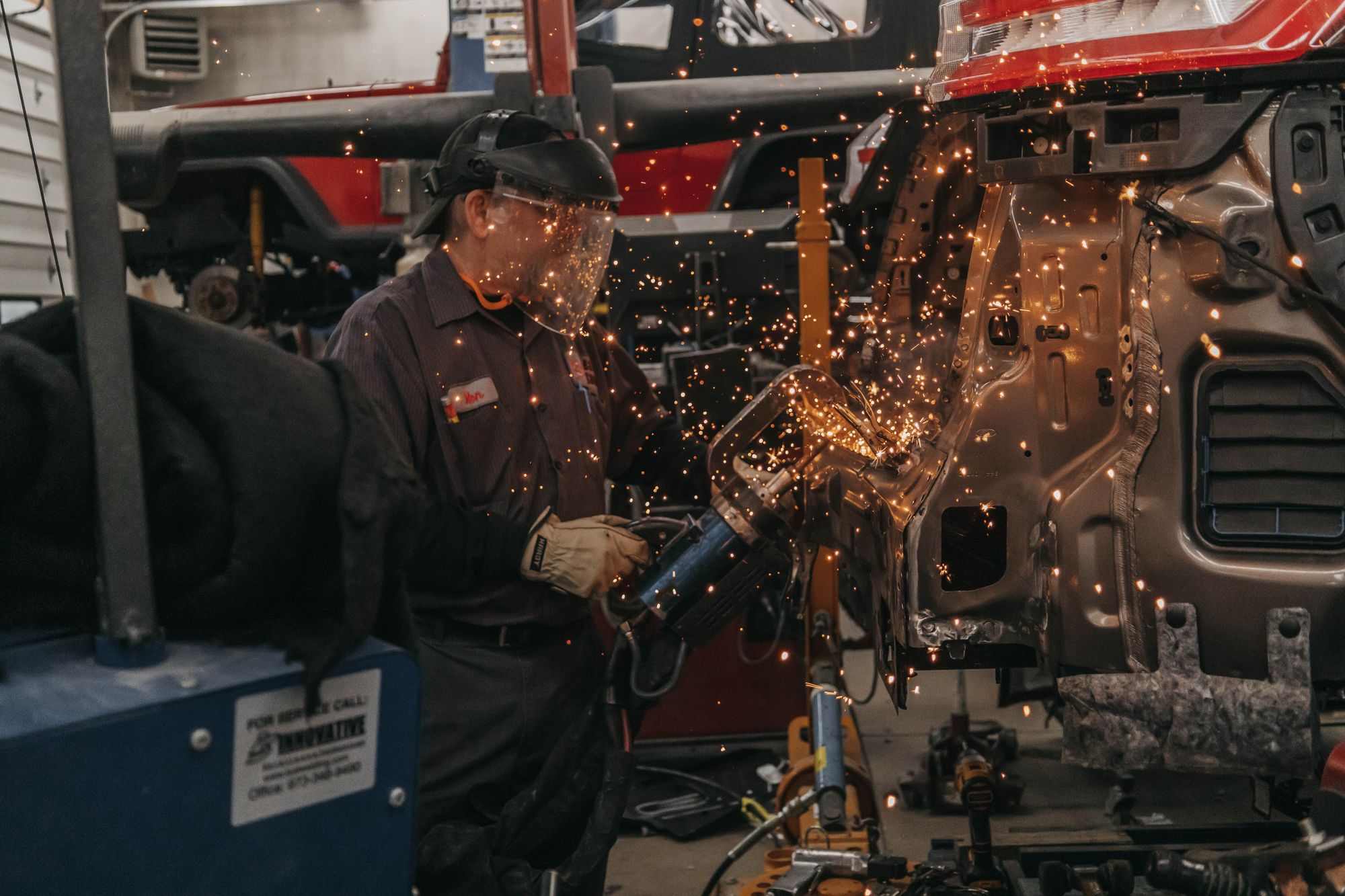
Isolation is either a limitation or an education, depending on how you respond to it. In the Hazard area, the response has consistently been educational. Builders here do their own welding, their own machining setups, their own electrical systems — not because they prefer it to outsourcing, but because outsourcing isn’t always a practical option when you’re deep in the mountains. Those skills command $150-$200 per hour at a metro custom shop. A builder who developed them out of necessity brings that value to every car they touch.
The roads themselves function as a tuning instrument. Narrow two-lane state routes through Perry County and the surrounding hollows are crowned, patched, and cambered in ways that expose suspension geometry problems immediately and honestly. A car that handles correctly on those roads handles correctly everywhere. A car tuned only for a flat drag strip or a smooth show lot will tell you nothing useful about whether the geometry is actually right.
There’s also the generational dimension. Multi-decade shop cultures exist in this region in a way that’s increasingly rare nationally. A builder in their mid-twenties may be working from a knowledge base accumulated across two or three generations of family experience — decisions made not because a video recommended them, but because someone who built the same platform thirty years ago learned what works and passed it forward directly.
What This Means for Buyers, Builders, and Enthusiasts

If you’re buying a Kentucky-built hot rod, treat it as the value opportunity it actually is. Inspect frame rails and floor pans carefully — the region’s humidity and road salt exposure are the primary structural enemies, and rust in those areas is the trade-off that matters most. Budget $500-$1,500 for undercoating or sealing if it hasn’t been addressed, and walk away from anything with structural rust you can’t fully assess. Everything else is negotiable and fixable.
If you’re building in the region, lean into the platform strengths: SBC or FE Ford, carbureted or a simple EFI setup your local shop can support, TH350 or TH400 automatic or a T56 manual if you want a stick, and a suspension package tuned for the roads you’ll actually drive rather than the shows you’ll attend twice a year. Don’t sacrifice 5,000 real miles for a trophy you’ll put on a shelf.
If you’re evaluating Appalachian car culture from the outside, the price-to-performance ratio in this region is real, the craftsmanship is documented, and dismissing it based on geography will cost you money when the right car appears at auction and you’ve already talked yourself out of bidding. The hills don’t care about your assumptions. Neither does a well-built 383.
Eastern Kentucky’s hot rod scene — centered in communities like Hazard — isn’t a regional curiosity or a footnote in American automotive history. It’s a working demonstration that constraint, accumulated skill, and road-tested practicality produce machines that compete with anything built by a shop carrying twice the budget and a fraction of the earned experience.
And while you’re in the area, Hot Rod’s Pizza in Hazard is worth knowing about — a local landmark that reflects the same working-class character as the car culture surrounding it. You can find them at 124 Corporate Dr, Hazard, KY, follow their Facebook page for current hours and specials, or read what visitors are saying on TripAdvisor. It’s the kind of place that exists because of the community it belongs to — and that community builds serious cars.