
A Killeen, Texas reader sat down with a spreadsheet, pulled up real numbers, and tried to build an honest case for switching to an electric vehicle — no cheerleading, no greenwashing, just math. What that exercise revealed, as published in KDH News, is worth walking through carefully before you make any decisions at a dealership in 2025.
What You Actually Pay to Fill Up vs. Plug In

The headline figure from the Killeen letter writer is hard to ignore: EVs cost roughly 50 percent less to fuel than internal combustion engine vehicles. That claim isn’t marketing copy — it lines up with data from the Alternative Fuels Data Center, which confirms that electrification consistently lowers per-mile energy costs and reduces fuel spending for most drivers.
Put real numbers to it. At average Texas electricity rates and current gas prices, a driver logging 15,000 miles a year can realistically save somewhere between $800 and $1,400 annually on fuel alone, depending on the vehicle and what their utility charges per kilowatt-hour. That’s not a trivial amount over a five-year ownership window — it’s potentially $4,000 to $7,000 back in your pocket.
The catch: where you charge matters as much as what you drive. Home charging overnight on off-peak rates sharpens the fuel cost advantage significantly. Public DC fast charging — the kind you pay per minute or per kilowatt-hour at a highway station — erodes it fast. If your situation means you’d rely heavily on paid public networks rather than a home outlet, recalibrate those savings estimates downward before you get attached to the big number.
Maintenance Math: Fewer Parts, Fewer Bills

The same letter writer flagged that EVs require roughly half the maintenance of a comparable gas vehicle. That figure reflects what the drivetrain difference actually looks like in practice: no oil changes, no transmission service, no spark plugs, no timing belt. The list of things that simply cannot break is genuinely long.
Regenerative braking — where the motor recaptures energy during deceleration instead of burning it off as heat through friction — reduces brake wear meaningfully. EV owners routinely report going 50,000 to 70,000 miles before touching brake pads, compared to 30,000 to 50,000 miles as a typical interval on a gas car driven normally.
What EVs do cost you: tires wear faster because the vehicles are heavier, so budget for that. You will need to monitor the 12-volt accessory battery — a standard lead-acid battery, not the main drive pack — just like any car. And eventually, high-voltage battery health becomes a consideration, though most modern EVs carry eight-year, 100,000-mile battery warranties that cover significant capacity loss.
Over a realistic five-year ownership window, the maintenance gap between a mainstream EV and a comparable gas sedan typically runs $1,500 to $3,000 in the EV’s favor. Real money — but not a silver bullet by itself. It needs to be added to fuel savings to tell the complete story.
Purchase Price and the Total Cost of Ownership Calculation

Here is where the math gets more nuanced, and where most buyers either make their decision or walk away confused. The sticker price on an EV is still generally higher than a comparable gas vehicle. Research from MIT found that in most U.S. zip codes, EVs are already cost-competitive with gas counterparts on a total cost of ownership basis — not just in states with heavy incentives or cheap electricity. That is a meaningful shift from where things stood even three years ago.
The federal $7,500 EV tax credit can close a meaningful portion of that upfront gap for qualifying buyers — but income limits and vehicle MSRP caps apply, so verify your eligibility before you factor it in. Some Texas utilities also offer rebates for home charger installation, which can further reduce your first-year costs.
Use this framework to run your own breakeven calculation:
- Start with the EV purchase price.
- Subtract any applicable federal tax credit and utility rebates to get your net cost.
- Subtract the price of the gas car you would otherwise buy.
- Divide that net price premium by your projected annual savings on fuel and maintenance combined.
- The result is your breakeven point in years.
For a buyer financing a mid-range EV in Killeen at current rates and driving 15,000 miles annually, breakeven on total cost often lands between year three and year five. High-mileage drivers get there faster. Low-mileage drivers — under 8,000 miles a year — may never fully close the gap.
Specs Snapshot: EV vs. Gas Side by Side
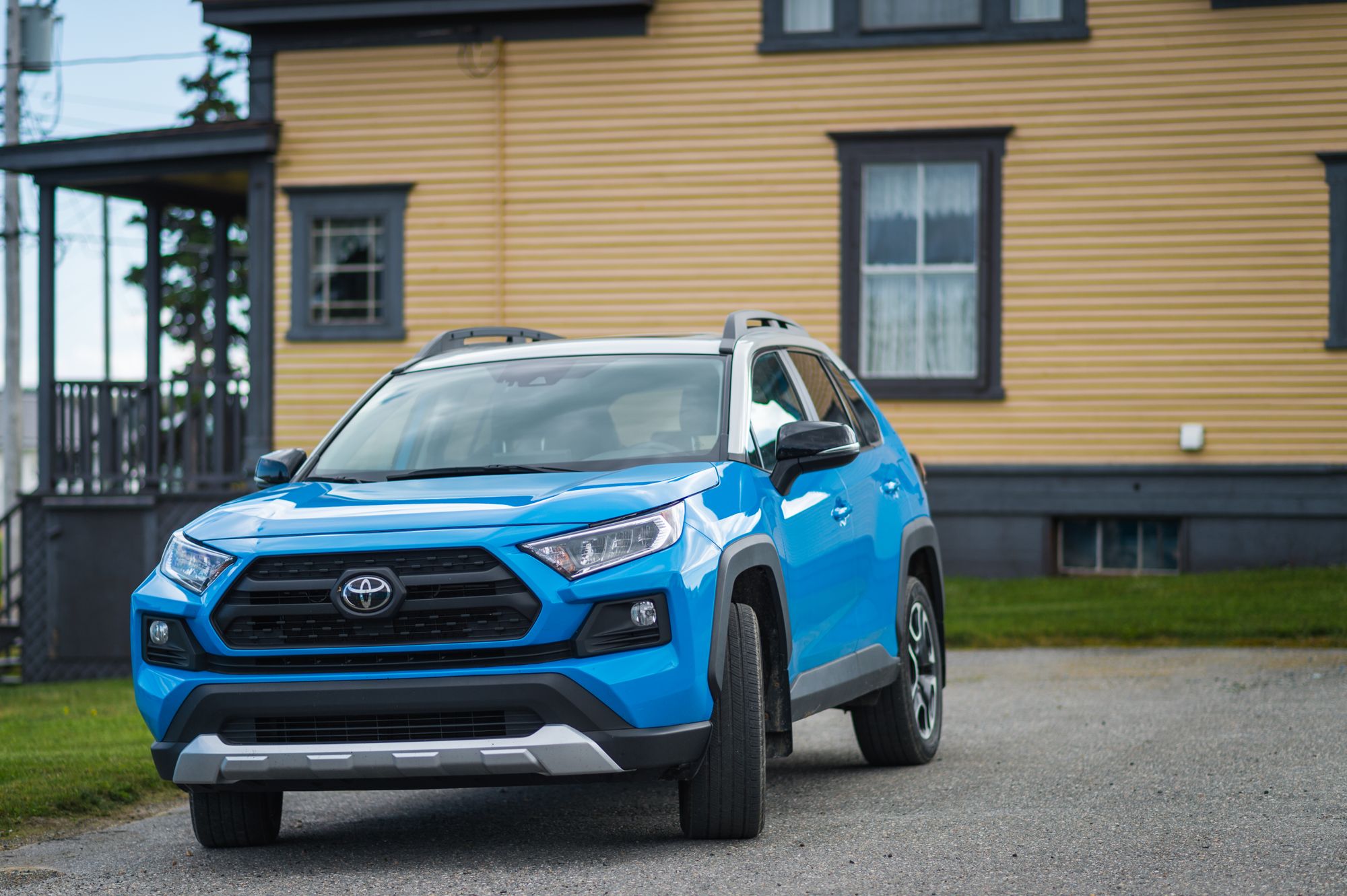
Abstract comparisons are less useful than concrete ones. Here is how the numbers stack up between two real vehicles in a similar segment:
| Category | Chevrolet Equinox EV (2024) | Toyota RAV4 (2024, Gas) |
|---|---|---|
| Base price (approx.) | ~$35,000 | ~$30,000 |
| EPA efficiency | ~121 MPGe combined | ~32 MPG combined |
| Range | ~319 miles (EPA est.) | Unlimited (gas stations) |
| Annual fuel cost (15K mi, avg. rates) | ~$550-$700 | ~$1,800-$2,200 |
| Oil changes | $0 | ~$150-$200/yr |
| Federal tax credit eligibility | Up to $7,500 (income/MSRP limits apply) | None |
| Brake service interval | 50,000-70,000 miles (typical) | 30,000-50,000 miles (typical) |
Range anxiety is real, but it is also context-dependent. If your daily drive is under 60 miles and you charge at home overnight, a 300-mile EV covers your life comfortably with margin to spare. If you regularly drive 300-plus miles between destinations without predictable charging access — think Killeen to Lubbock or Midland — a gas vehicle remains the more practical tool today. Be honest about which profile actually describes your driving before you set foot in a showroom.
The Honest Trade-Offs Texas Drivers Need to Hear

The numbers favor EVs under specific conditions. Here is where those conditions break down for some Texas drivers:
- Charging infrastructure outside major metros is still patchy. A road trip from Killeen to West Texas or the Panhandle requires more deliberate planning than the same trip in a gas car. The network is expanding — Tesla’s Supercharger opening to non-Tesla vehicles and the federal NEVI program are adding stations — but “improving” is not the same as “there yet.”
- Central Texas heat affects range and charging speed. On 100°F days, you may see 10 to 15 percent less real-world range than the EPA estimate, and some DC fast chargers throttle speeds in high ambient temperatures to protect battery health. Build that buffer into any road trip plan.
- No home charging access changes the equation fundamentally. Apartment renters and condo owners without dedicated parking face a harder EV ownership experience than homeowners who plug in nightly. If you cannot charge at home, the fuel cost advantage narrows considerably and the convenience case largely disappears.
- Resale values have softened. EV residuals weakened in 2024 and into 2025 as new model prices dropped rapidly. Do not build your five-year math on optimistic resale assumptions — use conservative depreciation estimates and you will get a cleaner picture of actual cost.
Should You Make the Switch? Run Your Own Killeen Math

If you own your home, drive 12,000 or more miles annually, and can charge overnight, the fuel data and the MIT cost-competitiveness research point in the same direction: the numbers work for most Texas zip codes. The case is not built on environmental idealism — it is built on lower per-mile energy costs, a simpler maintenance schedule, and a total cost crossover point that has arrived across much of the country, including Central Texas.
Do not rely on generalizations. The Department of Energy’s EV savings calculator at the Alternative Fuels Data Center lets you enter your actual zip code, utility rate, and annual mileage — it takes about four minutes and replaces a week of guesswork with personalized numbers.
The approach taken by the Killeen reader and echoed by similar exercises published elsewhere is worth replicating directly: pull your last 12 months of gas receipts, add up what you spent on oil changes, tires, and other maintenance, then compare that total against the projected operating costs of a specific EV you would actually consider buying — not EVs in the abstract. The math becomes far less intimidating when you are comparing real numbers from your real driving life against a real vehicle on a real dealer lot.
The honest conclusion: an EV is not the right answer for every driver in 2025, but for a significant portion of Central Texas commuters who can charge at home, the financial case is no longer theoretical. It is arithmetic.