
Most sports cars make you a promise they can’t keep. They feel extraordinary on a test drive and quietly grind you down every time you hit a pothole, fill the tank, or open an insurance renewal letter. A small handful genuinely deliver on both sides of that bargain — and those are the cars worth your money and attention.
Most Sports Cars Ask You To Compromise. The Best Ones Don’t.

The fantasy of a sports car rarely survives contact with a Monday morning commute. Traffic, speed bumps, the cost of premium fuel, a boot that won’t fit a weekend bag — these are the realities that separate genuinely usable sports cars from track weapons wearing number plates. This is not a list of the fastest cars or the most headline-grabbing machines. It is an honest, ranked look at sports cars that perform where it counts and hold up in real life, day after day.
You will get real specs, real ownership costs, and clear trade-offs, because the best sports car for daily driving depends entirely on what you are actually willing to live with. The benchmark running through every car on this list: it makes you feel something on a backroad without punishing you for owning it the other 95% of the time.
What ‘Balance’ Actually Means When You’re Buying A Sports Car

Performance is easy to measure. Zero-to-60 times, horsepower figures, lap records — manufacturers love these numbers because they are unambiguous. Daily usability is where most sports cars quietly fail their owners, and it is harder to quantify because it shows up in a dozen small ways rather than one obvious headline failure.
The metrics that actually matter for everyday ownership include boot space sufficient for at least a weekend bag, fuel economy you can live with week to week, reliability data drawn from owner surveys and independent sources, parts availability, ride quality on imperfect roads, and service intervals that do not require rearranging your schedule. Insurance group, depreciation curve, and the cost of routine maintenance belong in this conversation just as much as horsepower figures — arguably more so, because you pay those costs every year, not just on the day you buy.
A sports car that genuinely balances performance and usability earns its place by scoring competitively across all of those columns, not just the exciting ones. If it is fast but ruinously expensive to insure, or engaging but unreliable, it has not made the cut.
The Contenders: Specs, Prices, And Real-World Numbers At A Glance

Five cars make this shortlist: the Mazda MX-5 (ND generation), Toyota GR86, Honda S2000 (used market), Porsche 718 Cayman, and BMW M2. Each represents a different point on the price-to-usability spectrum, and no single car wins every column in the table below. The trade-offs are the whole point.
| Car | Market Price (approx.) | Horsepower | 0-60 mph | Combined MPG | Boot Volume | Reliability |
|---|---|---|---|---|---|---|
| Mazda MX-5 ND | £27,000-£34,000 new | 132-184 bhp | 6.5-7.3 sec | 36-40 mpg | 130 litres | Strong (Which? and owner survey data) |
| Toyota GR86 | £30,000-£33,000 new | 228 bhp | 6.3 sec | 32-36 mpg | 237 litres | Strong (Toyota reliability record) |
| Honda S2000 (used) | £15,000-£30,000+ used | 237 bhp (AP2) | 6.2 sec | 26-30 mpg | 153 litres | Excellent (Honda naturally aspirated engines; long-term owner data) |
| Porsche 718 Cayman | £55,000-£75,000 new | 300-395 bhp | 4.3-5.1 sec | 28-34 mpg | 275 litres (front + rear combined) | Good (PDK reliability strong; budget for servicing) |
| BMW M2 | £63,000-£70,000 new | 460 bhp | 4.1 sec | 25-30 mpg | 390 litres | Good (S58 engine well-regarded; significant service costs) |
The Honda S2000’s inclusion on a list alongside newer cars is deliberate. Used prices and Honda’s reputation for high-revving naturally aspirated reliability make it one of the most compelling real-world choices even measured against more technologically advanced modern alternatives — provided you buy carefully.
Honda S2000: The Benchmark That Still Holds Up

The S2000 remains a benchmark for driver engagement because its 9,000 rpm VTEC engine rewards mechanical skill rather than electronic assistance. There are no turbos masking throttle response, no torque-fill smoothing out your inputs. You get precisely what you put in, which is either the appeal or the warning, depending on your driving style and daily patience.
Reliability is the S2000’s quiet superpower. Well-maintained examples routinely cover well over 150,000 miles without major mechanical drama. Parts are widely available, the enthusiast community is large and knowledgeable, and independent specialists can service these cars without charging main dealer rates. For a car now over two decades old, that ownership ecosystem is genuinely valuable and difficult to replicate with newer, more electronically complex alternatives.
The trade-offs are real and worth stating plainly. Boot space is minimal at 153 litres, the ride is firm on poor surfaces, and the engine demands commitment — below 6,000 rpm it is merely adequate; above it, the car transforms. That characteristic suits drivers who prioritise feel over comfort, but it rules the S2000 out for anyone who wants effortless everyday pace from low revs. Used market prices have risen sharply as enthusiast demand has grown, so budget for a pre-purchase inspection from a Honda specialist, and factor in the potential cost of roof mechanism wear and differential maintenance on higher-mileage cars before you commit to any particular example.
The Everyday Argument: MX-5 And GR86 For Rational Buyers
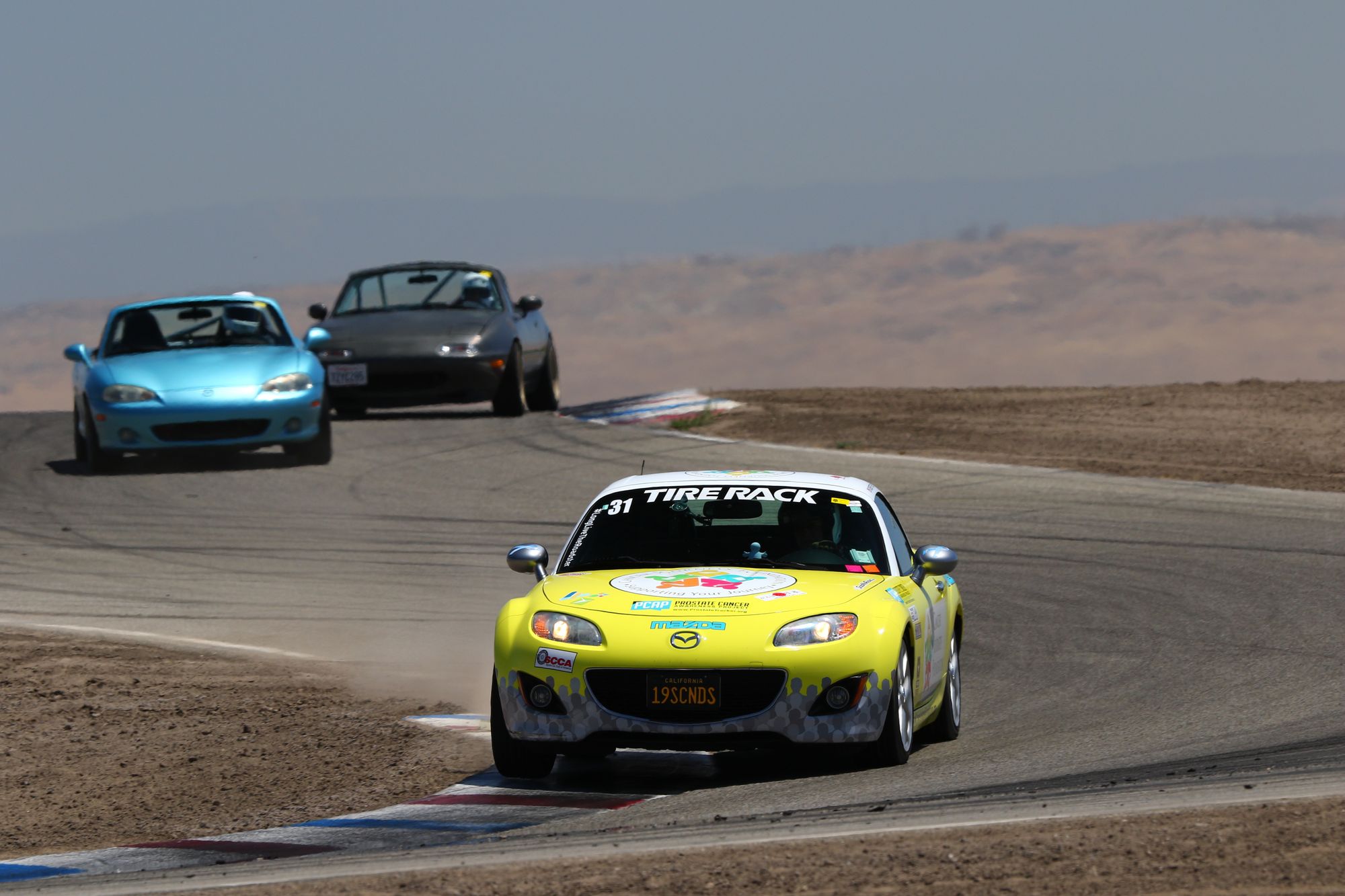
If you are making a purchase decision based primarily on the total cost of ownership over three to five years, the Mazda MX-5 and Toyota GR86 set the standard for sports cars that are reliable, affordable to run, and genuinely enjoyable to drive every day. These are not compromises dressed up as sports cars — they are sports cars that happen to be sensible choices, which is a rarer combination than the market would have you believe.
The MX-5 ND consistently appears near the top of owner satisfaction surveys for sports cars in its price bracket. It sits in a lower insurance group than either the Cayman or M2, returns real-world fuel economy in the mid-to-upper thirties on a mixed driving cycle, and Mazda’s dealer network can handle routine servicing at standard rates without specialist surcharges. The open roof adds genuine pleasure to the ownership experience without adding mechanical complexity that will break your budget. The boot is small — 130 litres is an honest number that demands realistic expectations — but manageable for solo commuting and short trips if you pack accordingly.
The GR86 makes a slightly different case. It adds a fixed roof, a genuine if snug rear seat useful for luggage overflow or occasional short-distance passengers, and Toyota’s naturally aspirated flat-four delivers a more accessible power band than the S2000 without sacrificing the mechanical, rev-hungry character that makes both cars worth owning. At 228 bhp, it is meaningfully quicker than the MX-5 in a straight line while remaining forgiving enough for everyday use. Toyota’s reliability record across its broader lineup gives the GR86 strong long-term ownership credentials that new buyers can rely on without the used-market due diligence the S2000 demands. If you are prioritising the most practical sports cars in this group for genuine daily use, the MX-5 and GR86 sit clearly at the top of that conversation.
The Premium Tier: 718 Cayman And BMW M2 — Worth The Premium?

The 718 Cayman is the strongest all-round sports car in this group on paper. Mid-engine balance, exceptional build quality, a driving experience that competes with cars costing considerably more, and enough everyday usability — combined front and rear boot space totalling 275 litres, a comfortable ride in its standard damper setting, and a PDK gearbox that works as well in traffic as it does on a mountain road — to justify daily use without meaningful reservation. The challenge is the price of entry and everything that follows it.
Porsche service costs are not trivial. Depreciation on new examples is meaningful in the early years, and extended warranty cover adds to the upfront calculation for buyers who want financial predictability. The honest assessment is straightforward: if you can comfortably afford the purchase price, you can likely absorb the running costs. If the sticker price stretches your budget, the Cayman will find other ways to reach into your wallet, and that pressure erodes the enjoyment the car is capable of delivering.
The BMW M2 makes a different kind of case for the premium tier. Its S58 turbocharged inline-six delivers genuinely usable performance across a wide rev range — this is not a car that demands high revs to feel alive, which makes it considerably more relaxed in everyday city traffic than the S2000 or, in a different way, the MX-5. The rear seats are functional for short journeys, the boot is the largest here at 390 litres, and the overall package is arguably the most practically capable performance car in this group at legal road speeds. Fuel economy suffers noticeably if you use the performance regularly, and service costs are significant, but the M2 delivers a breadth of ability that the more focused cars on this list do not attempt to match — and for some buyers, that breadth is precisely what justifies the premium.
The Verdict: Which Sports Car Should You Actually Buy?
Your answer depends on where you are in the buying decision and what your actual usage looks like — not the usage you imagine on a clear Sunday morning, but the reality of your weekly driving across all conditions and commitments.
- Driver engagement and long-term reliability are your priorities, and you are comfortable with used-market due diligence: The Honda S2000 remains a benchmark for driver engagement, reliability, and high-revving naturally aspirated performance. Buy the best example you can find rather than the cheapest one available, and commission a specialist inspection before you commit to anything.
- You want a new car with the lowest total cost of ownership and the most balanced daily experience: The Mazda MX-5 or Toyota GR86 are the rational choices. Both deliver genuine sports car character without requiring you to budget around their ownership costs each month.
- Your budget allows it and you want the most complete sports car in this group — something that concedes nothing to everyday use: The 718 Cayman is the answer, provided you buy well within your means and plan for Porsche service costs from the first day of ownership rather than treating them as a surprise.
- You need genuine rear seat capacity, broad real-world performance, and the largest boot in this group: The BMW M2 is the most practically usable machine here in pure functional terms, at the cost of fuel economy and running costs when you regularly exploit the performance it offers.
The sports car that best balances performance and daily usability is ultimately the one that matches your actual usage pattern, not the one carrying the highest headline specification. Every car on this list proves that trade-offs are negotiable — but only if you are honest with yourself about what you are trading before you sign anything.