
The three-pointed star on the hood means nothing if you don’t know which car it’s attached to. In the Mercedes collector market, the difference between a car that doubles in value and one that bleeds money for a decade often comes down to a single model designation — and most buyers discover that too late, after the wire transfer clears.
Why the Mercedes Badge Alone Won’t Save You

Mercedes-Benz has produced thousands of distinct models across more than a century of continuous manufacture. Some are genuine collector trophies with auction results to prove it. Others are comfortable, well-engineered automobiles that happen to be old — and the market treats them accordingly, without sentiment. If you’re buying, selling, or deciding whether to consign a classic, understanding which camp your specific car occupies is the most important homework you can do before anyone opens a checkbook.
MB Vintage Cars, based in Elyria, OH, provides a useful real-world lens here. As a specialist dealer that buys, picks up, and consigns classic European and American collectible vehicles from any location, their inventory reflects what the market is actually absorbing — not what sellers wish it would pay. Their listings have included everything from early 1960s SL-Class roadsters with manual gearboxes to early-2000s models, which illustrates immediately that the resale market is broad but deeply tiered by desirability and historical significance.
Mercedes Has One of the Deepest Collector Benches in the Game — Which Cuts Both Ways
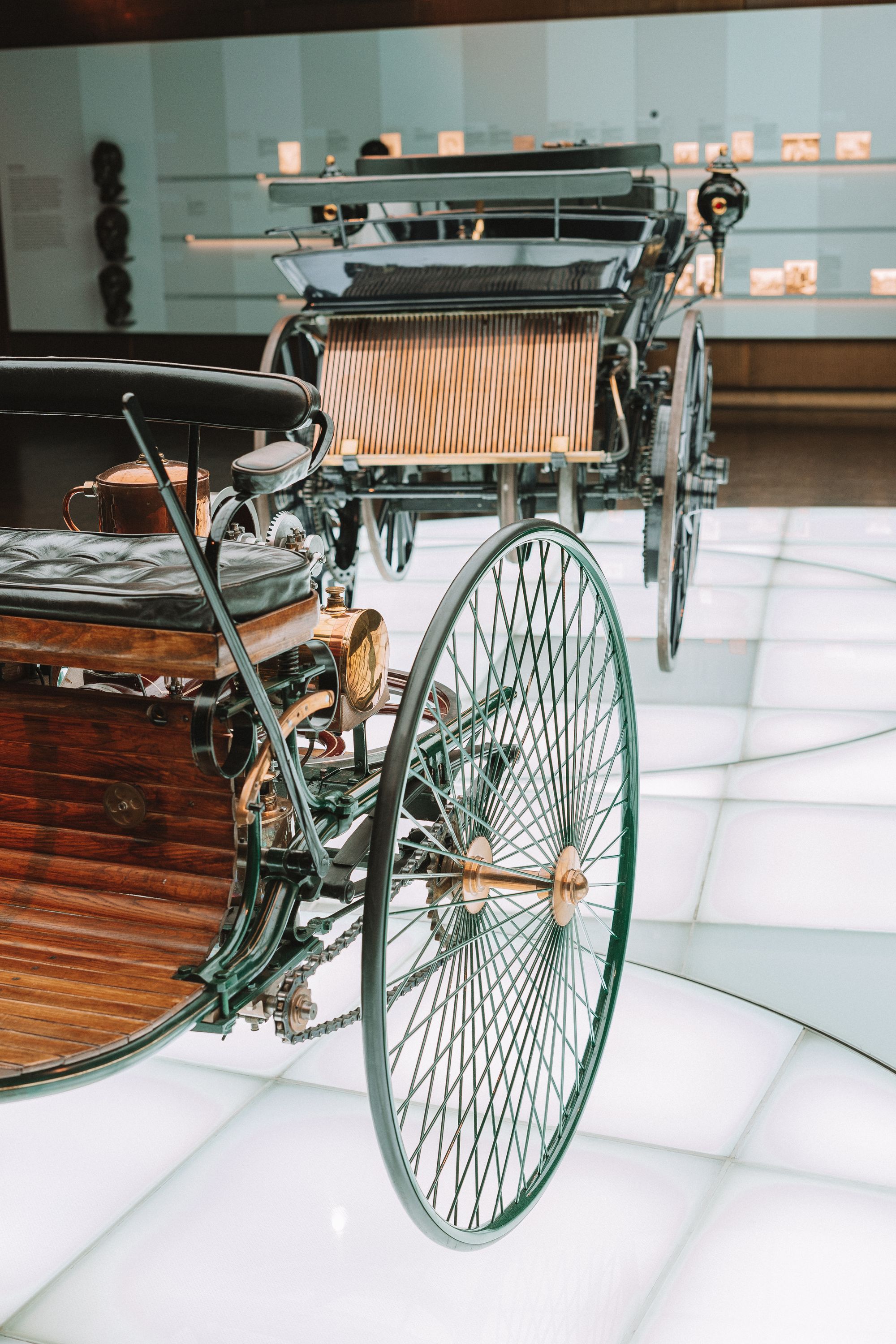
Mercedes-Benz’s own Classic division frames the brand as the inventor of the automobile — a claim grounded in the Benz Patent-Motorwagen of 1886. That heritage creates a collector floor most marques cannot match. It also breeds inflated expectations on models that don’t deserve them. The collectible range spans pre-war engineering masterpieces to postwar sports cars to 1980s grand tourers, with prices running from $8,000 survivors to seven-figure Gullwings. That depth means genuine opportunity — but only for buyers who do the work first.
What actually holds value in the vintage Mercedes-Benz market comes down to four factors: genuine scarcity (low production numbers, meaningful survival rates), a strong club and ownership infrastructure, documented provenance, and a parts ecosystem that makes restoration realistic rather than ruinous. Models that check all four boxes are the ones collectors compete for. The rest move slowly, if at all, regardless of how handsome they look in a photograph.
The Models Collectors Actually Fight Over — With Numbers to Back It Up

300SL Gullwing (1954-1957) and Roadster (1957-1963)
The undisputed apex of the Mercedes collector car market. Approximately 1,400 Gullwings were produced, and auction results for solid examples regularly clear $800,000 to $1.4 million, with exceptional cars going higher. The fuel-injected inline-six produces approximately 215 hp — remarkable engineering for 1954 — and the upward-opening gull-wing doors remain the most recognizable silhouette in postwar motoring. The Roadster, with around 1,858 units built, trades at a moderate discount but shares the same mechanical DNA and long-term appreciation profile. If you have one to sell, you are in a fundamentally different conversation: use a major auction house or a specialist dealer capable of reaching the appropriate buyer pool.
190SL (1955-1963)
The attainable entry point to the SL era, with approximately 25,800 built over eight years of production. Well-restored examples typically trade between $55,000 and $110,000. The overhead-cam four-cylinder produces around 105 hp — modest by any measure — but parts availability makes restoration realistic, the ownership community is large and active, and the car’s proportions have aged exceptionally well. This is one of the most practical vintage Mercedes-Benz models to own if your goal is enjoyment alongside appreciation. Fuel economy is also noticeably better than the V8 cars: real-world figures of 20-24 mpg matter if you plan to drive rather than trailer.
280SE 3.5 Cabriolet (1969-1971)
Approximately 1,232 were built, making this among the rarest production Mercedes-Benz models of its era. Pristine examples have crossed $400,000 at major auction. This is the sleeper pick that informed collectors identify immediately — the rarity-meets-elegance formula works here in a way it simply does not on the far more common W108 sedans. The 3.5-liter V8 produces approximately 200 hp and pulls cleanly through the car’s substantial weight. If you own one and haven’t had a professional appraisal recently, do that before making any selling decision — values in this segment have moved materially over the past several years.
107-Series SL (1971-1989) — Particularly the 450SL and 560SL
The most liquid segment of the vintage Mercedes market, and for good reason. Prices range from $18,000 to $55,000 depending on year, mileage, and condition, with the late-production 560SL commanding the premium within the series. Parts supply is strong, the buyer pool is broad, and values have shown steady if unspectacular appreciation without the volatility of six-figure cars. The V8s average 12-16 mpg in real-world use — acceptable for a car in this class. This is the segment where a buyer can acquire, sort, drive regularly, and eventually sell without financial vertigo. For most collectors entering the market, it is the honest starting point.
The Models Collectors Quietly Ignore — and Why

Not every old Mercedes-Benz is worth buying as a collectible. These are the segments where money quietly disappears:
- Mid-range W108/W109 sedans (non-300SEL 6.3 specification): Handsome and well-engineered, but common enough that supply perpetually outpaces collector demand. Budget $8,000-$18,000 to acquire one, then plan for deferred maintenance that can exceed purchase price. The 300SEL 6.3 — with its transplanted 6.3-liter V8 from the 600 Grosser — is a separate and legitimate collector conversation. Everything else in the W108/W109 range is a driver, not an appreciating asset.
- R129 SL (1990-2002): Entry prices of $8,000-$20,000 are low for a reason. The ABC active hydraulic suspension systems and aging electronics can cost $5,000-$15,000 to sort properly on a neglected example, and values have not risen enough to justify speculative buying. Buy one because you love the car and intend to maintain it correctly — not because you expect to flip it profitably in five years.
- W126 S-Class sedans (1979-1991): Deeply respected by enthusiasts for their build quality and engineering integrity, but the market is saturated. A clean 560SEL fetches $12,000-$22,000, and appreciation has been essentially flat for a decade. Buy one to drive — it is an excellent car for the money — but don’t mistake it for an investment-grade collectible.
Specs and Value Comparison at a Glance

| Model | Production Years | Approx. Units Built | Typical Market Range | Engine / Est. HP | Parts Availability | Collector Demand | Buy Strategy |
|---|---|---|---|---|---|---|---|
| 300SL Gullwing | 1954-1957 | ~1,400 | $800K-$1.4M+ | Inline-6 / ~215 hp | Specialist-only, expensive | ⭐⭐⭐⭐⭐ | Buy and hold |
| 190SL | 1955-1963 | ~25,800 | $55K-$110K | Inline-4 / ~105 hp | Good — active community | ⭐⭐⭐⭐ | Buy to hold and drive |
| 280SE 3.5 Cabriolet | 1969-1971 | ~1,232 | $250K-$400K+ | V8 / ~200 hp | Moderate, costly | ⭐⭐⭐⭐⭐ | Buy and hold |
| 450SL / 560SL (107-series) | 1971-1989 | ~237,000 (full series) | $18K-$55K | V8 / 180-227 hp | Excellent | ⭐⭐⭐⭐ | Buy to drive; modest appreciation |
| W126 S-Class (560SEL) | 1979-1991 | High volume | $12K-$22K | V8 / 238 hp | Good | ⭐⭐ | Buy to drive only |
| R129 SL | 1990-2002 | ~204,000 | $8K-$20K | V8 / 228-315 hp | Fair — electronics risk | ⭐⭐ | Buy to drive; speculative risk |
On total cost of ownership: Sticker price is only the beginning. Pre-emission-control engines — generally pre-1968 — are mechanically simpler and cheaper to maintain than anything carrying early electronic fuel injection or late-1980s complexity. Calculate acquisition cost, a realistic restoration reserve, annual maintenance, insurance (agreed-value policies are essential for collector cars), and storage before any car has a chance to charm you into ignoring the math.
How to Buy, Sell, or Consign a Classic Mercedes Today

If you’re selling a classic Mercedes-Benz — or any collectible vehicle regardless of condition or location — MB Vintage Cars in Elyria, OH will purchase it and physically pick it up from anywhere. That matters when you’re dealing with a car that isn’t driveable or that you’d rather not manage through a private sale. You can reach them at 216-362-0100 or browse current inventory through their eBay store to gauge what is moving and at what price.
Consignment is the middle path worth considering if your car needs a buyer who understands what they’re looking at. Private listings on general platforms attract price-shoppers. A specialist dealer with an established audience of serious collectors reaches the people most likely to pay correctly for a correctly represented car. MB Vintage Cars accepts consignments, which matters most in the upper tiers of the market where the buyer pool is narrower and the transaction requires more trust on both sides.
Non-negotiable pre-purchase steps for any vintage Mercedes-Benz, regardless of price tier:
- Independent pre-purchase inspection from a marque specialist — not the selling dealer’s preferred mechanic
- Full VIN history check and original documentation review, including any factory build records where available
- Thorough undercarriage and body inspection focused on sills, floor pans, and rear frame rails — rust in these areas is expensive and structurally significant
- Documented service history with particular attention to major mechanical work, engine rebuilds, and any accident or paint history
On sales channel selection: major auction houses such as Barrett-Jackson and RM Sotheby’s maximize exposure for high-value cars but carry buyer’s premiums of 10-15% that directly affect seller net. Specialist dealers offer vetted inventory, sometimes financing, and a buyer pool already filtered by genuine interest. Private sales offer price flexibility but zero recourse if something is misrepresented. Match the channel to the car’s value tier — a Gullwing warrants a different approach than a W126 sedan, and treating them identically is a seller’s mistake.
The Bottom Line: Buy the Right Mercedes for the Right Reason
The most valuable vintage Mercedes-Benz models share three qualities: few survivors, compelling provenance, and strong support infrastructure. The 300SL Gullwing and 280SE 3.5 Cabriolet check all three boxes and have demonstrated consistent long-term appreciation. If you can access either at a reasonable entry point relative to current market, you are likely holding value over a meaningful time horizon.
If you want the most practical vintage Mercedes-Benz for actual use rather than investment, the 107-series SL is the honest answer: parts are widely available, the ownership community is large and helpful, and $35,000-$45,000 buys a properly sorted, driveable car that rewards regular use rather than penalizing it.
Avoid buying any old Mercedes-Benz on badge alone. The marque’s depth means the gap between a $9,000 W126 sedan and a $900,000 Gullwing is entirely real — and confusing the two is precisely how buyers get burned. Run the full acquisition, maintenance reserve, insurance, and storage numbers before the car has a chance to charm you past rational judgment. Mercedes collector cars reward patience and research. They punish impulse, every time, without exception.